



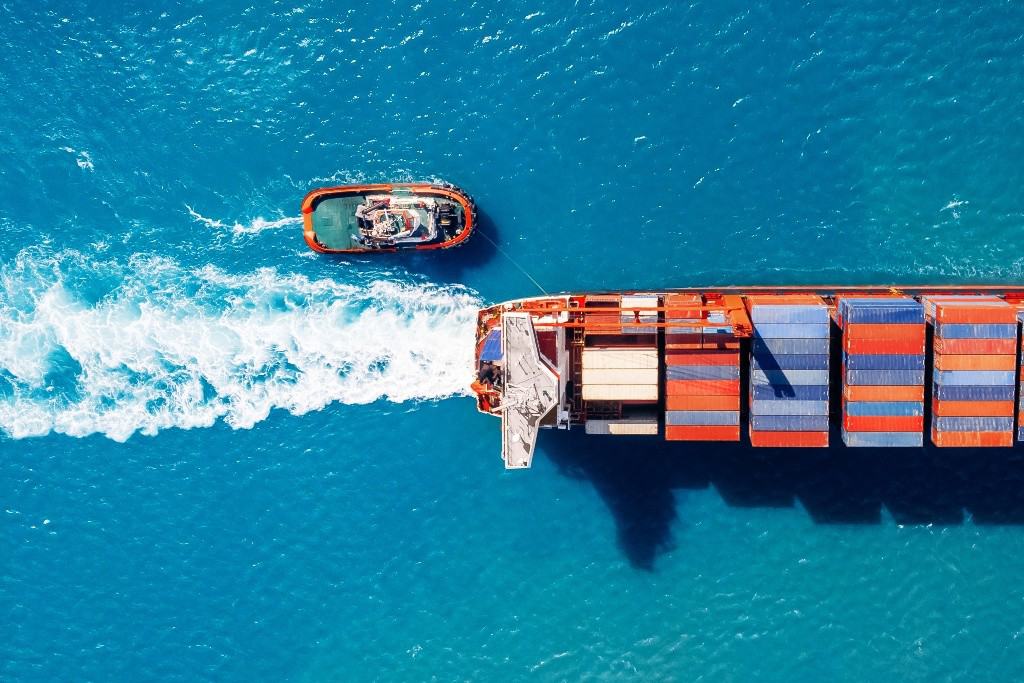
International Maritime Organization (IMO) has set ambitious goals to reduce shipping greenhouse gas (GHG) emissions by 50 % by year 2050. Discussion on lowering the emissions has largely been focused on using new green fuel options, such as hydrogen, ammonia and methanol. However, innovations and improvements in propulsion technology and hull form should not be forgotten. By developing efficient propulsion concepts, the fuel consumption can be reduced regardless of the used fuel type.
Currently the propulsive efficiency of ships, meaning how much of the power delivered to the propeller can be used for propelling the ship, is about 70 %. This can be significantly improved by developing new propulsor and hull form innovations. This kind of improvement is also not dependent on the fuel type used and leads always to lowered fuel consumption.
Besides the GHG emissions, underwater radiated noise has been recognized as a major environmental issue in shipping industry. VTT is tackling this challenge with the industry partners and is developing new methods to model the underwater noise and propeller cavitation phenomena. By better understanding the sources for the underwater noise, it can be mitigated more effectively.
“The main goal of the research project is to significantly increase the propulsive efficiency of ships by developing new propulsion concepts. Increase in propulsive efficiency leads directly to lower fuel consumption and lower emissions. Concurrently we are looking for solutions to lower the underwater radiated noise of ships”, says research scientist Ilkka Perälä who is leading the project at VTT.
Cooperation with industry partners will advance the shift to zero-emission shipping
VTT has received a 1.2 M€ funding from Business Finland for UltraPropulsor Co-Innovation project. The project develops future solutions for zero-emission shipping. Total budget of the co-innovation project is 4.5 M€ including the industry partner budgets. VTT contributes to the project with strong expertise of hydrodynamics expertise and materials science to minimize ship energy consumption and enabling the development of novel low emission solutions and concepts.
Industrial partners in the project are ABB, Foreship, ATA Gears and Composite Solutions and Innovations. VTT acts as a research partner supporting the research needs of the industry partners. The consortium brings together strong expertise from different domains of the maritime sector.
Main topics of the research project include hydrodynamic research to demonstrate the feasibility of novel solutions by numerical modelling and experiments, and material research to develop methods for strength assessment of propeller blades. Material research aims to techno-economic optimization of the future propeller materials. Life cycle cost assessment, manufacturability, and material properties, especially fatigue strength, and corrosion resistance in operational conditions constitute key criteria. Furthermore, novel methodology for the defect-tolerant design of the propeller material will be developed.










 has set ambitious goals to reduce shipping greenhouse gas (GHG) emissions by 50 % by year 2050. Discussion on lowering the emissions has largely been focused on using new green fuel options, such as hydrogen, ammonia and methanol. However, innovations and improvements in propulsion technology and hull form should not be forgotten. By developing efficient propulsion concepts, the fuel consumption can be reduced regardless of the used fuel type. Currently the propulsive efficiency of ships, meaning how much of the power delivered to the propeller can be used for propelling the ship, is about 70 %. This can be significantly improved by developing new propulsor and hull form innovations. This kind of improvement is also not dependent on the fuel type used and leads always to lowered fuel consumption. Besides the GHG emissions, underwater radiated noise has been recognized as a major environmental issue in shipping industry. VTT is tackling this challenge with the industry partners and is developing new methods to model the underwater noise and propeller cavitation phenomena. By better understanding the sources for the underwater noise, it can be mitigated more effectively.)