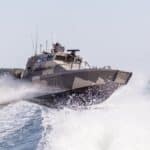



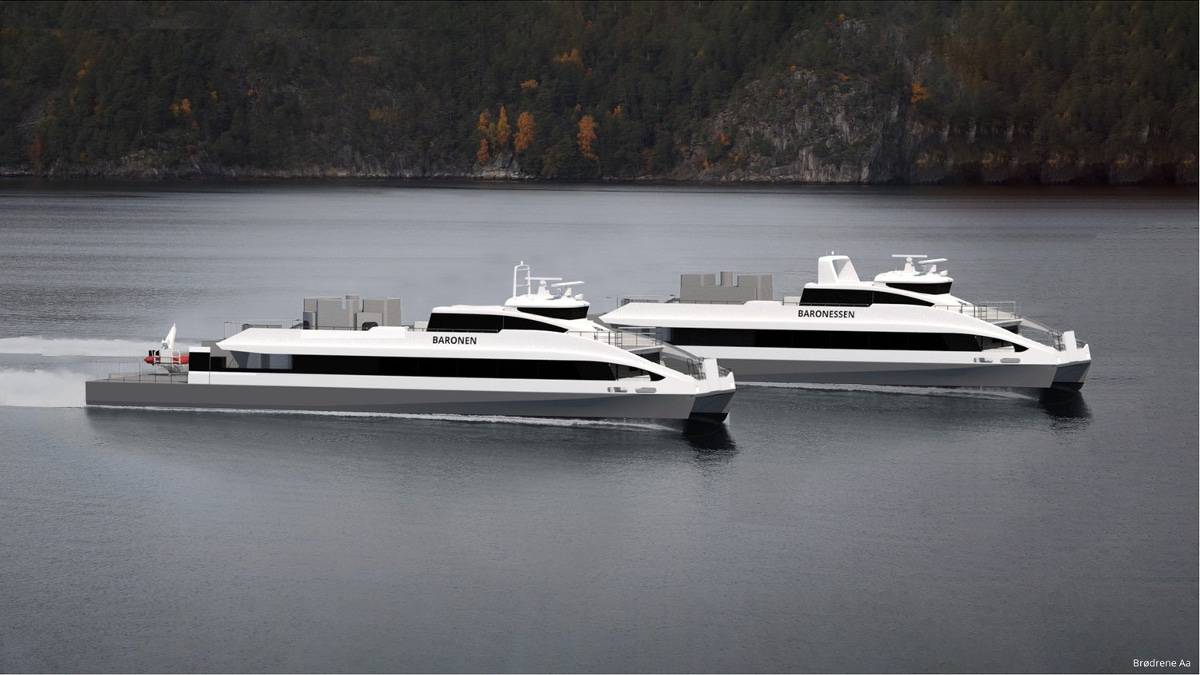
This autumn, the high speed ferries MS Baronessen and MS Baronen returned to the shipyard to replace their diesel engines with batteries – and to extend their hulls by a full 10 metres. The conversion project is an example of how electrification can equip vessels for new decades at sea.
Upgrading existing vessels is an important measure by Brødrene Aa to turn the maritime industry in a greener direction. Vessels that are built to last can be rebuilt to meet new needs and requirements, explains Lars Endre Gimmestad, Head of Strategy and Business Development at Brødrene Aa.
– A benefit of circular economy
The high speed ferries MS “Baronen” and MS “Baronessen” usually operates in the Oslofjord. As part of the initiative to make public transport on the fjord emission-free, Norled has entered into an agreement with Ruter on the realization of the conversion project.
Electrifying existing vessels rather than building new ones provides clear circular economic benefits. It was also a premise for us to be able to extend the 10-year contract with Ruter, explains Karolina Adolfsson, Head of Innovation at Norled.
This project shows what is possible and is an example of how vessels can be developed in line with the industry’s climate ambitions. With the help of an innovative battery replacement system, we are able to provide sufficient zero emission energy, while maintaining the required speed and range that the vessels must have to service their routes.
Battery-change carousel yields dual gains
As part of electrification, Brødrene Aa and Norled are at the forefront of testing the autonomous battery-changing robot SHIFTR.
– Using a robotic arm and a battery carousel, changing the battery module can be done in about 3 minutes. SHIFTR makes it possible to change to a fully charged battery while the boat is docked, thus saving a lot of time. At the same time, the power grid will not be burdened to the same extent as with fast charging. Slow charging takes place at lower power, and will be less of a burden on the infrastructure, explains Adolfsson.
By changing the battery instead of having a permanent battery, the vessels are lighter in weight, and can thus run longer routes at the same speed as today.
Splits hulls and extends vessel length
Replacing fossil propulsion systems with battery packs results in a significant increase in total weight. To ensure good seaworthiness, the hull must be lengthened.
– With the addition of heavy batteries, both the weight of the vessel and its draft increase, leading to reduced energy efficiency. To address this, we chose to extend the hull by 10 meters. By doing so and using newly cast, energy-efficient hulls, we achieve improved buoyancy and decreased resistance,” explains Gimmestad.

After 6 months at the shipyard in Hyen, the electric version of Baronessen is scheduled to be ready for traffic in the Oslofjord starting in the summer of 2024.