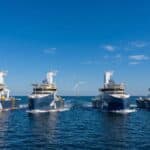
Five-year agreement will see advanced Raymarine navigation, digital ship control and FLIR thermal imaging systems integrated across the RNLI’s lifeboat fleet
The Royal National Lifeboat Institution (RNLI) has entered into a five-year strategic partnership with Teledyne brands Raymarine and FLIR Marine to equip its lifeboat fleet with advanced navigation, digital vessel control and thermal imaging technology, strengthening the charity’s lifesaving capabilities around the coasts of the UK, Ireland and the Channel Islands.
The agreement will see Teledyne Raymarine’s latest navigation and digital ship control systems integrated across RNLI lifeboats as part of the organisation’s long-term fleet modernisation programme. In parallel, the RNLI will begin trials of Teledyne FLIR Marine thermal imaging cameras to improve situational awareness during search and rescue operations, particularly in low-visibility conditions.
The technology upgrade is designed to ensure RNLI volunteer crews have access to the latest navigation and vessel management systems, supporting faster and more effective emergency response while helping the charity meet evolving operational demands along increasingly busy coastlines.
Under the partnership, RNLI lifeboats will be fitted with a suite of Teledyne Raymarine equipment, including Electronic Chart Systems (ECS) based on the company’s Axiom chartplotters, Quantum radar systems and YachtSense digital ship control technology, providing crews with enhanced navigation, vessel monitoring and onboard systems integration.
The Teledyne Raymarine systems were chosen following extensive feedback from the charity’s volunteer crew members, who gave insights into what was needed from the next generation of onboard systems, and how Teledyne Raymarine could provide the training and support for crew members to get the most from the updated equipment.
Where appropriate, the integration of Teledyne FLIR Marine’s thermal imaging technology will allow crews to detect vessels and people in the water more easily, even in complete darkness or fog. The project represents a major investment in the safety, capability and future resilience of the RNLI’s lifeboat fleet.
The Shannon all-weather lifeboat and the Atlantic 85 inshore lifeboat will be the first vessels to benefit from the new digital systems, while the E Class operating on the River Thames in London will also receive the upgrades, before the technology is rolled out to the rest of the RNLI fleet.
‘We are honoured to support the RNLI in their vital mission,’ said Gregoire Outters, President, Teledyne Marine Group. ‘Our technology is designed to perform in the most demanding marine environments, and we are proud that it will play a role in helping RNLI crews save lives at sea.’
The partnership reflects a shared commitment to innovation, safety, and future-proof technology. Teledyne Raymarine and Teledyne FLIR Marine will also support the RNLI through events, ongoing technical support, and awareness campaigns that highlight the importance of marine safety.
The RNLI relies on partners and supporters to continue its lifesaving work. This collaboration with Raymarine and FLIR Marine is a powerful example of how technology and innovation will make a real difference to the RNLI mission.