


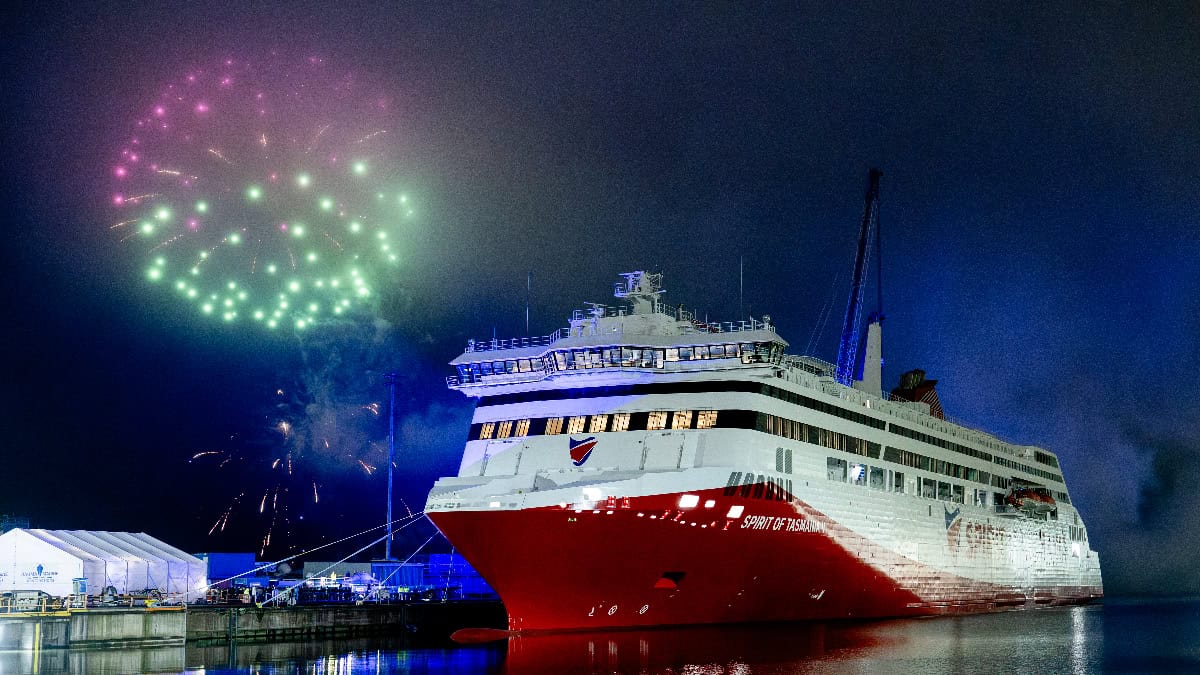
Handover of the second of two 48,000 GT ferries that embody Finland’s largest ever export deal with Australia also completes an assignment which saw Team Electric deploy wide-ranging technical expertise and project management skills across the Spirit of Tasmania V.
Delivered by Rauma Marine Contractors to TT-Line at the end of June, the 26-knot ro-pax ferry is the second new ship for the Bass Strait – with the first on its way to Hobart at time of writing. With capacity for 1,800 passengers and 3,700 lane metres for vehicles, the 212m loa vessels will replace older, smaller ferries to link Geelong, Victoria and Devonport, Tasmania.
The new vessels are notable for their design for rough conditions and their dual-fuel propulsion. But on the delivery of Spirit of Tasmania, Rauma Marine Constructions Oy CEO and President Mika Nieminen also highlighted the significance of the collaboration in their successful completion of V.
Thanking owner TT-Line for an “excellent cooperation”, he said: “The vessel represents the strong shipbuilding expertise found in Rauma and demonstrates the capabilities of the Rauma shipyard. I also want to say thank you to our cooperation partners and the Classification Society.”
Offering multi-disciplinary project management and electrical systems capabilities across the build, Team Electric’s contribution to the cooperation proved pivotal. The electrical solutions expert worked for and alongside RMC on a range of tasks that were integral to delivering the ship to the highest standards.
Complete electric solutions
With a total of 80-100 Team Electric engineers on board at any one time, the company was also required to maximise efficiency to meet project milestones while reporting into different supervisors within RMC. Where technical areas were concerned (engine rooms, workshops, stores and bow thrusters), for example, RMC engaged 30 Team Electric installation engineers to report direct to the yard’s own ship area managers.
Elsewhere, however, Team Electric worked in coordination with Amalco on electrical installations across 301 passenger and 46 crew cabins. Meanwhile, it collaborated with interiors specialist Orsap on 12 luxury cabins plus lounges and public areas on decks 9, 10 and 11, with NIT on restaurants, bars, cinemas and kids areas on Deck 8 (3497 sqm), and with Scanmarine on balconies on decks 8, 9 and 10.
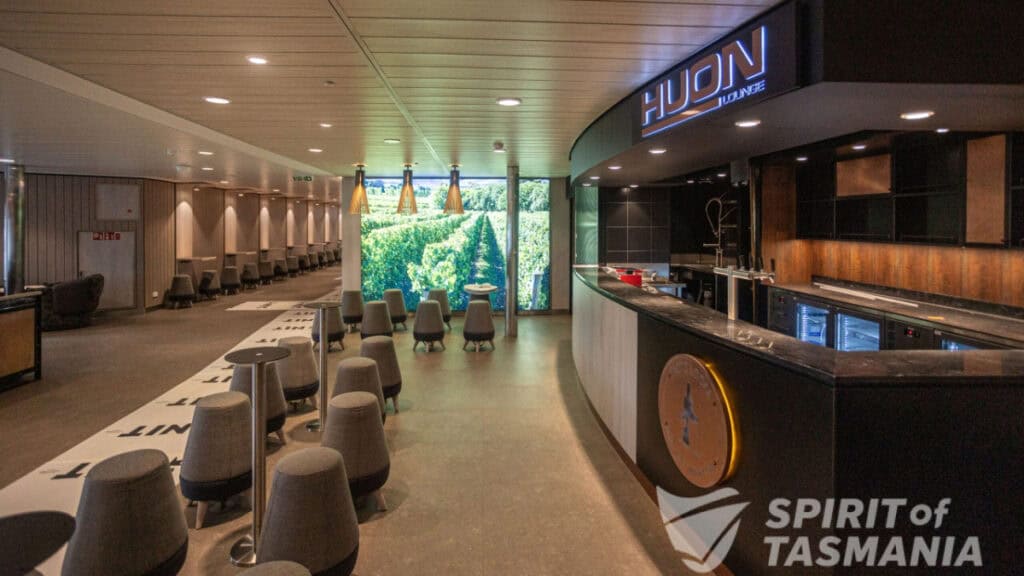
Team Electric also worked with turnkey solution provider Koja on installing three AC rooms (296,42 sqm), deploying engineers all over the ship to take care of related systems work. The Team Electric quality ‘stamp’ was also apparent after a special request from Signwell Oy to install all its low location light services, in an extra job also completed on time and on budget.
The entire project consolidated Team Electric’s reputation in the high performance ro-pax ferry market, while also sealing its close ties with TT-Line, according to Aigar Jürise, Project Manager, Team Electric Group.
Learning from experience
“Projects of this kind can be complex because they require coordination of different teams in different locations and involve multiple nationalities. In addition to making sure our own installation work meets expectations while working alongside plumbers, fitters and others on site, we need to coordinate with the yard and across our interiors partners, whose project milestones may not always align.” In the case of Spirit of Tasmania V, the delivery date also changed more than once, adding to the coordination challenge.
However, with “around 99%” of the Team Electric workers that completed Spirit of Tasmania IV at the RMC yard engaged for the second ship, Jürise says opportunities arose to make efficiency gains.
“There was a natural progression, where everyone knew what was expected of them on Spirit of Tasmania V, while we also refined workflows and anticipated challenges based on experience; we also knew the issues that were likely to need resolving at the end of the project.”
The passage of time between projects brought a regulatory requirement to switch from the USB-A sockets to higher speed USB-C fittings. The change meant “a modification on the go” for all cabins and public spaces, says Jürise, and logistics ingenuity to ensure the timely availability of fittings.
“Team Electric’s blend of technical know-how and practical execution has been one key to our selection as preferred partner for the highest profile deliveries in passenger shipping,” he adds. “Electricity is playing a growing role in improving the performance, efficiency and sustainability of ships, and we’re proud that an increasing number of owners, yards and contractors recognise that working with a multi-disciplinary electrical systems partner helps realise the potential.”