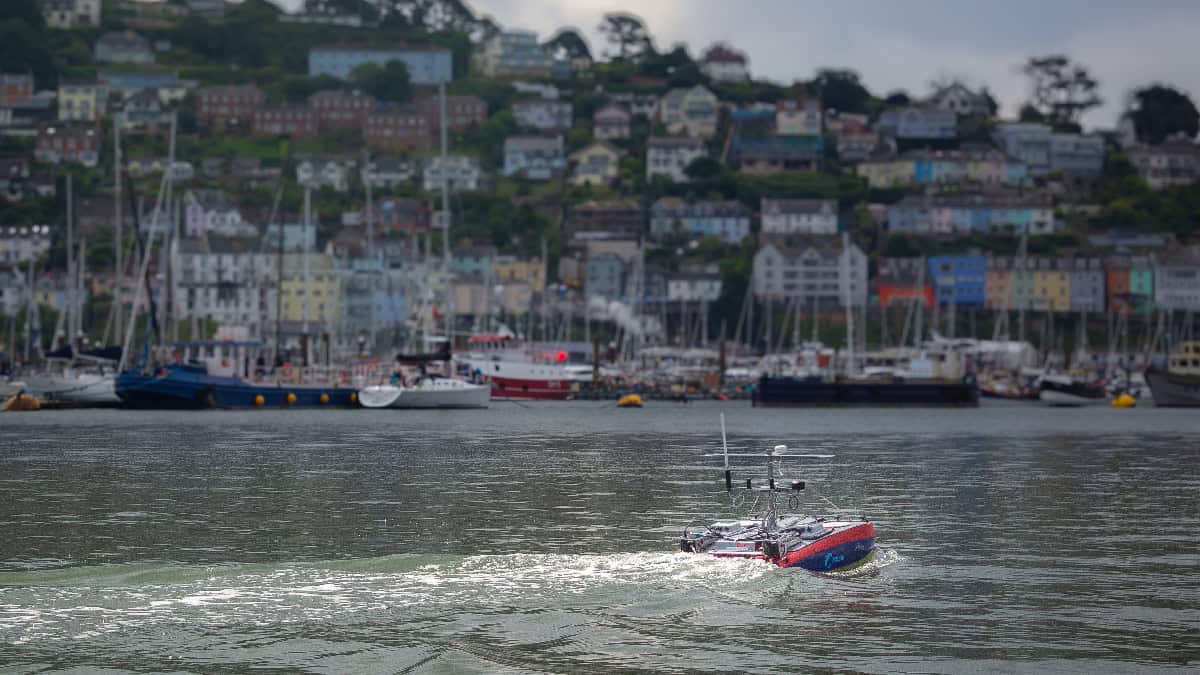
A consortium of British marine technology companies has secured Innovate UK funding to deploy non-invasive Uncrewed Surface Vessels (USVs) for water quality monitoring in three key South West regional ports; Dartmouth, Falmouth and Plymouth.
Led by Somerset-based marine acoustic monitoring experts, MSeis, the ‘Smart Ports, Clean Waters’ project partners aim to transform public understanding of water ecosystems in ports and harbours in the South West of England by providing broad range, accessible data relating to pollution in the region’s rivers and estuaries. MSeis will be supported by technical partners, HydroSurv (based in Exeter) and Chelsea Technologies.
Water quality standards have become a pressing concern in the UK. Under the Water Framework Directive, just 14% of UK rivers currently meet the criteria for ‘good ecological status’. The River Dart has recently been given bathing water status across four tidal locations, highlighting the immediate need for a sustainable water quality monitoring solution to detect potential issues related to agricultural run-off, untreated sewage and hydrocarbon contamination.
The ‘Smart Ports, Clean Waters’ end-to-end solution will see a specialist sensor payload from Chelsea Technologies integrated into MSeis’ three, battery electric HydroSurv REAV-16 uncrewed vessels. The remotely controlled Uncrewed Surface Vessels will harvest a range of water quality and eutrophication data within inland waters on weekly deployments by MSeis from their stations in Dartmouth, Falmouth and Plymouth, with the results widely accessible to regional stakeholders via a cloud-based, geospatial data viewing platform developed by HydroSurv.
David Hull, CEO of HydroSurv, said: “This zero-emission, safe and sustainable solution for water quality data collection will achieve widespread coverage at three of the South West’s key harbours using highly automated, robotic vessels overseen by shore-based personnel. The consortium is committed to serving public interest, operating independently from other public and private monitoring efforts, with the goal of providing accurate and unbiased information to the community.”
During the 12-month test and demonstration campaign, which will showcase the cloud-based visualisation platform, other expected outputs include detailed weekly datasets from each harbour, evaluation workshops involving the port partners and the further enhancement of integration and survey tactics knowledge.
MSeis Managing Director, Mark Higginbottom, said: “This project will make a real difference to the environmental monitoring of our harbours and coastal waters. We are thrilled to be working with HydroSurv and Chelsea Technologies, whose knowledge and skill sets will complement our own offshore experience and expertise.”
The South West’s rich maritime heritage and strong economic tie to tourism, fisheries and recreational marine makes it an ideal testing ground for this groundbreaking pilot, strengthening the region’s technological innovation reputation for the global blue economy.