Supplier will deliver integrated electric propulsion and waterjets for high-speed ferry
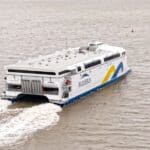
Wärtsilä has been contracted to supply a fully integrated electric propulsion system for a new high-speed, battery-electric catamaran ferry being built for Danish operator Molslinjen. The vessel is the third in a series under construction at Incat’s shipyard in Tasmania, with Wärtsilä systems specified for all three ferries.
The delivery scope includes the electric propulsion system, DC power conversion system, energy management and automation systems, eight electric propulsion motors, and waterjets. Wärtsilä will also supply its ProTouch propulsion control system, designed to deliver precise thrust control and efficient manoeuvring.
“Our commitment is to have fully sustainable ferry operations,” says Kristian Durhuus, CEO, Molslinjen. “Wärtsilä’s electrification technology will enable us to make harmful smoke emissions a thing of the past, and we had no hesitation in opting for their solutions again for this third ferry.”
“This series of battery-electric ships highlights the ferry industry’s focus towards decarbonised operations. Wärtsilä is similarly committed to supporting the decarbonisation of shipping, and our technology reflects our emphasis on sustainability, innovation and performance. The move towards net-zero emissions is well underway, and we at Wärtsilä are proud to be at the forefront of this transition,” comments Roger Holm, President of Wärtsilä Marine & Executive Vice President at Wärtsilä Corporation.
The three ferries will each measure 129 meters in length and 30.5 meters in width, accommodating up to 1,483 passengers and 500 cars. These new vessels will serve the Kattegat route and are expected to join the fleet in Denmark during 2027 and 2028.
“Electrification is very much the future for ferry operators around the world, and battery- based propulsion is a very viable option for owners and operators looking to increase the sustainability of their fleets,” says Stephen Casey, CEO, Incat. “Large-scale, low-emission transport solutions are not only possible, but are ready and available today. Incat Tasmania supports this trend through its record of pioneering new technology and design.”
The electric driven waterjet configuration features low weight, shallow draft operation, low maintenance and easy access, safety and reliability. Manoeuvrability is superb, thanks to the integrated steering and reversing with quick response times. The waterjets have been designed for the highest overall propulsion efficiency. As the power is divided over more jets, the power density is lower, which delivers higher efficiency. The Wärtsilä equipment for this third vessel is scheduled for delivery to the yard in 2027.