



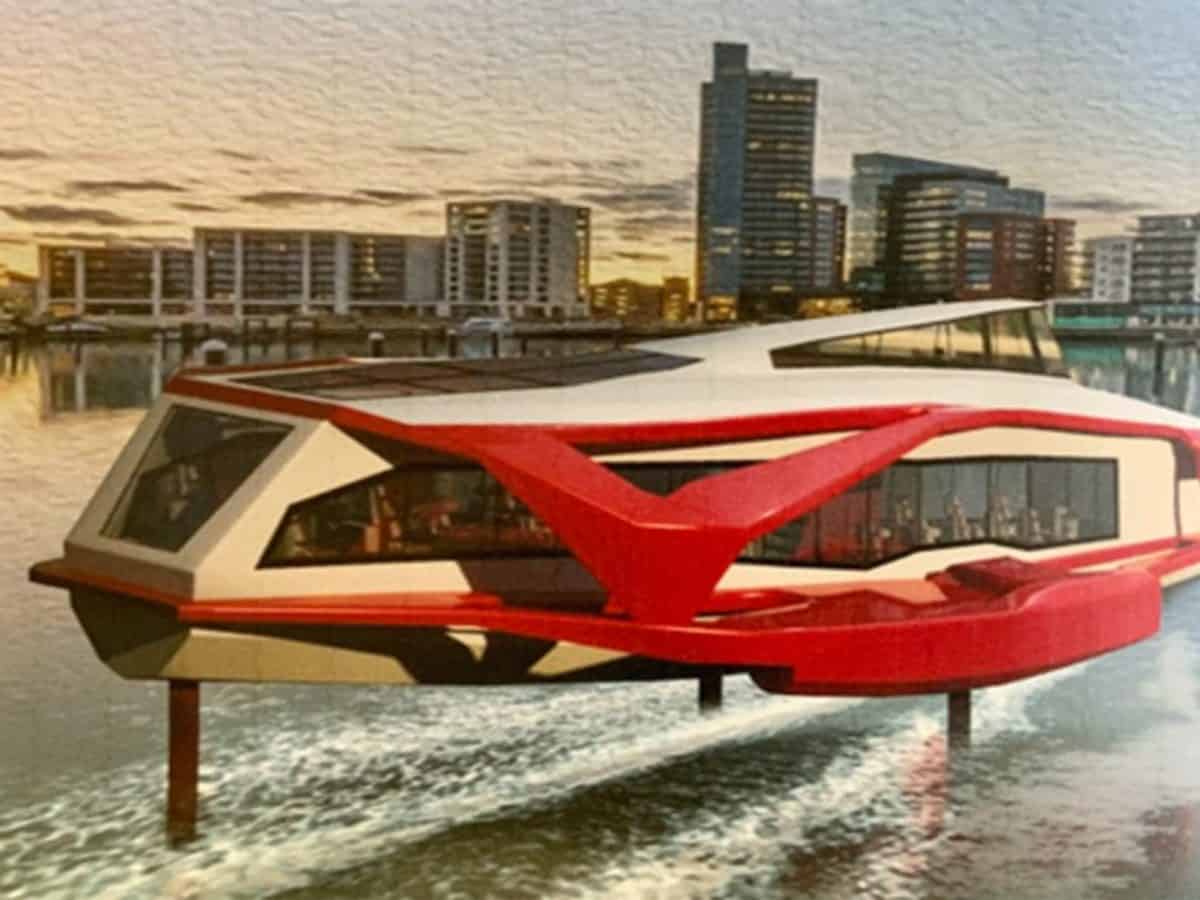
A new cost-effective, zero-emissions solution for high-speed passenger ferries is on the horizon thanks to a new industry-led collaboration between Solent University, Chartwell Marine and Newcastle Marine Services.
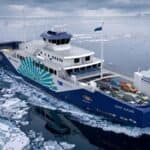
Following the development of an original concept by Solent University, the group is aiming to develop an electric hydro-foiling high-speed trimaran, capable of carrying up to 40 passengers on short to medium range coastal routes.
This £1.86m project is being funded by Innovate UK, under the Cleaner Maritime Demonstration Competition, to develop and build a scaled demonstrator vessel, proving that the concept is viable and can operate in a range of weather and sea conditions.
Initial testing has demonstrated the potential for a foiling trimaran with low drag and power requirements. Giles Barkley, leader of Solent University’s yacht engineering-based degrees says, “A traditional, diesel-powered, 40-passenger catamaran ferry operating at 25 knots typically requires well over 1000kw of power. The trimaran foiling ferry concept has the potential to reach 28 knots using just 250kW of power – equivalent to the power used by two modern electric family cars (2×125Kw motors). This means it is possible to power the craft using zero emission electric motors, with a significant reduction in associated fuel and operational costs compared to a traditional diesel craft.”
Solent University Project Lead, Associate Professor of Marine Sustainability, Dr Laurie Wright, says, “Recent advancements in electrical propulsion technology mean zero-emission, low-drag, high-speed medium capacity passenger vessels are now viable.
“These types of passenger vessels can open ‘blue corridors’, encouraging a shift from road to alternative transport on otherwise underutilised coastal waterways.”
The UK Government is funding the development of new clean maritime technology across a 2-year period. Innovative companies developing futuristic green technology in 12 regions around the UK will benefit from the cash, generating highly skilled jobs across the nation and positioning the UK as a world leader in low carbon maritime.
Following the successful deployment of the demonstration vessel, a ‘full-size’ vessel could be offered for commercial operation offering cost-effective, zero-emission solutions for high-speed passenger ferry operators both in the UK and abroad.
Andy Page, Director of Chartwell Marine, says: “As electric propulsion technology advances within the marine industry, we are presented with exciting opportunities to develop zero emission vessels that can capitalise on the underutilised coastal waterways. The high-speed trimaran is an exciting proposition offering a zero-emission solution for short coastal journeys. We are proud to be working with Newcastle Marine Services and Solent University to achieve this design which has only been made possible by the Innovate UK funding.”
Iman Ramzanpoor, Managing Director of Newcastle Marine Service says: “We are excited to collaborate with Chartwell Marine and Solent University to develop a cutting-edge, electric hydro-foiling high-speed trimaran that could revolutionize the passenger ferry industry. The ferry will significantly reduce operational costs and carbon emissions, making it an attractive solution for short distance passenger ferry operators in the UK and beyond. This project demonstrates our commitment to advancing sustainable maritime technology and supporting the UK’s efforts to become a global leader in low carbon maritime.”









. This means it is possible to power the craft using zero emission electric motors, with a significant reduction in associated fuel and operational costs compared to a traditional diesel craft.”Solent University Project Lead, Associate Professor of Marine Sustainability, Dr Laurie Wright, says, “Recent advancements in electrical propulsion technology mean zero-emission, low-drag, high-speed medium capacity passenger vessels are now viable.“These types of passenger vessels can open ‘blue corridors’, encouraging a shift from road to alternative transport on otherwise underutilised coastal waterways.)