



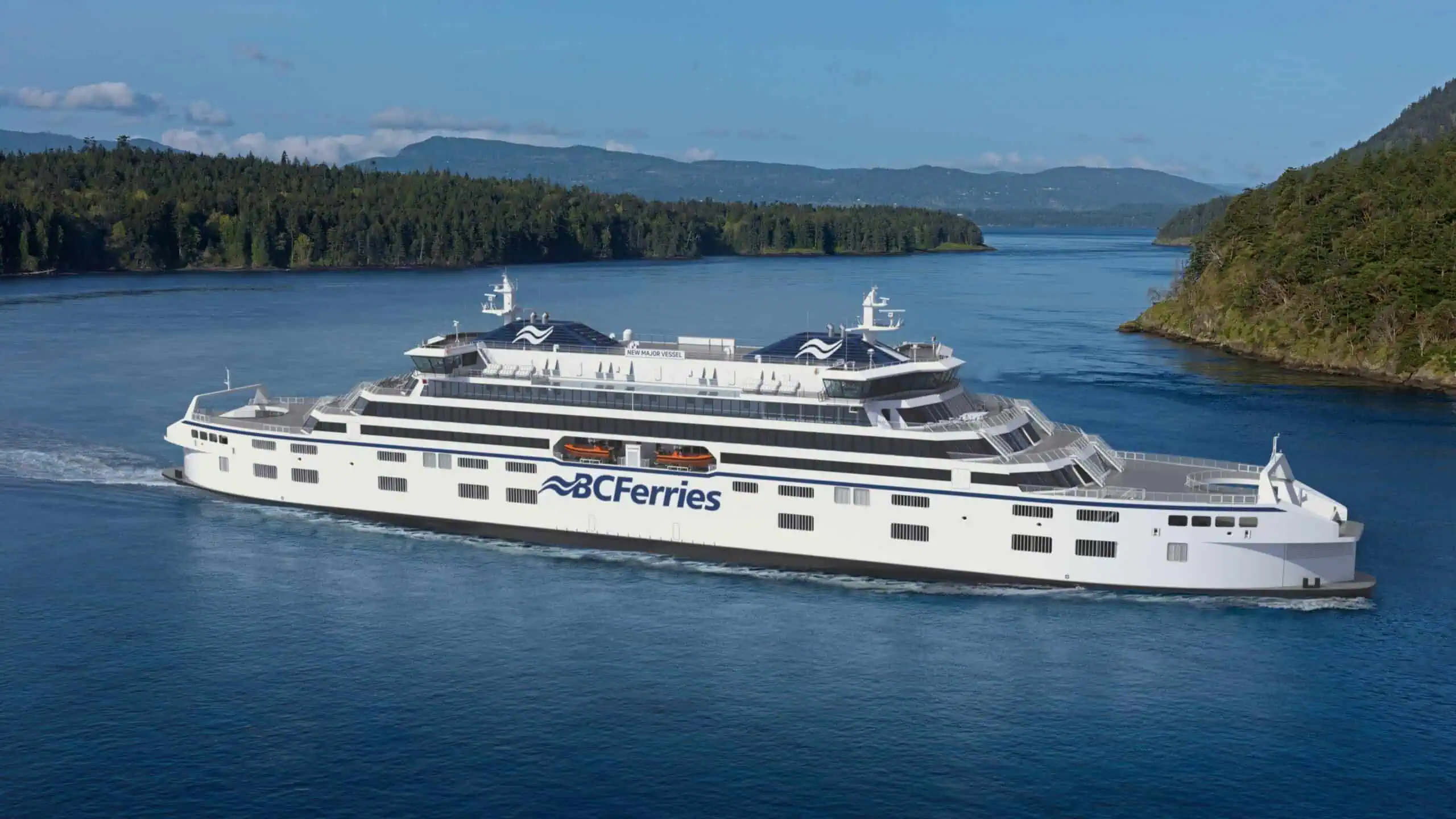
Next-generation ferries equipped with ABB systems for safer, greener, and more efficient operations.
ABB, a global technology leader in electrification and automation, has been selected to supply a complete package of power, propulsion, and control systems for four new double-ended passenger and car ferries for British Columbia Ferry Services (BC Ferries).
One of the world’s largest ferry operators, BC Ferries provides year-round service on 25 routes connecting 47 terminals, carrying nearly 9.7 million vehicles and 22.7 million passengers annually. With British Columbia’s population projected to grow by 44 percent by 2046, demand for ferry services is expected to increase significantly, underscoring the importance of modern, efficient, and reliable vessels.
The hybrid-electric ferries, which will replace four end-of-life vessels, are part of BC Ferries’ ‘New Major Vessels’ program, aimed at delivering safe, environmentally sustainable and reliable operations in and around the Strait of Georgia, the body of water separating Vancouver Island from the Lower Mainland of British Columbia. The order was booked in the fourth quarter of 2025. Financial details were not disclosed.
Scheduled for delivery by 2030 from China Merchants’ Weihai shipyard, the vessels will be equipped with ABB’s gearless, steerable Azipod® electric propulsion. The system offers proven reliability thanks to significantly fewer moving parts than mechanical thrusters, while the special propeller design helps reduce underwater radiated noise (URN). This helps safeguard at-risk species, such as the Southern Resident killer whale, and preserve one of the world’s most biologically rich marine ecosystems.
ABB’s Onboard DC Grid™ power distribution system will serve as the backbone for efficient energy flow, minimizing conversion losses and enabling higher overall system efficiency and lower emissions than comparable propulsion arrangements.
Each ferry will be equipped to accommodate up to 70 megawatt-hours (MWh) of battery energy storage. This enables efficient hybrid operations today and supports a future shift to fully electric, zero-emission service. The hybrid configuration uses biofuel or renewable diesel and continuously balances energy between generators and batteries. Each vessel can also connect to a high-capacity shore charging system rated above 60 megawatts (MW) for full electric operation. This system is more than 100 times more powerful than the fastest public electric vehicle charging stations in North America, which typically deliver up to 500 kilowatts (kW) per plug. This high-capacity charging supports fast turnaround in port and enables the transition to zero-emission operations.
ABB’s digital solutions will give crews a clear overview of ship operations and support safe, efficient journeys. These digital technologies are intended to help BC Ferries deliver an improved travel experience for passengers while reducing environmental impact.
“BC Ferries’ New Major Vessels represent the largest capital investment in our history and are essential to renewing our fleet, increasing capacity on our busiest routes, and strengthening system resilience,” said Nicolas Jimenez, President & CEO, BC Ferries. “Their design reflects what our customers value most: comfort, accessibility and environmental stewardship. With diesel-battery hybrid technology that can operate on bio and renewable diesel today and transition to full electrification as infrastructure evolves, these ships are a critical part of building a cleaner, quieter, and more reliable ferry system for the future.”
“We proudly support BC Ferries’ goals to reduce greenhouse gas emissions from their operations, striving to meet British Columbia’s 2030 greenhouse gas emissions reduction target for the transportation sector by at least 27 percent by 2030, from 2008 levels, in support of a cleaner future for British Columbia, and its ambitions to transition to all-electric operation,” said Rune Braastad, President, ABB’s Marine & Ports division. “ABB’s deep roots in Canada make it possible to support generational infrastructure projects like the New Major Vessels.”





)