



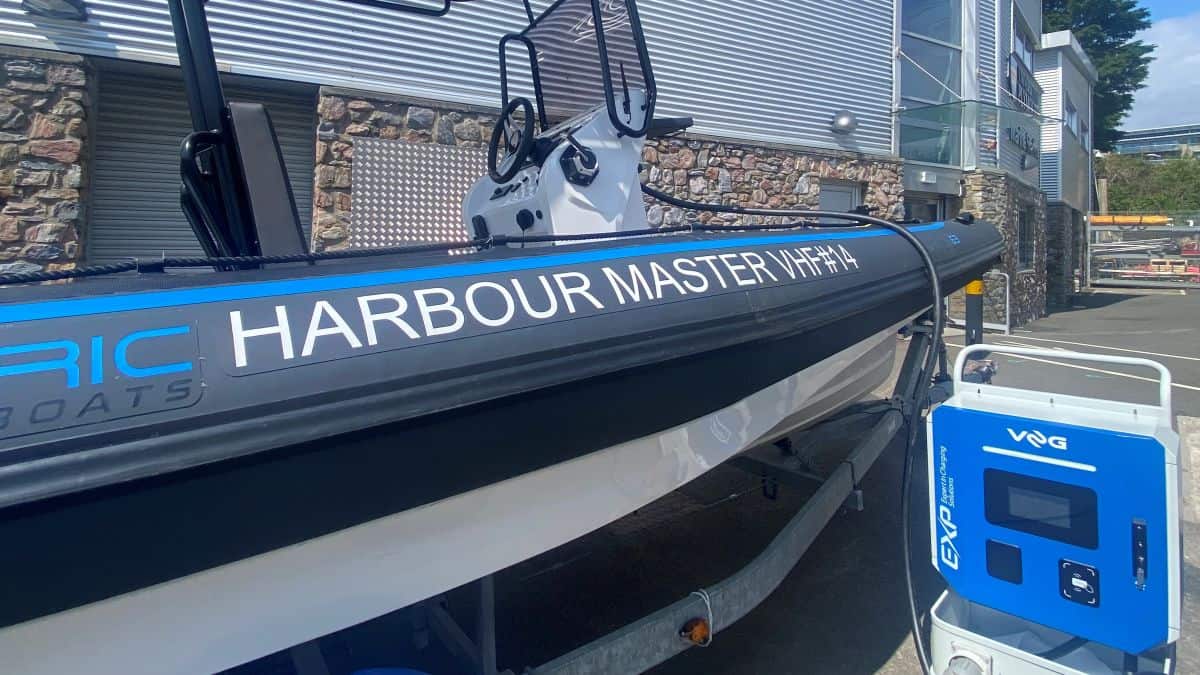
Aqua superPower has successfully demonstrated its revolutionary bidirectional charging system for electric boats at the University of Plymouth, introducing the marine industry to Virtual Bunkering for Electric Vessels (VBEV). This breakthrough technology enables electric vessels to both charge from and supply energy back to port power grids – a first for maritime electrification.
Bidirectional charging is a game-changer for the marine industry. It not only enables electric boats to charge efficiently but also allows boatowners to discharge their batteries and return surplus energy to the grid when the boats are not in use. This capability could help reduce energy costs, optimises battery health, and generate income for boat owners by selling energy back to the grid.
One of the most impactful aspects of the VBEV project is its ability to address a major challenge faced by harbours and marinas; providing sufficient power at affordable prices without the need for costly grid upgrades. The VBEV project also focusses on making vessel-to-grid technology affordable and efficient for maritime infrastructure managers, significantly reducing the need for expensive infrastructure changes and facilitating the transition to zero-emissions.
Adam Marshall, Chief Technology Officer of Aqua superPower, said “The technology, which mirrors systems used in the automotive sector, is now adapted for the maritime industry via VBEV, positioning the marine sector at the forefront of green innovation. Today’s demonstration, in front of key industry stakeholders, represents a monumental step forward for Aqua superPower, our partners and the UK’s progress toward a greener future.”
Aqua superPower leads the VBEV project, in collaboration with energy company EDF, software innovator Fuuse, research experts CENEX, the University of Plymouth, City College Plymouth, and electric vessel manufacturer RS Electric Boats. The demonstration featured an RS Pulse 63, a fully electric RIB, supplied by VBEV project partner RS Electric Boats. Using this technology has already enabled the next steps for Aqua superPower to deploy commercially viable vessel-backed EV charging in partnership with other OEMs.
The University of Plymouth’s research into battery degradation reveals early findings suggesting that V2G technology, when properly configured, could enhance battery health. EDF is exploring the large-scale potential of V2Gtechnology in maritime settings, aiming to decarbonise ports and harbours while providing critical flexibility assets to support grid network operations, particularly with the rise of intermittent renewable energy generation.
Cenex looked at the potential for V2G across different vessel types (archetypes); City College Plymouth is creating educational resources for students and apprentices to gain expertise in installing marine charging infrastructure, fostering skills for sustainable maritime energy solutions.
Alex Newton-Southon, Managing Director of RS Electric Boats, expressed his excitement about the project’s progress: “This technology lays the foundation for the widespread adoption of zero-emission boats, proving that they are a viable, environmentally sustainable choice for the marine industry. RS Electric Boats is proud to be part of the VBEV project, and to see years of hard work and innovation come to life in a way that benefits both the sector and the planet.”
The Virtual Bunkering for Electric Vessels Project is funded by UK Government through the UK Shipping Office for Reducing Emissions (UK SHORE) programme in the Department for Transport. UK SHORE has allocated over £200m since2022 to develop the technologies necessary to decarbonise the UK maritime sector and capture the economic growth opportunity of the transition. Innovate UK, part of UK Research and Innovation, is the main delivery partner for UKSHORE interventions. VBEV is one of many projects demonstrating and showcasing their project and technology around the UK in 2025, involving a variety of vessel types and new infrastructure in ports and harbours.










.)