



Tidal Transit CEO and co-founder Leo Hambro examines the potential for electrifying commercial workboats and why the maritime industry needs to rethink its approach
Marine diesel has dominated commercial vessel operations for decades, largely due to its high energy density, reliability and proven performance. However, while conventional diesel engines offer considerable flexibility in power delivery, their complex mechanical systems and environmental impact are increasingly prompting the maritime industry to reconsider its dependence on fossil fuels.
The industry needs to embrace change, and electrification offers a compelling alternative. With advances in battery technology, electric propulsion systems and charging capabilities, the maritime industry has an opportunity to accelerate its transition away from fossil fuels.
Tidal Transit was established in 2011 to provide crew transfer vessels (CTVs) for the offshore wind industry. Our original fleet relied on diesel, but spotting an increased appetite for low-carbon solutions, we decided to embark on our own journey to electrification.
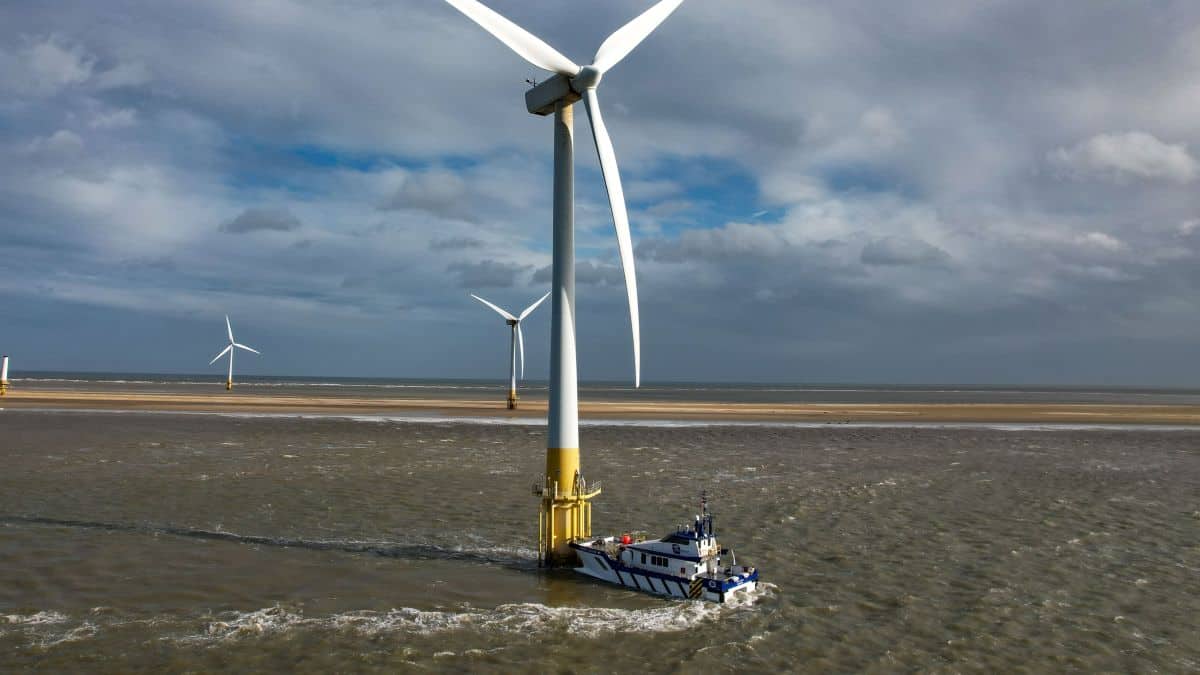
With support from the Zero Emission Vessel and Infrastructure (ZEVI) competition in 2024, our focus turned to the e-Ginny project – retrofitting a diesel-powered Mercurio 20m vessel, Ginny Louise, with more than two megawatt-hours (MWh) of battery capacity, electric motors and propulsion pods. The finished product, e-Ginny, produces zero exhaust emissions in operation, but it also offers increased manoeuvrability and near-silent operation, demonstrated during recently completed sea trials at RWE’s Scroby Sands offshore wind farm. While the results of e-Ginny’s sea trials were extremely encouraging, there are still limitations in terms of existing shoreside and offshore charging capabilities.
We worked with Charge Offshore (by MJR Power & Automation) to develop charging capabilities for fixed offshore wind farms, allowing CTVs and larger service operation vessels (SOVs) to recharge at sea by drawing power from the turbines they support.
That has real benefits. The ability to charge offshore can greatly extend vessels’ operating range and reduce the need to return to port specifically to recharge. However, shoreside charging infrastructure remains woefully inadequate.
In the passenger ferry sector, for example, there is massive potential to move away from fossil fuels. Research by Transport & Environment revealed that 52% of European ferries could be economically viable as battery-electric newbuilds by 2035, but the report identified charging infrastructure as the main barrier to adoption. According to estimates from DNV, a leading authority on maritime safety and ship technology, only around 3% of the world’s ports currently offer onshore power supply (OPS) infrastructure from its sample survey. Meanwhile, the International Association of Ports and Harbours’ 2026 World Ports Tracker found that just 11% of surveyed ports had shore power facilities for ferries.
Currently, we are in a chicken-and-egg scenario. To justify more charging infrastructure, we need more electrically powered vessels in operation, but electrically powered boats need charging infrastructure. So, which comes first?
It’s a dilemma. The ports that do offer charging facilities, where quick turnarounds are fundamental to achieving required schedules and fixed timetables, will soon be under pressure to cater for a larger number of vessels that are powered by electricity. But, if ports, vessel operators and energy companies continue to plan around conventional propulsion, electric vessels will always be playing catch-up. We need to reverse that thinking and start designing infrastructure and operating models around the vessels we want to be using in ten or 20 years, rather than those we’re using today.
I’d like electric propulsion to be the normal choice for offshore crew transport rather than the exception. Our mission at Tidal Transit is to “electrify everything” by helping establish a fleet of electric vessels supported by reliable shoreside and offshore charging infrastructure.
However, we have to be pragmatic. Not every vessel or route can immediately switch to battery power, particularly where charging infrastructure is limited. Battery-led hybrids, for example, allow operators to reduce fossil fuel consumption significantly while retaining backup diesel power for range extension and operational flexibility. They’re an important transitional technology, although our ambition is to eventually move beyond them. Ultimately, success means eventually making electrified transport so practical and commercially attractive that returning to diesel simply doesn’t make sense.