Latest NewsPower & PropulsionAquamarine - The First Venice Taxi Boat Powered by Yanmar

Aquamarine – The First Venice Taxi Boat Powered by Yanmar

YANMAR are making waves in the waterways of Venice, with the first installation of an engine for Matteo Tiepolato and his traditional wooden taxi boat Aquamarina.

The leading manufacturer of marine engines was chosen by Matteo, who has been operating a water taxi service in Venice since 2008, specifically for their reputation in reliability, efficiency and low emissions making them perfectly suited to his business and the narrow canals of the historic city. It also marks the first water taxi in Venice to be fitted with a YANMAR engine.

Another big benefit from the YANMAR engine is the lack of vibrations, important when transporting prestigious paying customers. The 4LV150 provides an enhanced passenger experience with minimal vibrations from the engine, driving a comfortable ride and leaving the occupants to enjoy the beauty of Venice without any distraction from the 4-cyclinder, 2.8L engine, all whilst remaining in compliance with the local requirements.

Equally, when entering the more open waters of the lagoons and exclusive private island resorts surrounding the city, the smooth acceleration and responsiveness of the YANMAR engine allows the boat to immediately enter onto a plane whether there are 1 or 10 people onboard.

With current fuel prices, economy is also key “I have complete faith in the engine which is economical to run and gives me peace of mind” says Matteo, “It suits the water taxi service, but I would recommend to anyone for leisure purposes also.”

Furthermore, the YANMAR engines durability to see the operator through long operating periods means that he hasn’t had a single day unplanned downtime in the 3 years it’s been fitted to his boat.

For further information on YANMAR’s 4LV range of marine engines visit https://www.yanmar.com/marine/engines/4lv-series/

Latest News

Combining GMDSS call statistics with an industry-first maritime safety broadcast analysis, Inmarsat Maritime’s new safety data platform aims to support shipping in addressing its persistent and evolving operational risks. Deep-sea shipping is an inherently hazardous enterprise and the many operational risks faced by vessels, cargo, and crew will likely never be eliminated entirely. Nevertheless, data can play a significant role in minimising the frequency and severity of incidents at sea.

Inmarsat Maritime Safety Data Hub Highlights Global Shipping Risks

Combining GMDSS call statistics with an industry-first maritime safety broadcast analysis, Inmarsat Maritime’s new safety data platform aims to support shipping in addressing its...
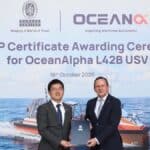
Bureau Veritas Marine & Offshore has awarded an Approval in Principle (AiP) to OceanAlpha for the design of its L42B uncrewed surface vessel (USV), developed for offshore hydrographic and geophysical survey operations.

OceanAlpha Secures BV AiP for L42B Offshore Survey USV

OceanAlpha's L42B combines a modular survey payload with remote operation capabilities to support extended offshore data-gathering missions Bureau Veritas Marine & Offshore (BV) has awarded...

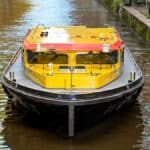
Damen Delivers Two Electric Patrol Vessels to Amsterdam

The latest delivery brings to six the number of Damen Patrol Vessels 1304 Electric supplied to Amsterdam since 2021 https://vimeo.com/1243208175?fl=pl&fe=sh Damen Shipyards Group has delivered two...
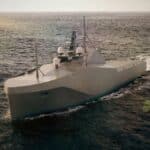
Kongsberg Maritime has unveiled the Arctic Hunter USV, a new class of uncrewed surface vessel designed to accelerate the deployment of hybrid naval fleets combining crewed and uncrewed assets.

Kongsberg Maritime Unveils Arctic Hunter USV

Kongsberg Maritime combines commercial shipbuilding expertise and autonomous vessel technology to support next-generation naval operations in Arctic waters Kongsberg Maritime has unveiled the Arctic Hunter...

Related news