


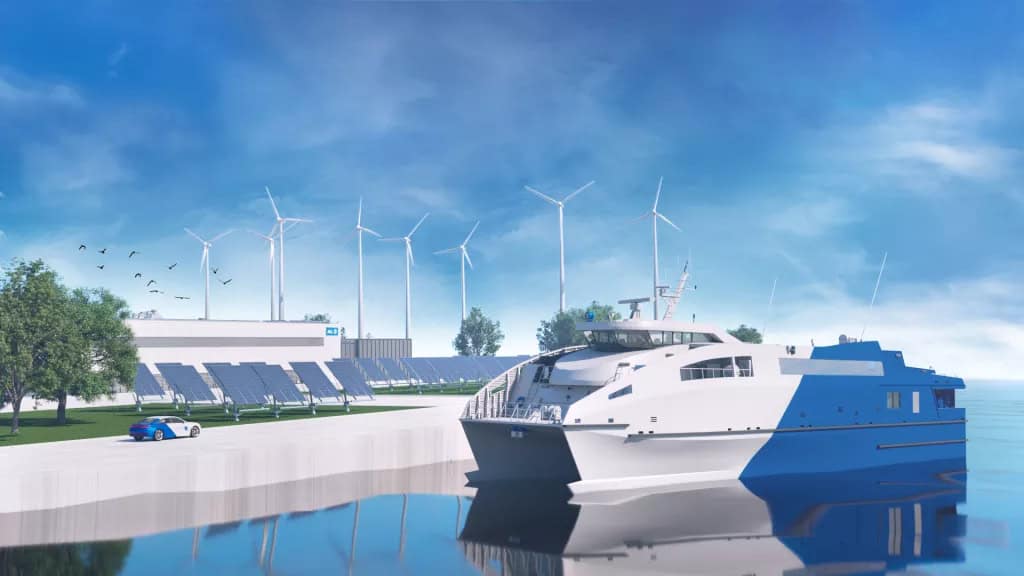
As part of the UK government’s Maritime 2050 strategy, AVL is spearheading the Smart Electrification of Short Straits Ferries (SESSF) feasibility study. This groundbreaking project aims to support the decarbonisation of the maritime sector in alignment with the Clean Maritime Plan by exploring the most viable e-vessel designs for cross-channel ferry routes between the United Kingdom and Europe.
This project is part of the Smart Shipping Acceleration Fund (SSAF), funded by the UK Department for Transport (DfT) and delivered by Innovate UK. SSAF is part of the Department’s UK Shipping Office for Reducing Emissions (UK SHORE) programme, a £206m initiative focused on developing the technology necessary to decarbonise the UK domestic maritime sector. The consortium which is led by AVL and including DFDS, a leading ferry operator on The Short Straits, and the University of Kent have successfully applied.
The collaborative project aims to identify the most viable designs for e-vessels, considering ship, propulsion and battery systems across a wide range of operating scenarios. Alongside this a techno-economic analysis will be undertaken and a dashboard developed by CeLSA, the Centre for Logistics and Sustainability Analysis at the University of Kent, which will help inform DFDS optimal strategic and operation decision-making process with the deployment of new electric ferries.
AVL is leading the overall project management and utilising their expertise in batteries and simulation solutions will be responsible for the simulation work package, looking after various operation scenarios for charge and discharge cycles of the different e-vessels designs. To facilitate this work, AVL will be using the state-of-the-art CRUISE™ M multi-domain simulation tool to create ship models including propulsion and energy systems.
The anticipated results from this project will play a crucial role in DFDS achieving their goal of deploying battery electric ships on The Short Straits from 2030. It will also have a wider impact in decarbonisation of the maritime sector as the key insights such as the reduce in greenhouse gas (GHG) emissions will be shared with the industry and government departments such as the DfT, the Maritime and Coastguard Agency (MCA) and Innovate UK.
Dr Matthias Wellers, Managing Director, AVL Powertrain UK Ltd: “We are excited to be at the forefront of this transformative project. Together with our academic and end-user partners we are committed to driving forward the decarbonisation of the maritime sector and hope that the insights gained from this study will not only support the goals of the UK maritime sector but also set a benchmark for decarbonising one of the most important trade routes in Europe.”
Dr Ramin Raeesi, Reader in Management Science and Director of the Centre for Logistics and Sustainability Analytics (CeLSA) in Kent Business School: “We are building on our extensive track record and previously completed transport decarbonisation projects, particularly those completed at Dover. It will see us lead the development of a digital and data-driven decision support tool that enables a complete cost/benefit and techno-economic analysis of the options and informs the strategic and operational decisions DFDS is currently making with regard to the ordering, deployment and best operational practices of e-vessels. This project is a crucial step forward in bringing the channel crossing decarbonisation closer to reality.”
Gauvain Haulot, Route Director Channel & Baltics, DFDS: “This partnership is an important step towards decarbonising Short Straits Ferries cross-Channel transport. The electrification of our cross-Channel fleet is essential for us to meet our climate targets and with this R&D collaboration, we aim to accelerate the transition to a greener future for the shipping industry.”