





Cummins Inc. announced the selection of its proposal to jointly develop a Methanol Kit for its QSK60 engine as part of the Zero Emission Vessels and Infrastructure (ZEVI) competition, funded by the UK Government and delivered in partnership with Innovate UK. To be chosen as one of the top 10 projects, Cummins delivered a proposal to collaborate with a major UK port and operators to develop, deploy and operate clean maritime technology solutions on the path to decarbonization and reduction to the overall greenhouse gas footprint.
The £4.4M in total funding will be leveraged by Cummins and its fellow project stakeholders — Ocean Infinity, the Aberdeen Harbour Board, and Proman AG — in the deployment of a UK-designed and built methanol conversion kit for a high-horsepower marine internal combustion engine, offering the UK an important foothold in enabling the transition to cleaner maritime fuels.
Upon completion in the second quarter of 2025, the project targets a reduction in CO2 emissions of 50 percent for offshore operations of the vessel with NOx, SOx and PM at levels considerably below those emitted by conventional fuel. Furthermore, all retrofitted dual-fuel engines achieve compliance with IMO Tier III emission standards.
“Cummins is honored to be selected by the UK Government in support of this dual fuel project that aligns well with our bridge technologies strategy,” said Mark Bargent, Cummins Technology Architecture and Planning Director. “We remain committed to helping the maritime sector reach its goal of 50 percent reductions in greenhouse gas emissions by 2050, as required by the IMO. To get there, ship builders need a roadmap for their decarbonization plans.”
“This project, with its focus on the conversion of existing engine installations, offers a seamless transition between today and the future builds of new, cleaner technology ships,” added Molly Puga Cummins Executive Director – Strategy, Product Planning & Digital. “It dismisses the need for a major vessel overhaul and creates an immediate positive impact on carbon emissions reduction in all environmental and operating conditions, ultimately helping the maritime sector meet our global climate needs.”
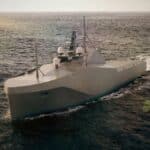
As part of the consortium, Ocean Infinity will provide one of its Armada 78m lean-crewed hybrid offshore service vessels for Cummins to design, develop, and test the dual fuel HVO (hydrotreated vegetable oil) and methanol technology. Earlier in Q3, Cummins had announced the approval of unblended paraffinic fuels — often referred to as renewable diesel including HVO — in all its high horsepower engines for all industrial applications.
The Port of Aberdeen — with a strong ambition to become Scotland’s premier net zero port — offers its world-class facilities and services for testing the vessels, while Proman AG lends its long-standing global expertise in methanol production and leading development of ultra-low carbon methanol production.
Ocean Infinity’s Chief Technology Officer Josh Broussard said: “Ocean Infinity exists to use innovative technology to transform operations at sea for the benefit of people and the planet. This project forms part of our wider future fuels strategy targeting a transition from traditional energy sources to low carbon alternatives to ultimately minimize the environmental impact of our ship operations. Our strategy includes advanced bio-fuels, such as HVO and methanol, to bridge the gap before eventually developing ammonia in the future.”










 competition, funded by the UK Government and delivered in partnership with Innovate UK. To be chosen as one of the top 10 projects, Cummins delivered a proposal to collaborate with a major UK port and operators to develop, deploy and operate clean maritime technology solutions on the path to decarbonization and reduction to the overall greenhouse gas footprint.)