


Conversion at Halsnøy Dokk positions Viking Energy for ammonia powered operations under long-term service with Equinor
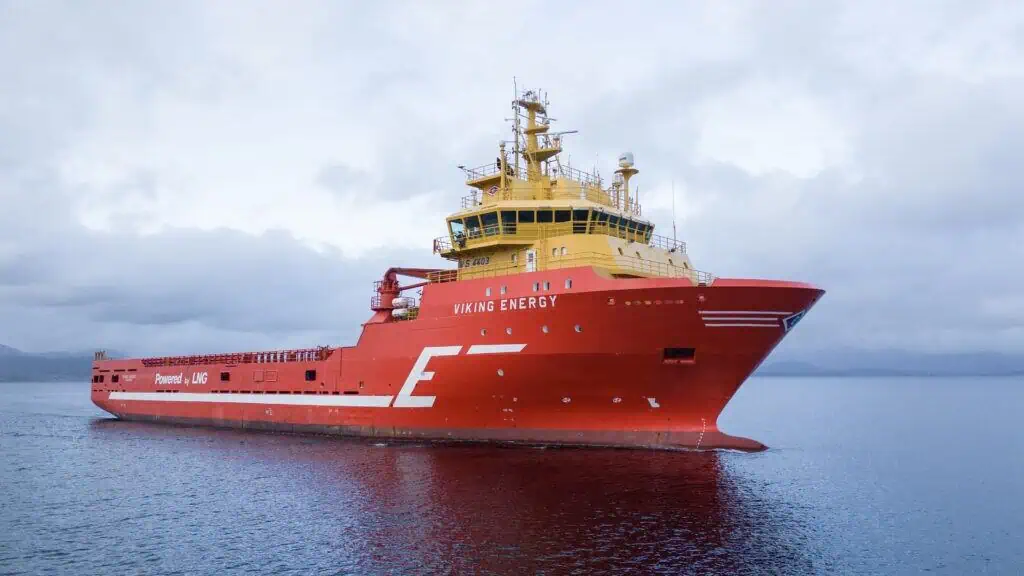
Eidesvik Offshore has signed a contract with Halsnøy Dokk for the conversion of the platform supply vessel (PSV) Viking Energy to ammonia-powered operations, marking a key milestone in the Apollo project. The conversion moves the world’s first ammonia-powered offshore vessel into the execution phase.
From 2026, Viking Energy will be able to operate on ammonia for Equinor, with the potential to reduce greenhouse gas emissions by 70 per cent or more. The vessel has been on continuous contract with Equinor since delivery in 2003.
“This is a defining moment for Apollo. With the yard contract signed, the project takes a decisive step towards demonstrating what is possible when it comes to ammonia as a maritime fuel,” says Emilie Dorgeville, project co-ordinator of Apollo.
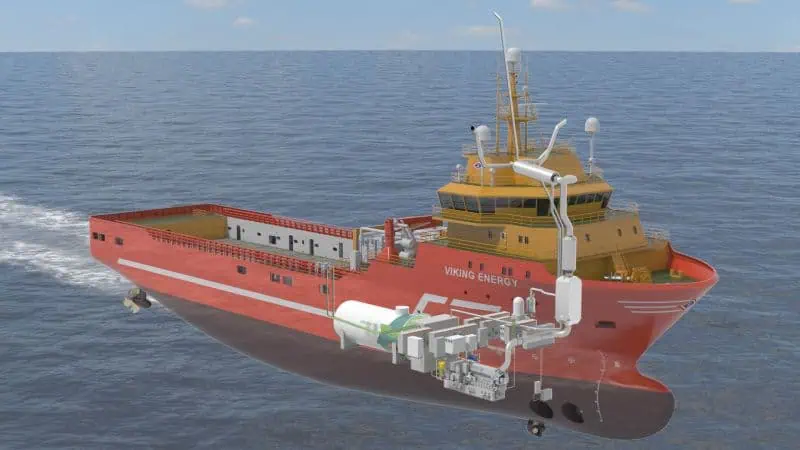
Work begins with prefabrication of steel and piping systems in spring 2026. Conversion is planned to be completed autum 2026. The scope includes major structural modifications, installation and integration of a new ammonia dual-fuel engine, ammonia tank and fuel systems, and technical upgrades required for safe operation. Testing and commissioning are being conducted following the completion of the convertion.
Viking Energy will be equipped with a Wärtsilä 25 dual-fuel engine capable of operating on ammonia and marine gas oil. Wärtsilä will supply the ammonia technology, while Breeze Ship Design is responsible for ship design and engineering. The design package recently received a preliminary assessment from the Norwegian Maritime Authority, reaching another important milestone in the Apollo project.
“Ammonia‑fuel technology is ready, and we’re excited to bring that capability onboard Viking Energy,” says Stefan Nysjö, Vice President of Power Supply, Wärtsilä Marine. “It’s been extremely rewarding to work closely with our partners to apply a fully integrated ammonia solution – combining engine technology, fuel supply, and safety systems – to an existing vessel. This project marks an important milestone in supporting the maritime industry’s journey towards zero‑emission operations.”
Apollo represents a first-of-a-kind retrofit of an existing offshore vessel to ammonia fuel — a pioneering step that turns ambition into action. As a safety-driven and regulatorily anchored demonstration project, Apollo is designed to address technical integration, operational procedures and regulatory frameworks required for ammonia as a maritime fuel. By documenting real-world offshore operations, Apollo lays the groundwork for broader adoption across the maritime sector.
Equinor plays a central role in driving the project forward, with financial backing for the conversion. The retrofit forms part of the EU-supported Apollo project, led by Maritime CleanTech.
“This is exactly how maritime decarbonisation must happen. This is a bold industrial partnership combined with structured learning and regulatory alignment,” says Håvard Tvedte, interim CEO of Maritime CleanTech.
The consortium brings together eight European partners: Equinor, Eidesvik Offshore, Maritime CleanTech, Wärtsilä, Breeze Ship Design, DEME Group, VTT Technical Research Centre of Finland and the National Centre for Scientific Research “Demokritos”. Together, the partners combine operational experience, technology development, and safety expertise to accelerate the adoption of ammonia in maritime operations.