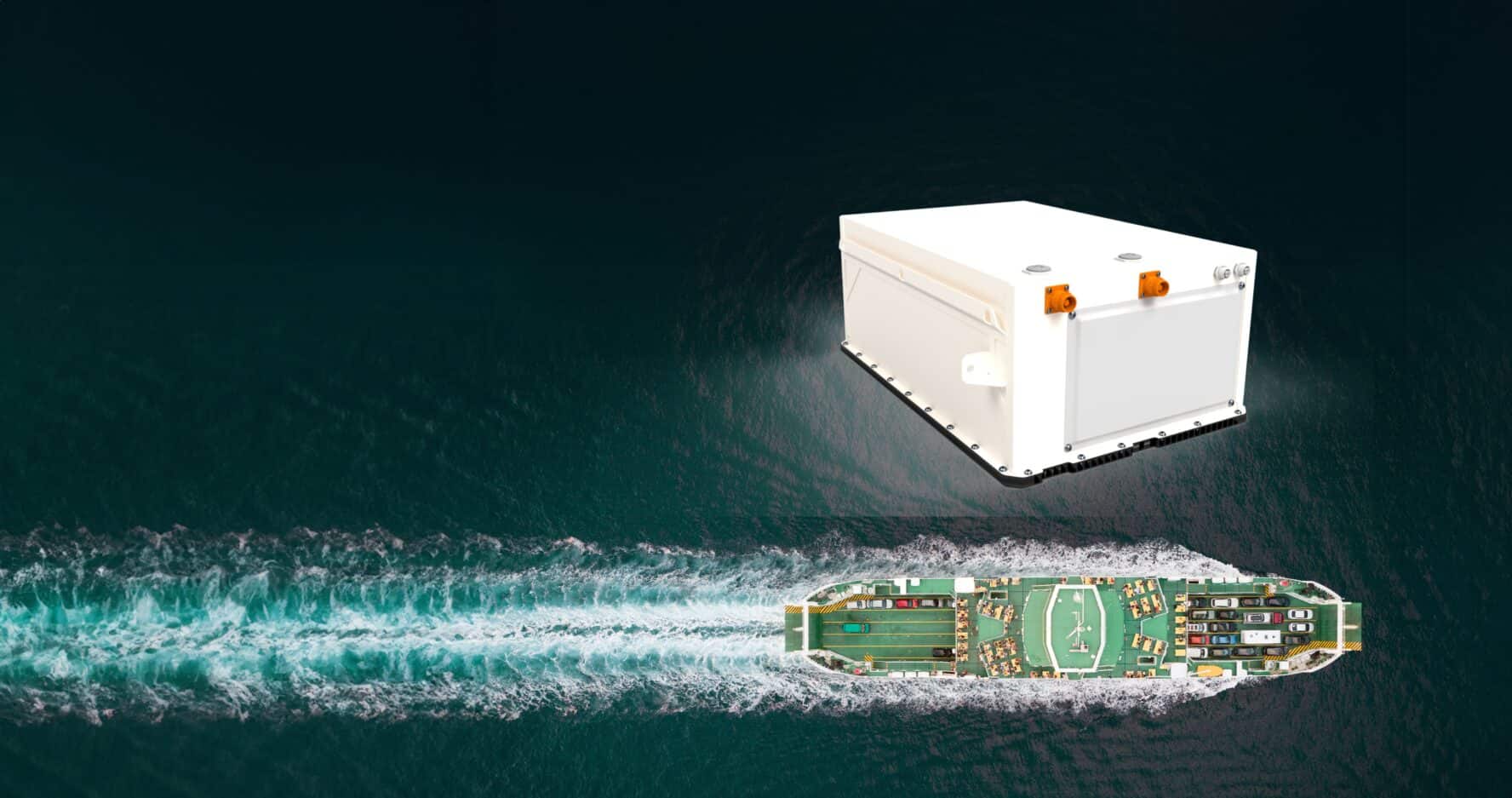
EST-Floattech, a Dutch pioneer in maritime energy storage solutions, has announced a significant expansion of its Octopus Series with the introduction of Lithium Iron Phosphate (LFP) battery modules. This strategic addition broadens the company’s portfolio, offering shipowners and operators a safer, more durable, and cost-effective alternative. The new Octopus LFP ESS is engineered for reliable and robust large scale battery systems, and works together seamlessly with the trusted Octopus Series Battery Management System (BMS).
The newly introduced LFP is based on the significant advancements made in recent years, especially in terms of the energy density and cost per kWh. The Octopus LFP modules are engineered with the latest innovations in lithium iron phosphate chemistry, offering superior thermal stability, longer lifecycle performance, and enhanced safety.
With the expected long cycle lifetimes, the LFP modules are ideally suited for vessels discharging by day and charging overnight. Each module delivers a nominal voltage of 52V, a capacity of 233Ah, and is designed for scalable integration into larger battery systems of multiple MWh’s. The modular rack design is flexible in both height and width and includes integrated ventilation to ensure optimal thermal performance of the battery system. The decision for air cooling is an advantage compared to liquid cooling. There are no risks for leakage, less maintenance is needed and it limits the weight.
The LFP modules are part of the Octopus Series and its agnostic platform. Therefore, the battery system will be fully integrated with the Octopus Series Battery Management System (BMS), a platform developed in-house by EST-Floattech’s engineering team in the Netherlands and based on 15 years of experience. The BMS ensures seamless communication, precise thermal and power management, and real-time diagnostics, enabling optimized performance, operational safety, and compliance with stringent maritime classification and cyber security standards.
“By introducing LFP to our Octopus Series, we empower shipbuilders and operators with even more choice,” says Mark Witjens, CEO of EST-Floattech. “We understand that different vessels have different energy profiles. LFP gives us the ability to serve applications with a high energy capacity demand and long discharge and charge cycles with a robust, safe, and cost-effective solution—without compromising on our commitment to reliability and quality. The development of LFP is the logical step for EST-Floattech to cater the growing demand for different chemistries by shipyards and shipowners.”
The Octopus Series is known for its flexibility, reliability, and has type approvals from four major maritime class approvals. Adding LFP to this portfolio provides shipowners with more opportunities to optimize for application-specific needs, whether it’s extending battery life, improving sustainability of the fleet, or implementing systems with the highest standards in battery safety. EST-Floattech has outlined a roadmap to have the LFP module certified by various class societies in the beginning of next year.
“Our engineers have qualified the new LFP modules to meet the same high standards we apply across the Octopus Series,” said Diederick Stam, Technical Director at EST-Floattech. “This addition enhances our ability to support even more vessel designs and hybrid propulsion systems, enabling cleaner and smarter shipping. During the entire development process we’ve continuously adhered to our safe by design mentality. ”
Celebrating its third jubilee with this product launch, EST-Floattech continues to drive innovation in maritime energy storage. The addition of LFP reflects a broader commitment to offering chemistry-independent, future-proof solutions that address both operational and environmental goals for the maritime sector.