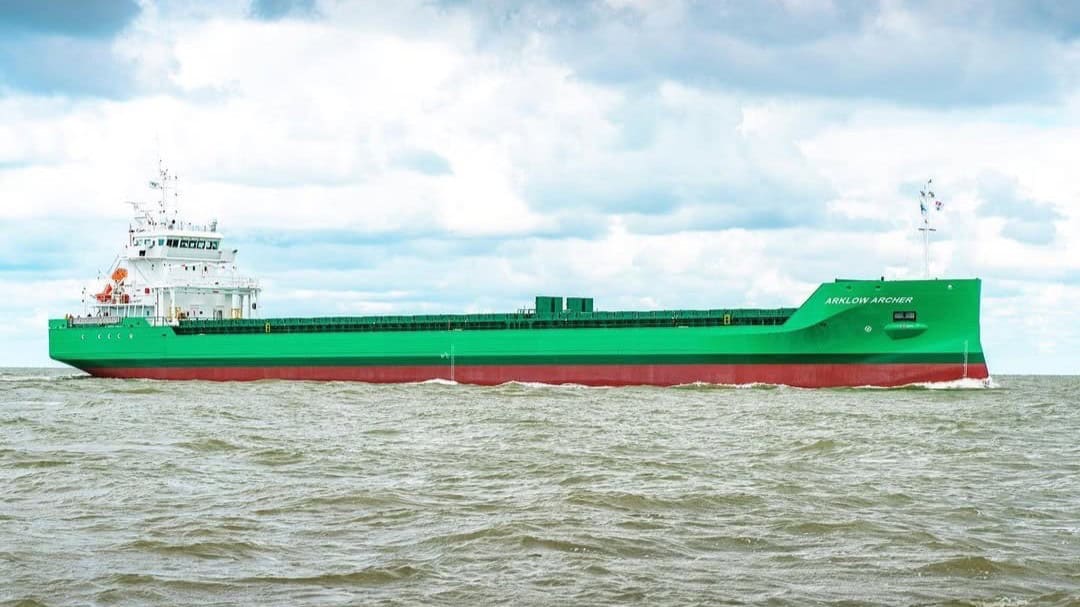
EST-Floattech, a leading developer of advanced energy storage systems for for maritime applications, has been selected to supply its Octopus Lite battery system for a new series of six general cargo vessels. The vessels will be built by Ferus Smit in the Netherlands for Irish ship operator Arklow Shipping. In close cooperation with Ferus Smit and electrical systems provider Eekels Technology, EST-Floattech has tailored the battery solution to match the vessels’ operational profile, delivering both technological and efficiency advantages for Arklow Shipping.
The new series of 11,000 DWT general cargo vessels represents another successful chapter in the ongoing collaboration between Ferus Smit and Arklow Shipping.
The battery systems will support several onboard functions, such as grid stabilization during sailing. Other functions include loading and offloading operations, in particular when the vessel’s electric excavator is deployed. The Octopus Lite BESS will also provide power for the bow thruster and enable zero-emission port stays, improving overall efficiency and reducing CO2 and other emissions across the vessel’s entire operational profile.
Patrick Kuiper, Mechanical Designer at Ferus Smit Shipyard, says: “We selected EST-Floattech as our partner, because of their proven battery performance and excellent service on previous vessel series. Their modular battery system design allows for capacity upgrades over the vessel’s lifetime, providing the shipowner with added flexibility and ensuring the vessels remain future-proof.”
Walter van der Pennen, Chief Commercial Officer at EST-Floattech, comments: “We are grateful for the trust that Ferus Smit, Eekels and Arklow Shipping have put in us. In general, we see a strong interest among cargo vessel owners to operate more efficiently, and with lower emissions. With tightening regulations our battery systems, in combination with modern electric propulsion solutions, help owners reduce fuel consumption and emissions today, while preparing them for the cleaner, more sustainable shipping of tomorrow.”
Delivery of the first vessel is scheduled for 2026, with the final vessel expected to be completed in 2029.