



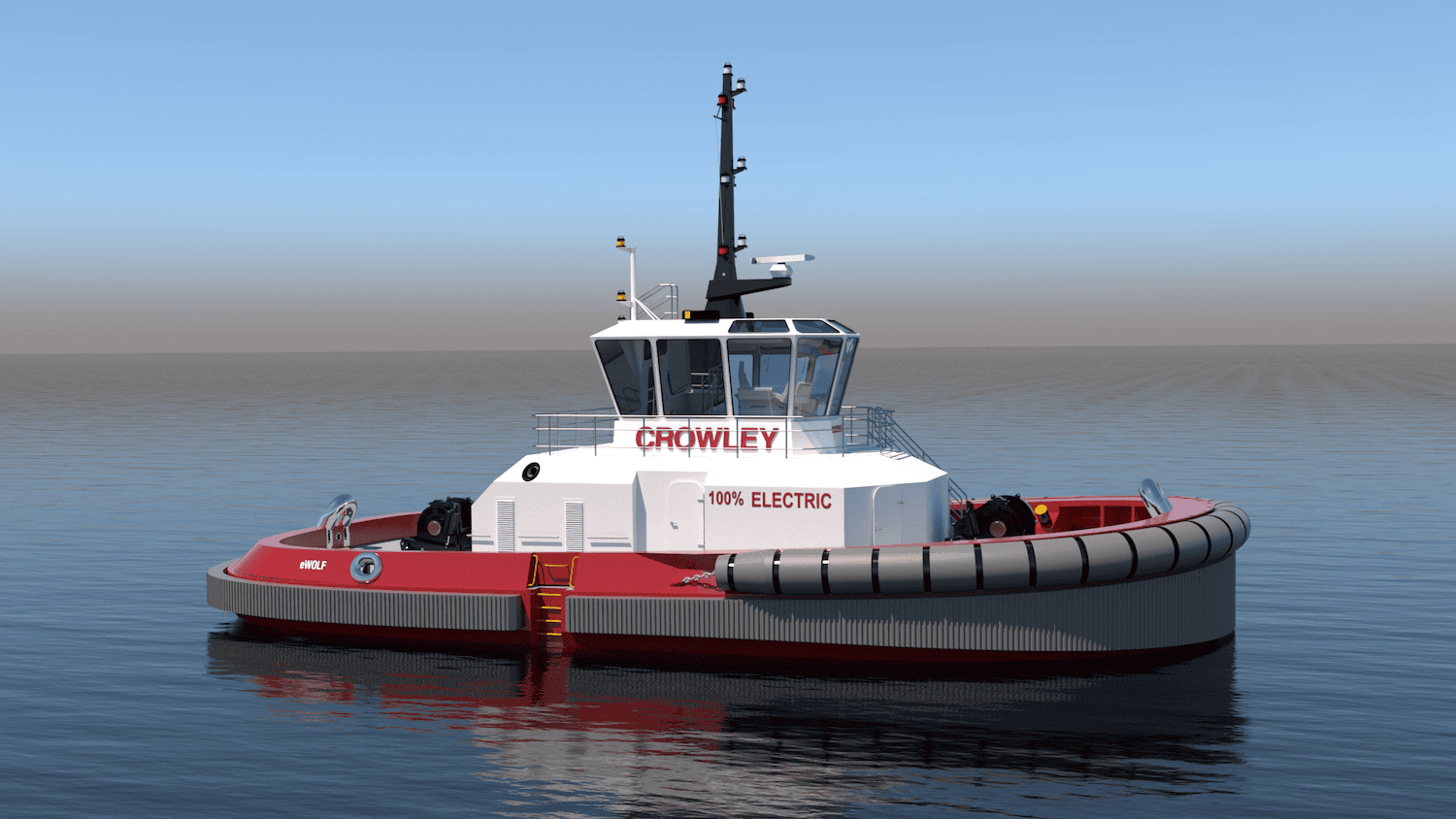
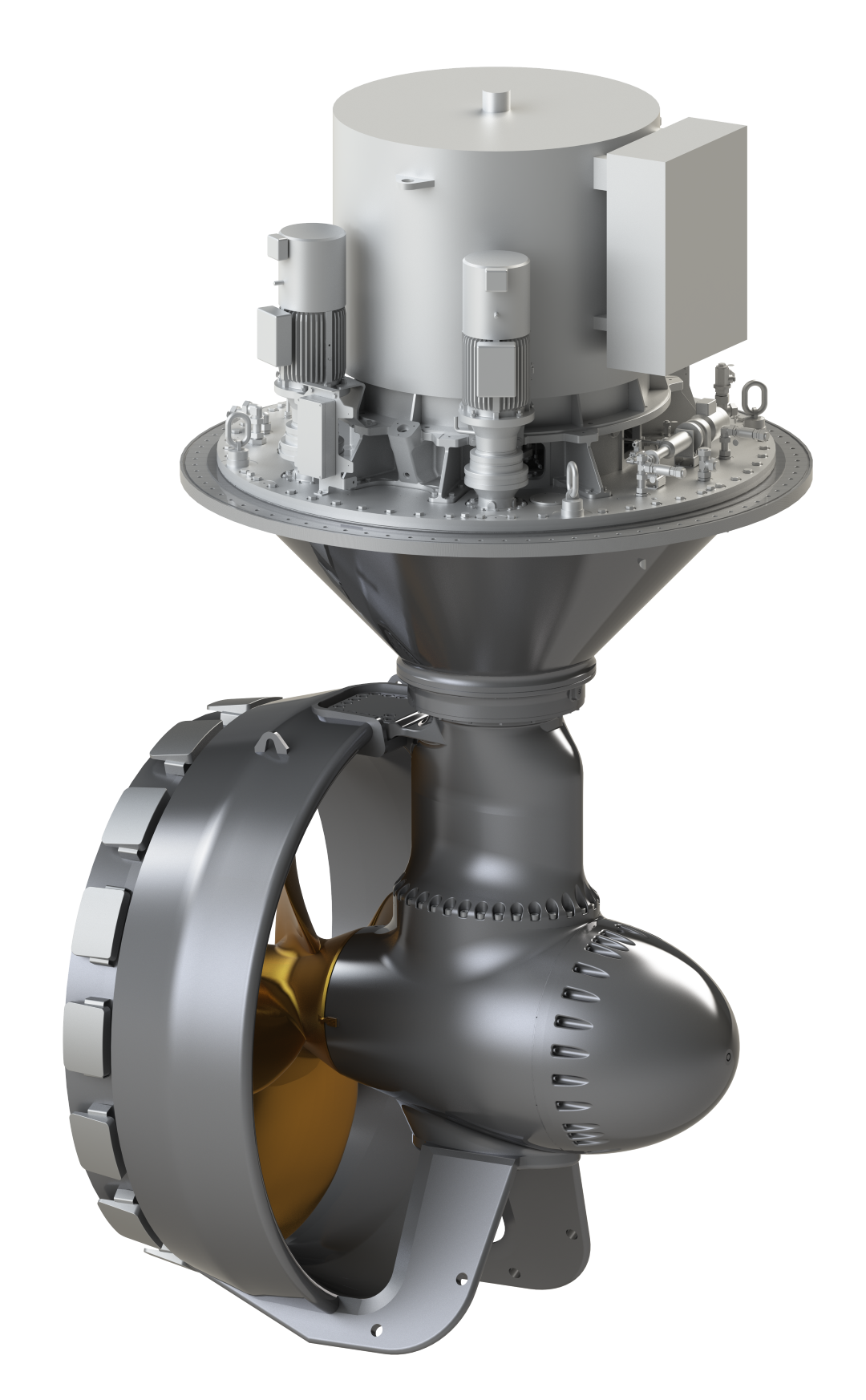
Crowley’s new 25-metre-vessel eWolf, the first all-electric tug to be built and operated in the United States, will be equipped with SCHOTTEL systems. As part of the fully integrated electrical package, SCHOTTEL supplies two RudderPropellers type SRP 430 featuring the LE-Drive (“Embedded L-Drive”). MariHub, the data IoT Gateway and monitoring solution, completes SCHOTTEL’s scope of delivery.
To be constructed at Master Boat Builders shipyard in Coden, Alabama, and designed by US-based Crowley Engineering Services, it is scheduled to enter operations by mid-2023. eWolf will support ship arrivals and departures at the Port of San Diego in California.
Joshua Ellis, Vice President, Ship Assist Services at Crowley: “The eWolf’s zero-emissions design features a propulsion system that will provide a sustainable ship assist solution with enhanced safety and nimble manoeuvring capabilities. Crowley looks forward to working with experienced, innovative partners like SCHOTTEL to deliver this groundbreaking ship-assist tug that will offer customers in San Diego sustainable, high-performance operations.”
Space-saving, efficient, low-noise
The propulsion system of eWolf consists of two electrically driven SCHOTTEL RudderPropellers type SRP 430 LE (2,050 kW each) featuring propeller diameters of 2.5 metres. Thanks to this, the vessel will achieve a bollard pull of around 70 short tonnes.
The SRP 430 LE is characterized by its compact design. Due to the extremely low installation height of the LE-Drive and the omission of the upper gearbox, the mechanical efficiency is increased by around three percent, and, at the same time, fuel consumption is reduced.
Towing operations without emissions
The eWolf will have a 6-Mwh energy storage system with sufficient capacity enabling the vessel to deliver one full day of normal work without using a drop of fuel. Batteries can supply power to the propulsion system almost instantly, ensuring effective ship support and harbour escort services without emissions.
The tug’s systems are designed for fast-changing load requirements. The vessel has two generators on board for emergency use and to enable longer transit distances at a reduced speed.
Data collection, processing and evaluation
Beyond this, eWolf will feature MariHub, the IoT gateway and monitoring solution from SCHOTTEL. It records and analyses signals from sensors, machinery and other components which can then be evaluated by certified SCHOTTEL experts.
Together with the condition monitoring service ProCMS, MariHub allows for early detection of irregularities in the propulsion system. This predictive maintenance approach significantly increases the availability of the fully electric vessel: ProCMS is able to support the operator’s achievements in reducing maintenance costs and improve maintenance planning













. MariHub, the data IoT Gateway and monitoring solution, completes SCHOTTEL's scope of delivery.© Crowley Engineering Services To be constructed at Master Boat Builders shipyard in Coden, Alabama, and designed by US-based Crowley Engineering Services, it is scheduled to enter operations by mid-2023. eWolf will support ship arrivals and departures at the Port of San Diego in California.)