


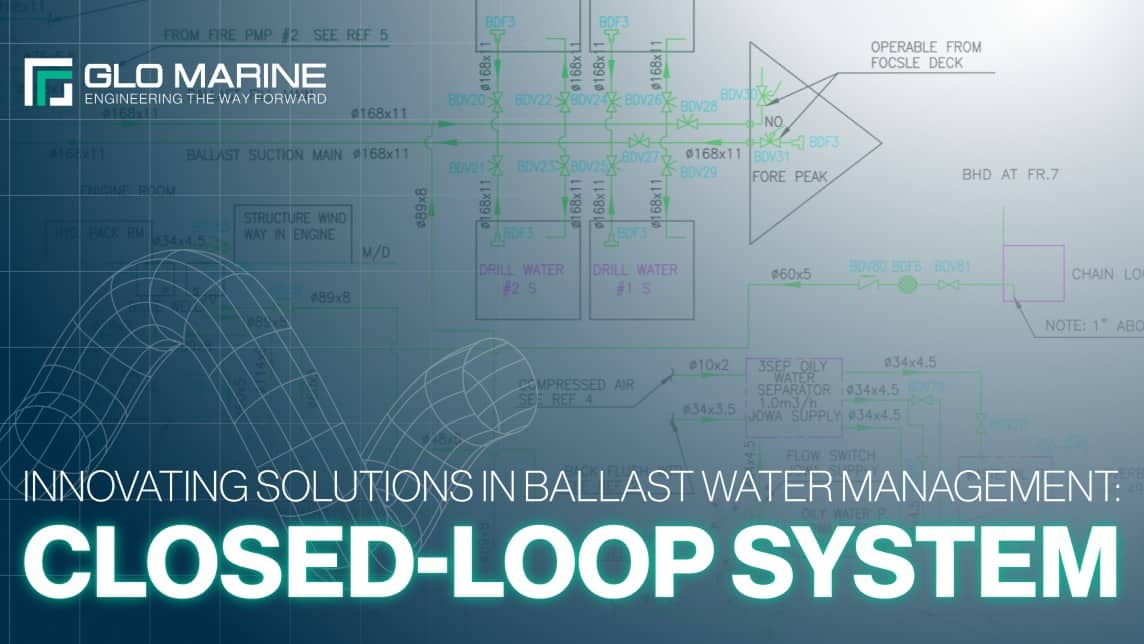
In the ever-evolving maritime industry, finding cost-effective, compliant, and tailored engineering solutions is a constant challenge. GLO MARINE recently delivered a series of closed-loop ballast system retrofits—an innovative approach rarely implemented but very relevant for certain vessel types. These projects stand out because they reimagine regulatory compliance while minimizing operational disruption.
Engineering beyond the standard: Why Closed-Loop Ballast Systems matter
Closed-loop ballast systems are a specialized solution designed for vessels that use their ballast systems infrequently, such as Offshore Support Vessels (OSVs) and Anchor Handling Tug Supply (AHTS), PSV vessels (Platform Supply Vessel). Standard Ballast Water Treatment Systems (BWTS) often involve extensive installations, making them costly and impractical for such vessels.
GLO MARINE’s solution was innovative: instead of installing a full Ballast Water Treatment Systems, the team developed a closed-loop ballast operation by modifying only essential components. This enabled vessels to comply with international ballast water regulations without undergoing major retrofits or interruptions in service.
Problem-solving in action: How GLO MARINE made it happen
The heart of GLO MARINE’s success lies in its problem-solving expertise—a skill essential for vessel retrofits and onboard functional modifications. Working within the operational limits of vessels already in service requires technical ingenuity, adaptability, and a clear understanding of ship systems.
Every vessel presented unique challenges. To tackle them, GLO MARINE assembled a multidisciplinary team of naval architects, marine engineers, electrical specialists, and regulatory compliance experts. Together, they translated complex technical needs into workable, approved solutions:
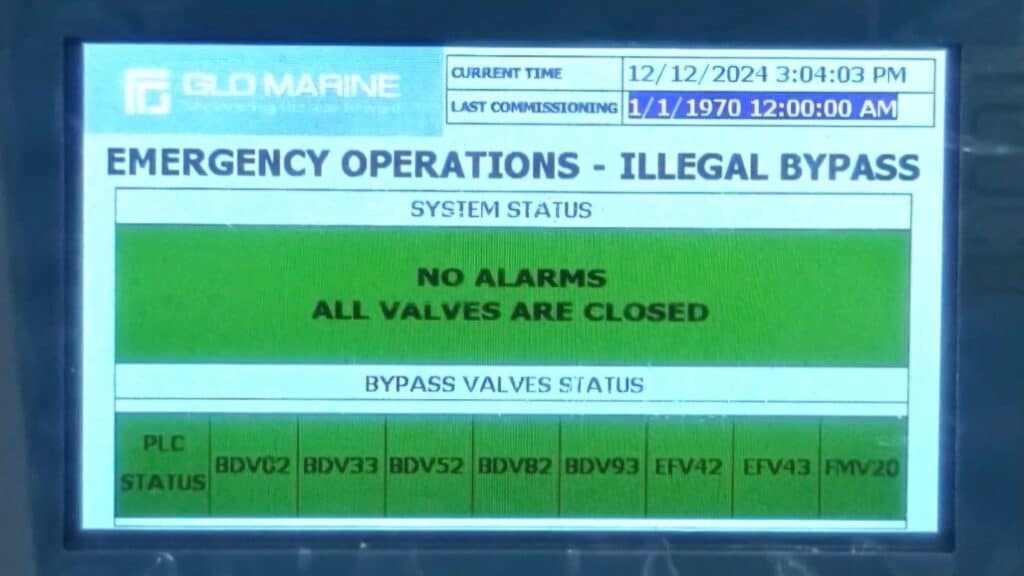
- Valve position indicators (VPI): Sensors were installed to electronically monitor valve positions, ensuring seawater couldn’t be taken into the ballast tanks. This required custom electrical integrations and precise system engineering.
- Sealed valves: In simpler cases, valves were physically sealed. While technically straightforward, obtaining classification society approvals (from ABS and BV) demanded relentless troubleshooting, detailed documentation, and persistent communication.
The team’s ability to anticipate potential regulatory concerns and proactively design a Drill Water Management Plan earned approval from key authorities, despite the unconventional nature of the solution.
Why it matters: Client benefits & industry potential
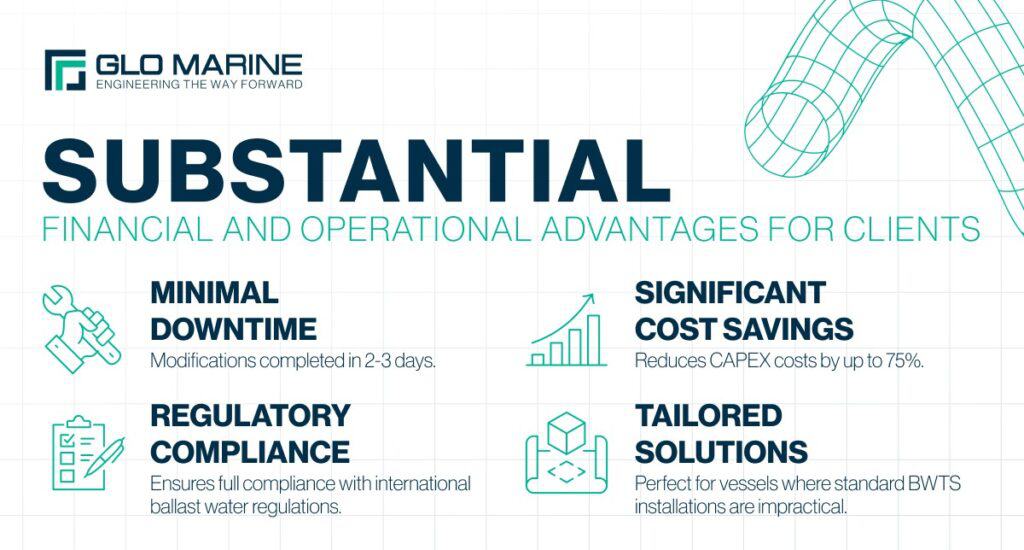
The financial and operational advantages for clients were substantial:
- Minimal downtime: Modifications completed in 2-3 days.
- Significant cost savings: Reduces CAPEX costs by up to 75%.
- Regulatory compliance: Ensures full compliance with international ballast water regulations.
- Tailored solutions: Perfect for vessels where standard BWTS installations are impractical.
Looking ahead: Who can benefit?
While this solution isn’t for every vessel, it offers a compelling alternative for OSVs, AHTS vessels, PSV vessels and other ships with limited ballast water use. GLO MARINE is ready to replicate the success of these pilot projects and extend the same expertise to new vessels and clients in similar operational contexts.
Whether it’s a vessel retrofit or a complex onboard system modification, we thrive on turning challenges into practical, tailored solutions that work. Every project is an opportunity to push boundaries, rethink the standard, and engineer solutions that deliver real-world value.