


New certification for MacGregor’s Horizon gangway opens floating-to-floating access for FPSOs, floating rigs, offshore wind arrays and service fleets
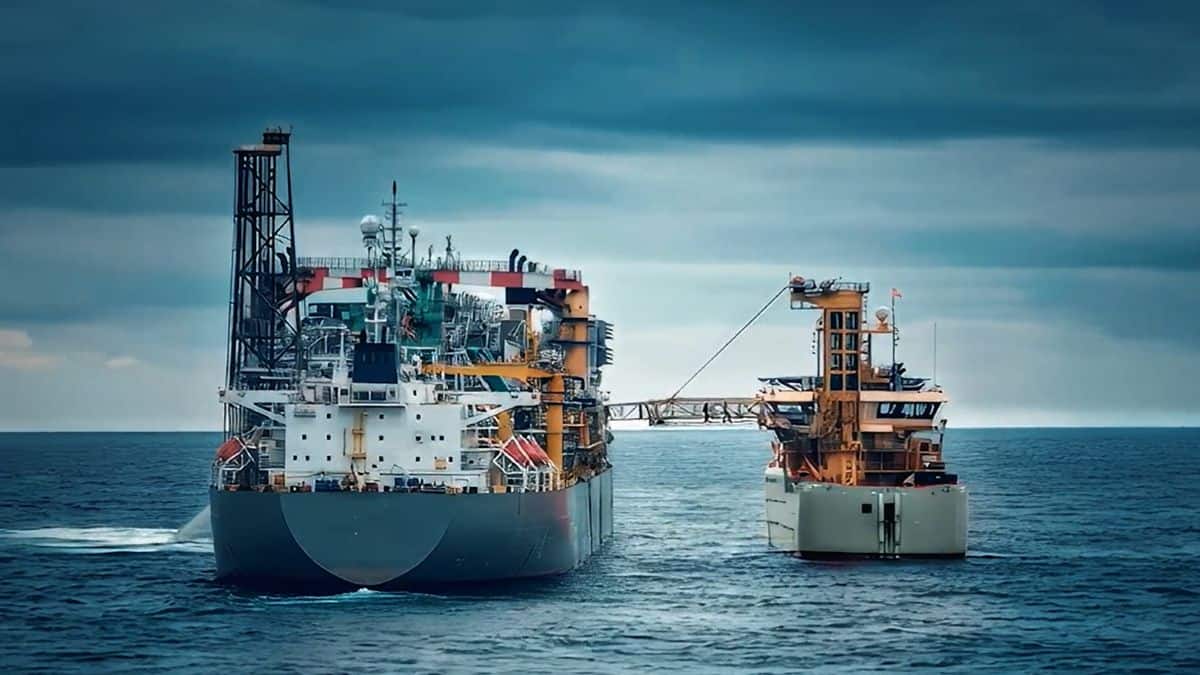
MacGregor has secured DNV certification for its Horizon gangway for floating-to-floating (F2F) personnel transfer, enabling motion-compensated walkway connections between two independently moving vessels.
The certification, achieved in accordance with DNV-ST-0358 following a successful sea acceptance test, extends the Horizon platform beyond conventional transfers to fixed offshore structures and enables personnel movements where no permanent landing point is available.
For operators of FPSOs, floating rigs, floating wind arrays and offshore service fleets, the capability offers greater flexibility in planning offshore operations. Crew changes can be conducted at sea, service campaigns can be scheduled without being tied to port calls, and walk-to-work access between vessels can be aligned with offshore field activities rather than port availability.
At the heart of the solution is a purpose-designed flap at the gangway tip, which replaces the conventional docking head used for landings on fixed structures. LiDAR-based relative motion tracking feeds the gangway’s motion compensation system in real time, maintaining a controlled connection as both vessels move.
“This new capability opens up flexible crewing models for FPSOs and floating facilities, so that crew changes can be carried out at sea, service campaigns don’t need to be routed around port calls, and walk-to-work access between vessels can be based on the field’s schedule,” said Prateek Sadhana, MacGregor Product Owner, Walk-to-Work Gangways. “In the renewables sector, this supports the service logistics that floating wind operations demand – where there is no fixed structure to land on whatsoever.”
F2F is delivered as an extended function of the existing Horizon gangway family rather than a standalone product and can be retrofitted/ upgraded to existing units in operation. Operators already running Horizon gangways gain the new capability on a platform they know, with the same control philosophy and no separate qualification process.
“Certification matters commercially as well as technically,” Sadhana added. “It gives owners, charterers and insurers an independently verified basis for planning vessel-to-vessel operations, and it gives crews the confidence that the equipment they cross has been designed, tested and certified for exactly this use.”