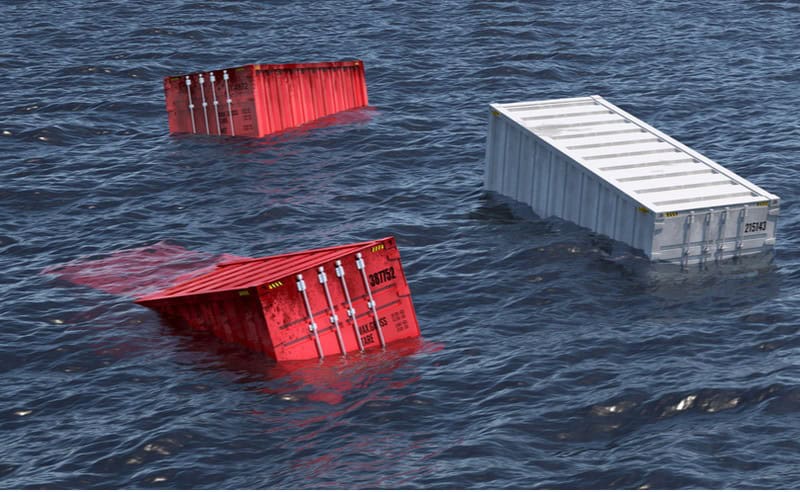
Multiple ships have lost about 2000 containers in heavy weather conditions over the last months. Losing containers at sea has a major impact on the ocean environment and is a huge cost expense for shipping companies. Heavy rolling and pitching of the ship is one of the causes that the containers lose their stability and start falling overboard. JRC’s navigational radar JMR-7200/9200 has the Wave Analysis function that is easily available by a software upgrade.
The JRC Radar Wave Analysis function is developed to measure wave height, direction and length. Even at rough sea, clear presented information about the wave provides navigational officers a proper decision support to steer the ship on the best course and speed to reduce rolling and pitching.
The analysis technique is developed in the radar signal processor, TM Blizzard, that realizes accurate wave measurement and ships detection simultaneously in optimizing scan correlation and pulse length adjustment. In fact, the radar can analyze the wave in a zone of 4 square kilometers ahead in the range of 1.5NM – 2NM, while the radar’s ships detection is kept with 12NM, like two eyes.
In combination with a JRC Dynamic Sensor JLR-21 which can measure the motion of the vessel around 3 axis, a clear Conning page can be created with all motion and wave information to support the crew to make course and speed decisions in difficult sailing circumstances.
Features:
- The wave analysis function is integrated in the JRC JMR-7200 and 9200 IMO radar as a software license function, no additional hardware is needed;
- Due to the unique signal processing of JRC radars, ASIC tm Blizzard, the wave measurement function can be in use while important navigation radar functions are being continued up to a 12NM range for the prevention of collision with other ships;
- A window within the IMO radar screen gives a clear indication of the wave height, length, period and direction in values, but also in a spectrum chart for easy and fast interpretation;
- When the unique J-Marine box is connected, the wave data can be recorded and shared with the shore office, ship design institutes and weather data companies for research and improvement of calculation models.
By analyzing and measuring the waves and present clear decision-making information to the crew, we can prevent containers from falling over or rolling dangerously.
Are you interested in receiving more information about the Wave Analysis Function and the upgrade possibilities? Please contact our sales team at sales@jrc-europe.com We are always happy to assist you!