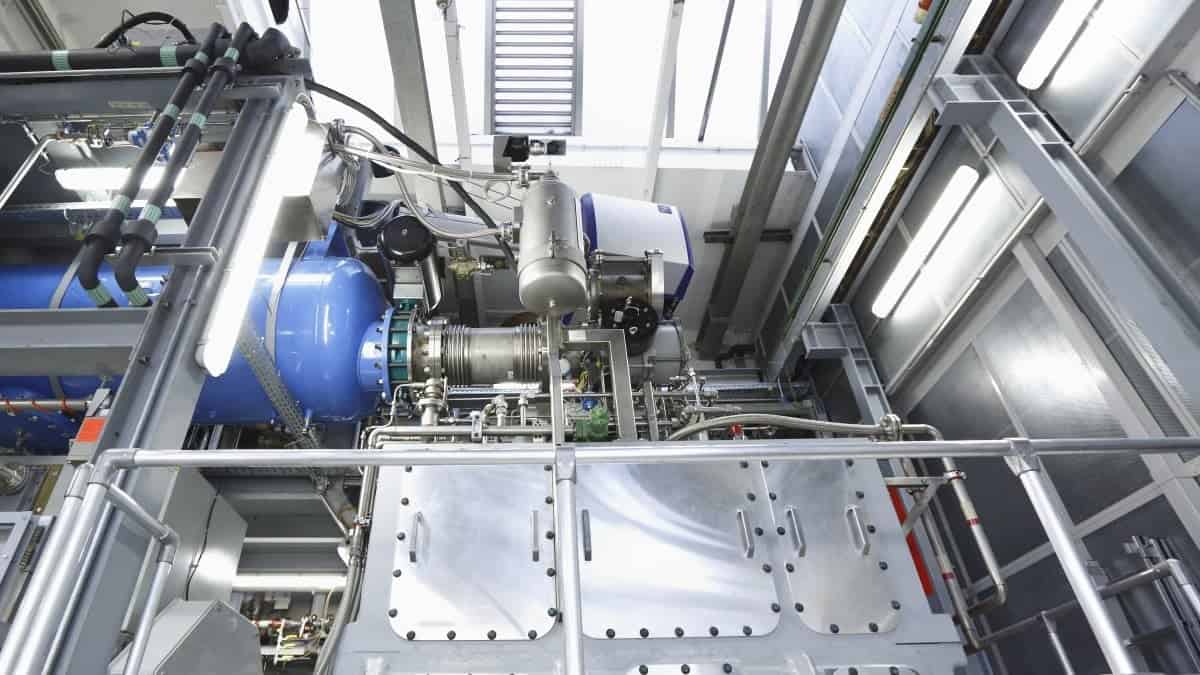
MAN Energy Solutions has announced a partnership with industry leaders and research institutes that will develop engine concepts for hydrogen-fuelled, medium-speed engines in the maritime sector. Dubbed ‘HydroPoLEn’, the project is supported and funded by the German Federal Ministry for Economic Affairs and Climate Action. It aims to transform propulsion systems within shipping and develop key technologies such as injection, ignition and advanced tribological systems, while part of its remit is also to develop a concept for the integration of power unit and fuel storage as a single system.
Besides challenges related to the combustion process, the project will also address engine efficiency, safety issues and the main steps concerning the integration of the technology in ships. Such integration is intended to enhance the efficiency, performance, and durability of a hydrogen-fuelled engine, paving the way for sustainable propulsion in the maritime sector.
Alexander Knafl, Head of Four-Stroke R&D, MAN Energy Solutions, said: “Hydrogen plays a key role in MAN Energy Solutions’ strategy and is the base for carbon-free fuels such as hydrogen itself and ammonia, as well as synthetic carbon-neutral fuels like methane and methanol. Along with this, our product portfolio comprises electrolysers – through our subsidiary, H-TEC SYSTEMS – for the production of hydrogen based on green energy. We already have several products and key technologies for Carbon Capture Storage, for example for blue-hydrogen production and for the production of methanol, synthetic methane and ammonia. Furthermore, in our engine portfolio, hydrogen plays a major role. After the release of our 25% hydrogen engines in 2021, a pure-hydrogen engine is the next logical step for us.”
Christian Kunkel, Head of Combustion Development, Four-Stroke R&D, MAN Energy Solutions, said: “Hydrogen and ammonia are by far the two most promising carbon-free fuels with the advantage that their combustion produces absolutely no CO2-emissions. Hydrogen can be produced off a base of green energy and electrolysis – green hydrogen – or based off natural gas and Carbon Capture Storage, known as blue hydrogen; both production methods are climate-neutral. In the long run, we are convinced that green hydrogen will be the cheapest way to produce hydrogen. In the meantime, when the infrastructure and production capacity for green hydrogen are established, we will need a mix of green and blue hydrogen to decarbonise industry. As such, I am very happy to see the HydroPoLEn project started; the results I have seen so far and the collaboration with the partners look very promising.”
Project members and aims
HydroPoLEn brings together the collective expertise and resources of industry leaders from the cruise sector (Carnival Maritime GmbH) and marine propulsion (MAN Energy Solutions SE), along with renowned research institutes specialising in pioneering green energy solutions (WTZ Roßlau gGmbH, NMA TUM) and a key-component supplier (Tenneco Inc.). The partnership intends to foster innovation, knowledge exchange, and multidisciplinary research ensuring the development of a robust concept fulfilling the key buying criteria.
The hydrogen-fuelled, medium-speed engine concept developed through this collaboration will significantly reduce greenhouse gas emissions and contribute to the maritime sector’s defossilisation efforts. By promoting a sustainable future for shipping, the project aligns with global goals for carbon reduction and clean-energy adoption.