


Norwegian-founded innovation Maritime CleanTech hub reflects on 15 years of industry collaboration to drive decarbonisation
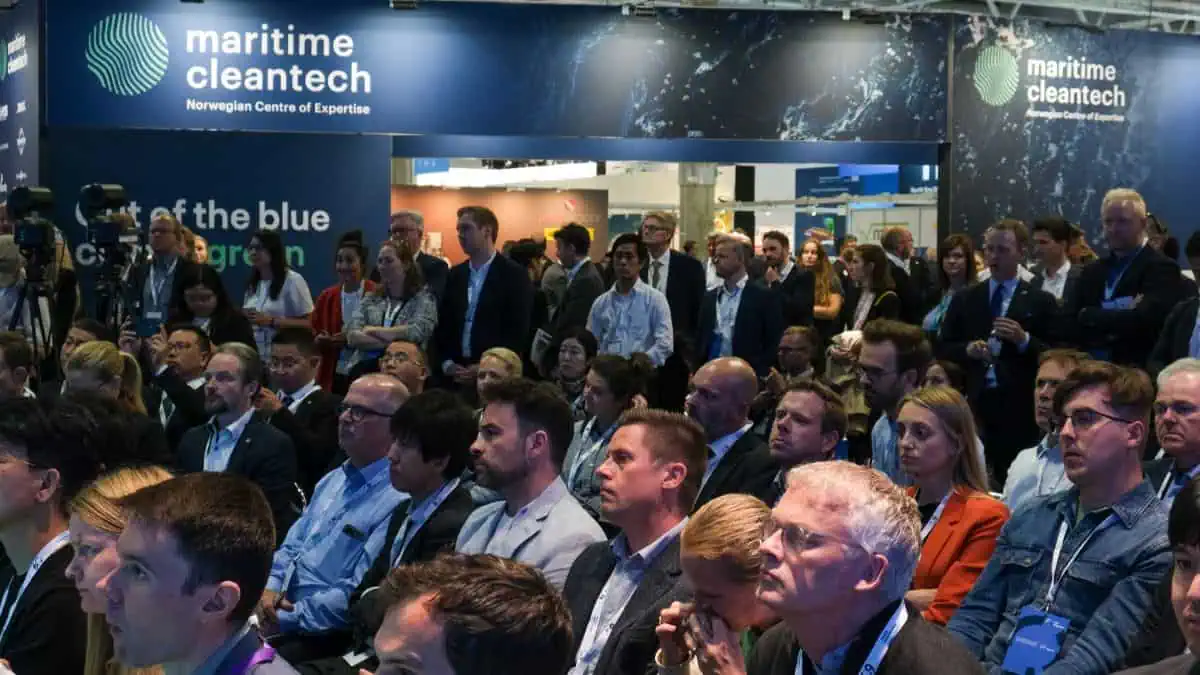
The transition to net zero in the maritime sector is no longer a question of if, but how quickly it can be achieved, with increasing focus on execution, coordination and large-scale deployment across the value chain. Maritime CleanTech, an international innovation cluster, is marking 15 years of facilitating collaboration to accelerate the industry’s green transition.
Founded within a network of companies along the Norwegian coast in 2011, Maritime CleanTech has grown from eight companies into a leading international innovation hub. Coordinated efforts across industry, research and authorities have accelerated the maritime transition in ways that would not have been possible by each player separately alone.
“Maritime CleanTech has played a central role in developing groundbreaking green solutions for shipping,” says Norway’s Minister of Climate and Environment, Andreas Bjelland Eriksen. “We are in a landscape that is tougher, more challenging than before, but the road that we need to walk together stands as clear as ever. We have to reduce emissions and drive change every year, and that is exactly what Maritime Clean Tech helps us do in practice.”
Together, our partners have delivered a series of world firsts. Vessels running on batteries, liquid and compressed hydrogen, ammonia and more. What started as high-risk pilots has become a set of proven solutions, and the work continues.
“Maritime CleanTech has built one of the most complete maritime innovation hubs in the world and demonstrates what happens when industry, innovators, and authorities pull in the same direction,” says CEO of Höegh Autoliners, Andreas Enger.
One early example is the supply vessel MS Viking Lady from Eidesvik, often referred to as “the world’s most important ship”. It played an important role in testing hybrid technology, including LNG, fuel cells, and batteries, and pointed forward towards the global scaling of electrification now seen across short sea and offshore operations.
In just over a decade, the number of vessels with battery propulsion and hybrid systems has grown from one to over 1000. Technologies developed by the partners in Maritime CleanTech are widely deployed, and the ripple effects are significant.
By working together across value chains, companies solve technical, operational and practical challenges and find ways around barriers. Partners are connected, and ideas are turned into concrete solutions. Funding is secured, including from the EU.
“Our strength lies in our partners. Together, we take ideas forward, develop them and continuously improve along the way when needed,” says interim CEO of Maritime CleanTech, Håvard Tvedte.
The projects are not one-offs. They are designed to scale. From pilot to fleet. From Norway to international markets.
A defining example is the EU-supported TrAM project. In 2022, it resulted in MS Medstraum, the world’s first high-speed craft powered only by batteries.
Today, the impact is global – and scaling fast. From pilot projects like Medstraum to large-scale vessels and systems, the development demonstrates how collaboration in early phases enables solutions to grow in both size and complexity.
A 130-metre ferry for Buquebus now carries the world’s largest battery system to date, demonstrating that electrification is possible also for large commercial ships. The vessel will transport 2,100 passengers and 225 cars between Argentina and Uruguay.
Maritime CleanTech partners have contributed with batteries, propulsion systems, motors, control systems and infrastructure that enable this shift.
“This is a turning point – a ‘game changer’,” says CEO Fredrik Witte in Corvus Energy.
Companies are scaling rapidly. Costs are going down. Energy density is increasing. Shore power and charging infrastructure are expanding. Solutions proven along the Norwegian coast are entering global markets.
The work goes beyond battery electric systems. Across the Maritime CleanTech ecosystem, partners develop and integrate a wide range of solutions, including hydrogen, ammonia, electrification, onboard carbon capture, digital systems and energy infrastructure.
Shipowners invest, technology companies deliver and yards integrate. Energy providers build the infrastructure. Collaboration with leading research partners in the early phases provides the foundation. Step by step, innovation becomes everyday industry.
For 15 years, Maritime CleanTech has connected these forces, reduced risk in early phases, and helped move solutions from concept to market.
“The strong results from our innovation collaborations belong to our partners. Together, they show that the transition is happening. In a more challenging geopolitical landscape, collaboration is more important than ever. We need trusted arenas to solve challenges and move forward. That is what our partners have built over 15 years,” says Håvard Tvedte in Maritime CleanTech.