


MoU sets scope for feasibility work on electric tug operations and port-side energy systems
The Port of Melbourne and global towage operator Svitzer have signed a Memorandum of Understanding (MoU) to explore the introduction of next-generation electric tugs and associated clean-energy infrastructure at Australia’s largest container port.
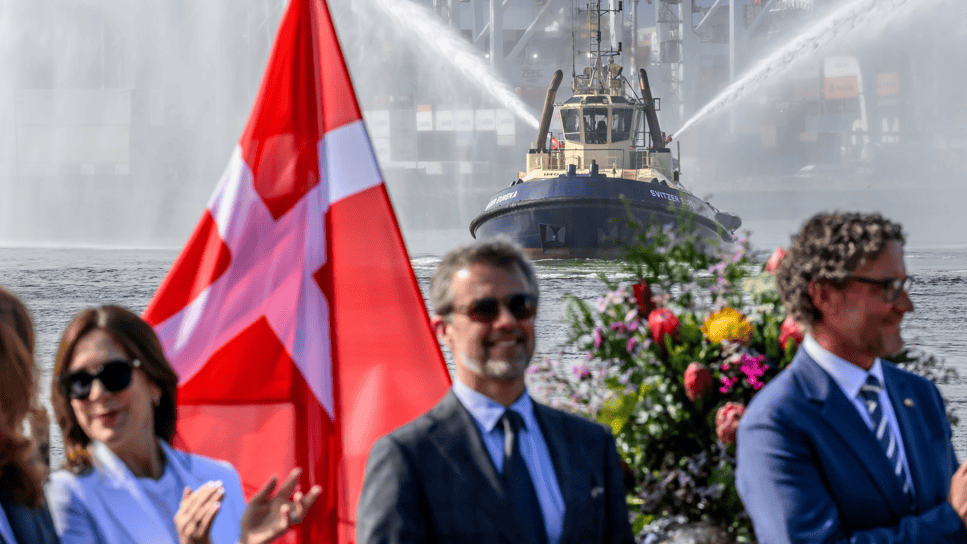
The MoU was formalised at the Port of Melbourne Education Centre, in the presence of Their Majesties The King and Queen of Denmark, during the Danish State Visit to Australia.
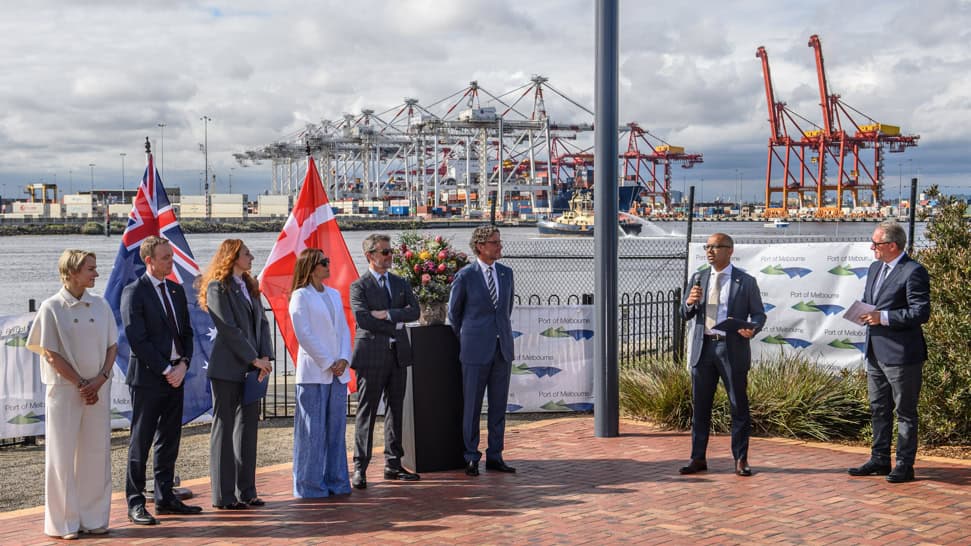
The partnership, also comprising Copenhagen Infrastructure Partners (CIP) and Plexar Energy, establishes a framework to assess the feasibility of deploying two fully electric TRAnsverse 2600e tugs in Melbourne. Designed by Robert Allan with Svitzer, the tug’s patented staple with double-ended hull and in-line propulsion with omni-directional thrust expands the dynamic operating envelope in towage of up to 50%.
The initiative also includes evaluation of a dedicated renewable energy microgrid and high-capacity charging infrastructure to enable zero-emission towage operations.
Port of Melbourne CEO, Saul Cannon, said the collaboration reflects a shared ambition to improve port efficiency while accelerating the sector’s transition to lower‑emissions operations.“Efficient, reliable towage services are critical to the smooth functioning of the port, and electrification offers the potential to improve both operational performance and environmental outcomes.
Through this MoU, we are exploring what it would take to bring the next generation of electric towage to Melbourne in a way that benefits port users, reduces emissions, and supports a more sustainable future,” Mr Cannon said.
The shift to electric towage has the potential to deliver a range of benefits for port users, including improved vessel handling performance, reduced noise and vibration, and greater predictability in operating costs. A dedicated renewable microgrid may also provide a resilient and efficient energy supply tailored to the specific operational requirements of tug services.
Svitzer Australia Managing Director, Videlina Georgieva, said the partnership with Port of Melbourne and CIP represents an important step in bringing the next generation of sustainable towage to Australia.“Towage is critical to the performance of any port, and our biggest challenge for decarbonisation is reducing emissions without compromising safety, capability or reliability.
At Svitzer, we are investing in the technologies that will help solve this challenge, and it is exciting to see Melbourne leading the way, through this collaboration, to make sustainable towage a working reality in Australia,” Ms Georgieva said.
Plexar CEO and Partner at CIP, Karsten Plauborg, said the partnership with Port of Melbourne and Svitzer highlights how microgrids and AI based optimisation tools can support electrification.“We are grateful to our visionary partners and look forward to demonstrating how Plexar’s solutions, electrical engineering expertise and the direct use of onsite electricity generation can both optimise costs and increase power availability”.
The MoU was signed during the State Visit’s energy programme, themed “Partnering for a green, secure and sustainable tomorrow” – an opportune platform to highlight the Port’s collaboration with Danish firms Svitzer, CIP, and Plexar Energy. Further, the occasion underscores Port of Melbourne’s broader commitment to advancing decarbonisation and enhancing efficiency across the port supply chain.
“Transitioning port operations to cleaner, more efficient technologies is a shared challenge. Collaborations like this help us build the partnerships and capability needed to deliver meaningful progress for the sector and for Victoria,” added Mr Cannon.