
NuProShip II Exploring the integration of small 4th generation nuclear reactors into specialised offshore vessels.
VARD, part of the Fincantieri Group, has unveiled the results of its pioneering research and innovation initiative, NuProShip II. The project represents a major step forward in sustainable marine technology, focusing on the potential integration of small, 4th generation nuclear reactors into specialised offshore vessels.
NuProShip II—short for Nuclear Propulsion in Merchant Shipping—demonstrates the technical feasibility of nuclear-powered dynamic positioning (DP) vessels. The initiative explores how advanced nuclear propulsion could enhance operational efficiency, reliability, and environmental performance across the maritime sector.
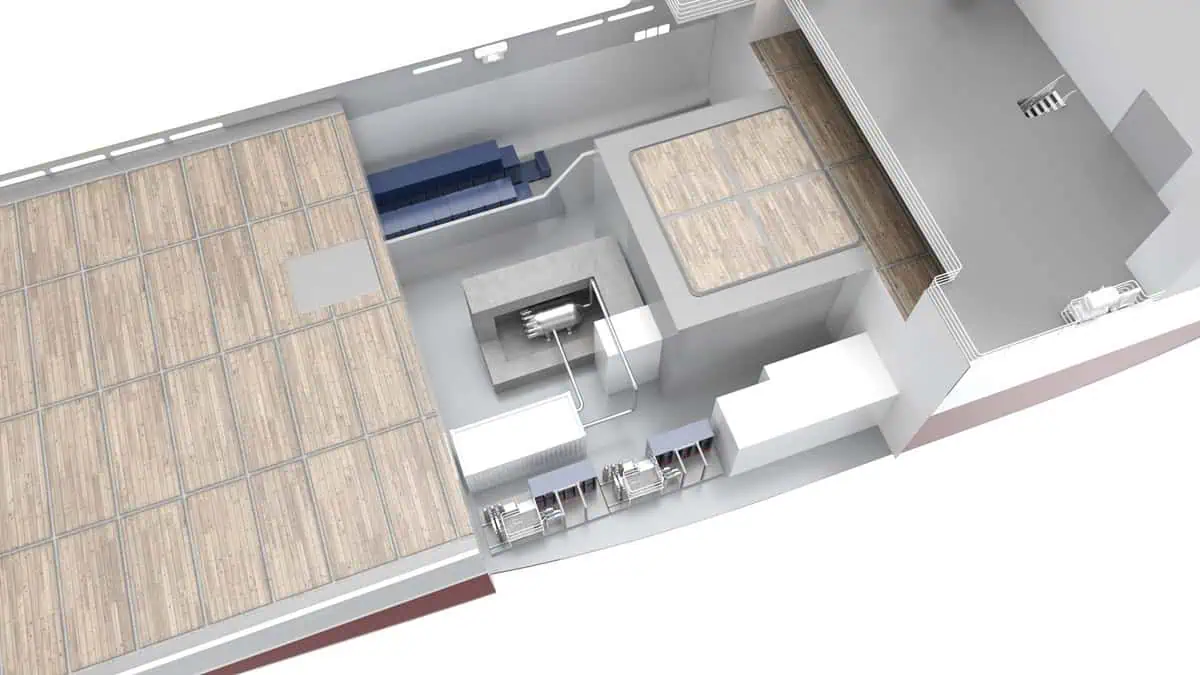
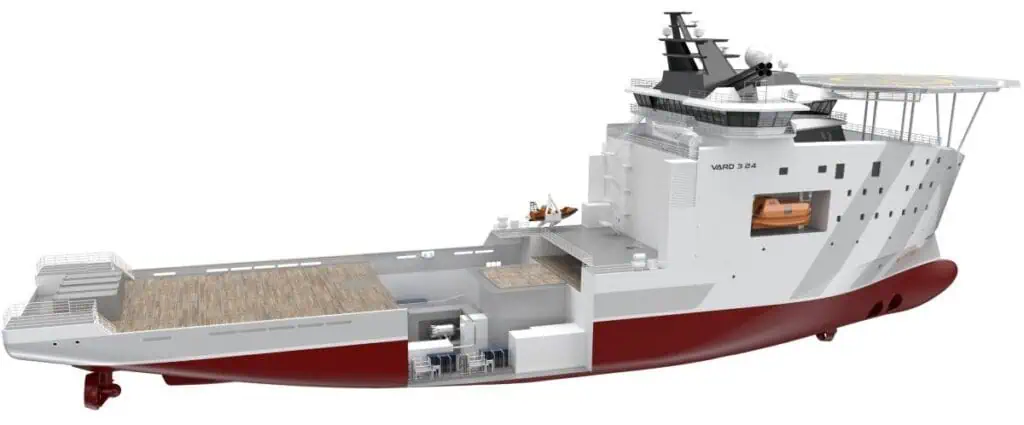
The development of a concept design for a nuclear-powered construction vessel based on an existing VARD reference concept. The study investigates the feasibility of integrating a helium gas-cooled nuclear reactor as the primary power source and evaluates its implications for vessel layout, safety, and overall system performance.
The case study is led by Vard Design and conducted in close cooperation with DNV, Emerald Nuclear, Vard Electro, offshore ship owner Island Offshore, and the project leader and our long-term research & innovation partner Norwegian University of Science and Technology (NTNU).
The NuProShip II project proves that the technology on nuclear-powered ships is moving forward, and that VARD – as a part of the Fincantieri Group, and together with the partners in the project – are frontrunners in finding the best solutions through tangible innovation.
The study confirms that, with validated assumptions and supplier data, nuclear-powered DP vessels are achievable. The integration aligns with the high redundancy required for DP2 power architecture, with possibility to also adapt to DP3 requirements, enhancing operational safety and reliability.
By leveraging advanced reactor concepts, NuProShip II offers the potential for removal of greenhouse gas emissions and extended operations. The project also explores innovative energy storage solutions, such as super-critical CO₂ turbines and thermal battery systems, which could provide power balancing alternatives to conventional electrical batteries.

NuProShip II aims to set new standards for radiological safety and risk management in commercial shipping.
Henrik Burvang, Research & Innovation Manager at Vard Design AS and responsible for NuProShip II in Vard, commented: We are proud to contribute to the future of maritime innovation. NuProShip II demonstrates that nuclear-powered vessels are not just a vision, but a technically feasible solution. Our work lays the foundation for safer, more efficient, and environmentally responsible shipping. We hope this project brings real value to the continued development of maritime nuclear technology. It is also particularly valuable to have a professional ship owner and operator like Island Offshore in the project, proving that ship owners are focusing on this technology going forward.
NuProShip II acknowledges the need for a modern regulatory framework and greater industrial experience in civilian nuclear marine propulsion. The project also recognizes the importance of public acceptance and environmental stewardship, committing to transparent communication, and continuous improvement.
The NuProShip II project is a two-year initiative to further refine solutions for nuclear propulsion in maritime applications.
The NuProShip II is funded by the Research Council of Norway, underscoring Norway’s commitment to innovation and sustainable solutions in maritime propulsion technology.
The project will be concluded in 2026 and followed by the SFI SAINT (Sustainable Applied and Industrialized Nuclear Technology) – center for research-based innovation led by NTNU, where VARD will be one of the key partners. The national center has received NOK 96 million in funding from the Research Council of Norway to research maritime nuclear technology. In-kind contributions from industry, including Vard, amount to about NOK 200 million. The center will operate for eight years starting in January 2026.