


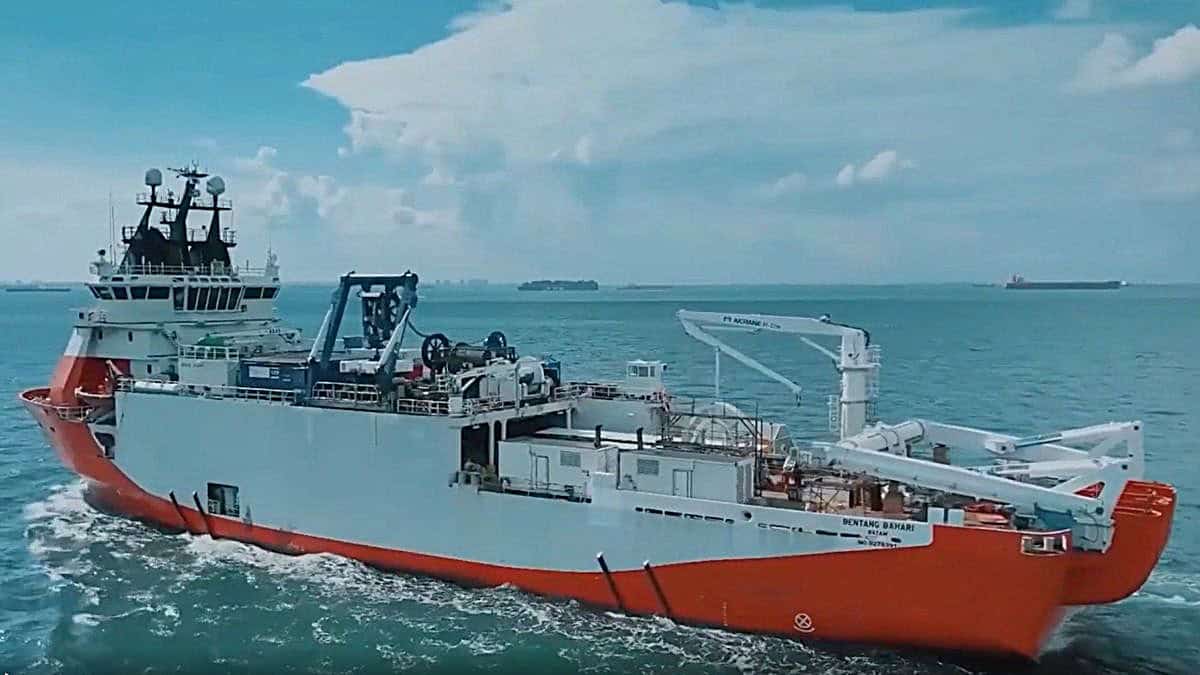
Triasmitra, a pioneer in Indonesia’s telecommunications infrastructure sector, has reached a landmark moment with the official handover of the Cable Laying Vessel (CLV) Bentang Bahari from PaxOcean in Batam.
The Bentang Bahari, the first Indonesian-flagged cable laying vessel, is set to transform the nation’s digital landscape by enabling the installation and maintenance of subsea cable networks that power connectivity across the archipelago.
The arrival of the CLV Bentang Bahari carries profound strategic significance for Indonesia’s telecommunications infrastructure. This vessel not only strengthens national technological independence but also opens up opportunities for expansion into the Asia-Pacific regional market. With world-class operational capabilities, Bentang Bahari positions Indonesia as a major player in the regional subsea telecommunications industry.
The Bentang Bahari’s transformation began with Triasmitra’s strategic acquisition of the Norwegian-flagged Platform Supply Vessel (PSV) Skandi Sotra. Rather than building a new vessel from the ground up, Triasmitra chose an efficient conversion strategy to rapidly strengthen national capabilities. PaxOcean was entrusted with the complex task of converting the PSV from its original role in offshore support to a state-of-the-art Cable Laying Vessel (CLV), purpose-built for subsea telecommunications projects.
“The Bentang Bahari is a testament to the dedication of our teams and a step forward for Indonesia’s telecommunications. We are proud to support Triasmitra in building backbone networks that connect Indonesia and drive digital transformation,” said Mr. Jerome Chew, COO, PaxOcean Group.
“We thank the management for their unwavering support, and the project team for their fast response, professionalism and relentless help throughout this journey,” said Mr. Titus Dondi, CEO, Triasmitra.
This conversion process resulted in international-standard cable vessel technology with impressive technical specifications. Bentang Bahari is 94.65 meters long and has a cable carrying capacity of up to 2,400 tons, enabling the handling of large-scale projects in a single mobilization.
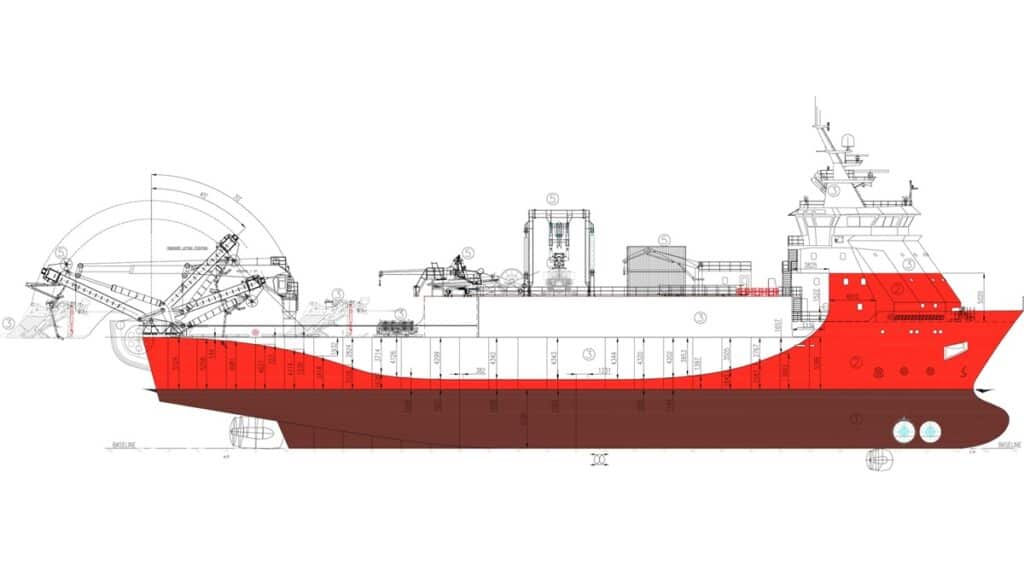
Bentang Bahari has been certified by DNV as a guarantee of international safety standards. Furthermore, this cable laying vessel is equipped with several advanced technologies, such as the Dynamic Positioning DP-2, which serves as the backbone of Bentang Bahari’s operations in carrying out subsea cable installation missions with high precision. This technology enables the vessel to automatically maintain a stable position, even in adverse weather conditions and strong ocean currents.
Another technology is the A-Frame, which serves as the main structure for lowering and lifting heavy equipment to the seabed. This system works synergistically with the Plough system, which creates a groove in the seabed for optimal cable placement, ensures the cable is buried at the correct depth, and protects it from damage caused by fishing activities or other vessels anchoring.
Another technological component is the ROV (Remotely Operated Vehicle), capable of operating to depths of thousands of meters and performing inspection and maintenance at sea level. This combination of advanced technologies makes Bentang Bahari a strategic asset capable of developing subsea cable infrastructure projects with optimal time and cost efficiency.
The presence of the CLV Bentang Bahari marks a new era of Indonesian technological independence in the subsea telecommunications sector. For years, subsea cable installation projects in Indonesia have relied on foreign fleets, resulting in high costs and schedules that do not always align with national priorities. Ownership of this Indonesian-flagged vessel provides full control over the timeline and execution of national telecommunications infrastructure projects.