Enhanced Wärtsilä 25 Ammonia engine improves efficiency and design flexibility
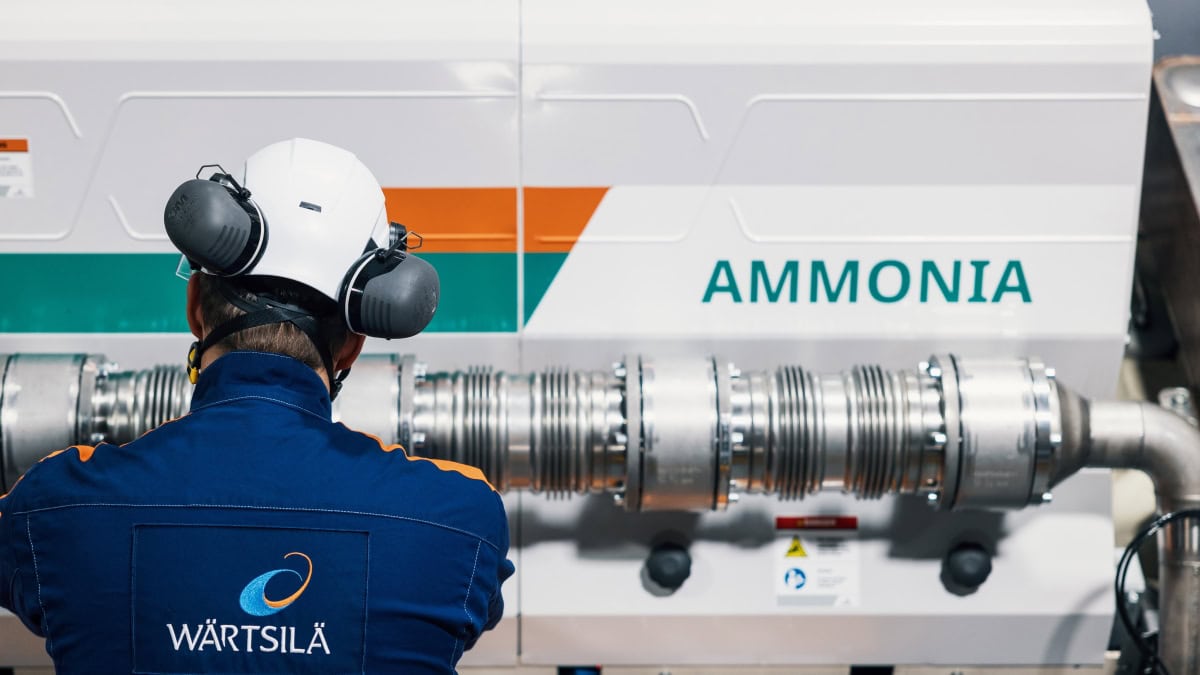
Wärtsilä has announced an upgrade to its 4-stroke ammonia-fuelled Wärtsilä 25 engine, delivering a higher power rating as part of the company’s continued development of sustainable marine propulsion technologies.
The upgrade to the Wärtsilä 25 Ammonia engine now achieves an output of 315 kW per cylinder at 900 rpm and 345 kW per cylinder at 1000 rpm. This brings its performance in line with the LNG-fuelled Wärtsilä 25DF engine.
A key benefit of the upgrade is that fewer cylinders are required for a given power demand, which will reduce installation complexity and simplify maintenance. This supports more flexible and efficient vessel designs for ammonia‑fuelled applications.
The power increase also supports the conversion of the engine between LNG and ammonia fuel operation. With this new power range of 1.9-3.1 MW, the Wärtsilä 25 Ammonia engine is an ideal choice for a wide range of applications, both as a main engine or as an auxiliary engine. What’s more, by aligning with the power level of the LNG-fuelled Wärtsilä 25DF, retrofitability is improved resulting in greater flexibility in fuel choice for shipowners. The increased power rating was demonstrated during type approval tests carried out in autumn 2025 under the supervision of classification society representatives.
“With decarbonisation front and centre of our strategy, we continue to enhance the capabilities of our ammonia engine solution. This power increase builds on our extensive testing and development work and helps make ammonia‑fuelled ship operations more practical and affordable, while maintaining high standards of safety and reliability,” says Stefan Nysjö, Vice President of Power Supply, Wärtsilä Marine.
Ammonia is increasingly recognised as an important alternative fuel as the marine industry works towards meeting international emissions reduction targets. With the International Maritime Organization setting clear goals for reducing greenhouse gas emissions from shipping, the shift away from conventional fossil fuels is expected to accelerate in the coming years.
The Wärtsilä 25 engine platform is a next-generation, medium-speed marine engine designed for safe and reliable power generation, low emissions, efficient operation and easy integration. The Wärtsilä 25 Ammonia features a modular design and delivers proven reliability for a wide range of vessels and propulsion arrangements.
The increased power version of the Wärtsilä 25 Ammonia engine is now released to the commercial market for deliveries in 2028.