


Nearly 80m Dutch research vessel to support next-generation climate, ocean and biodiversity research
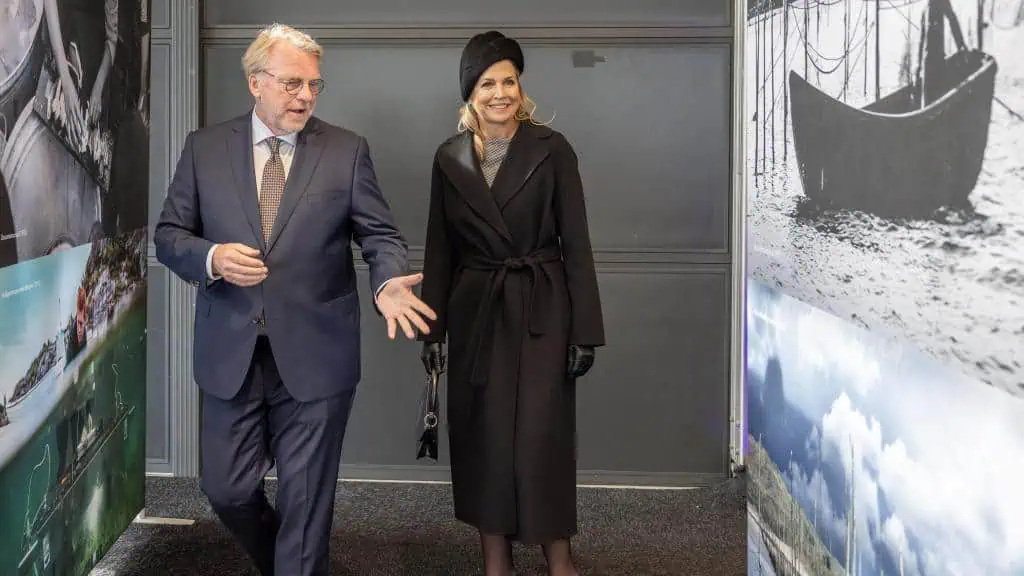
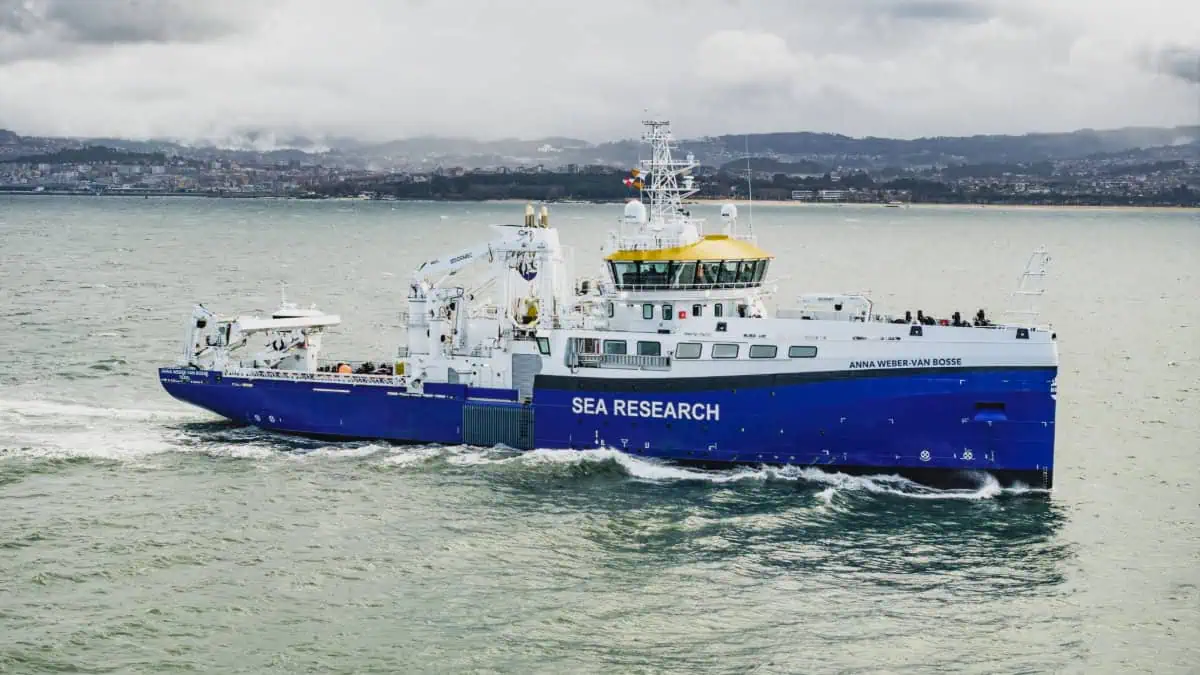
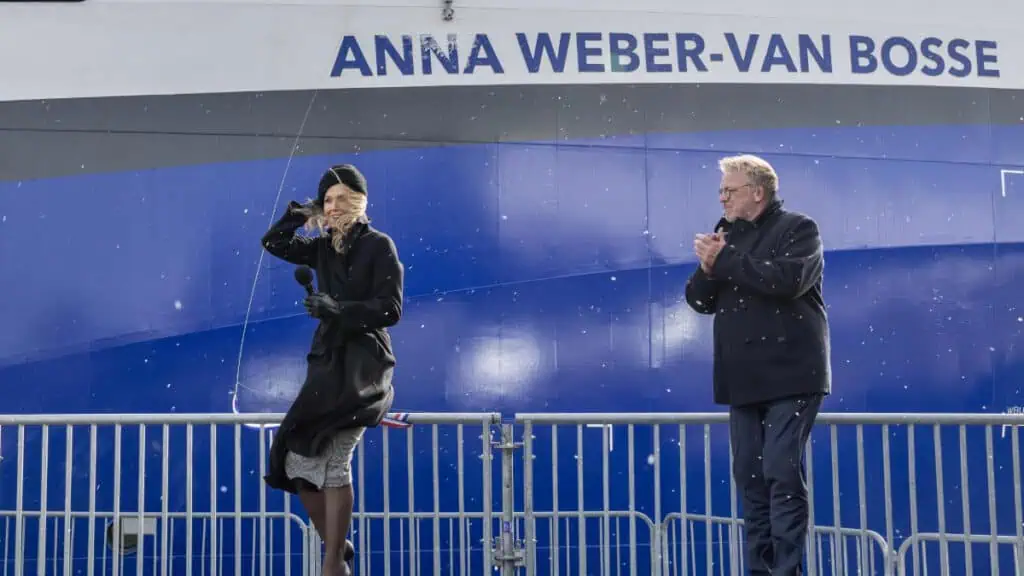
The new Dutch ocean research vessel RV Anna Weber-van Bosse was christened by Queen Máxima on 12 March 2026 at Texel, Netherlands, despite challenging weather conditions. The nearly 80-metre vessel has been developed for the Royal Netherlands Institute for Sea Research (NIOZ) is regarded as one of the most advanced oceanographic research platforms currently in operation. The vessel is designed to support a broad range of scientific missions, enabling multidisciplinary research across climate systems, ocean circulation and marine ecosystems.
The ship is equipped with advanced sensors, satellite communications and facilities for underwater robotics. Scientists will be able to deploy autonomous underwater drones, drifting measurement robots and, in the near future, a remotely operated submersible.
According to marine geologist Prof. Dr Gert-Jan Reichart, who was closely involved in designing the vessel’s scientific infrastructure, the new ship represents a major leap forward for ocean research: “The difference compared with the previous vessel is enormous. With integrated sensors and real-time data connections we can monitor processes in the ocean far more accurately.”
The RV Anna Weber-van Bosse can operate worldwide, from tropical waters to the edge of the Arctic ice. This will allow researchers to study changes in ocean circulation, melting sea ice and the role of the oceans in absorbing CO₂. The oceans take up roughly one third of the carbon dioxide emitted by human activities.
The vessel can accommodate around thirty scientists, nearly twice as many as the previous Dutch ocean research vessel RV Pelagia, which is now replaced after 35 years of service.
According to NIOZ Director Prof. Dr Han Dolman, the new ship arrives at a crucial moment for ocean research: “Changes in the ocean affect our climate, our ecosystems and ultimately our societies. With this ship, scientists gain a powerful instrument to better understand those changes.”
Prof. Dr Marcel Levi, President of NWO, the Dutch Research Council: “With this new research vessel researchers can make new discoveries for decades to come. Not just NIOZ scientists but every marine scientist in the Netherlands and beyond. This is an excellent example of the importance of national scientific infrastructure.”
With the arrival of the RV Anna Weber-van Bosse, the Dutch research fleet has been completely renewed. Together with the RV Wim Wolff for coastal research and the RV Adriaen Coenen for research in the Wadden Sea, the Dutch marine research community now has three modern research vessels, ready for the current and next generations of ocean scientists.
The ship is named after marine biologist Anna Weber-van Bosse (1852–1942), a marine biologist specialized in algae and the first woman in history to participate as a scientific staff member in a major ocean expedition: the Siboga Expedition (1899–1900) to the waters of the former Dutch East Indies.