




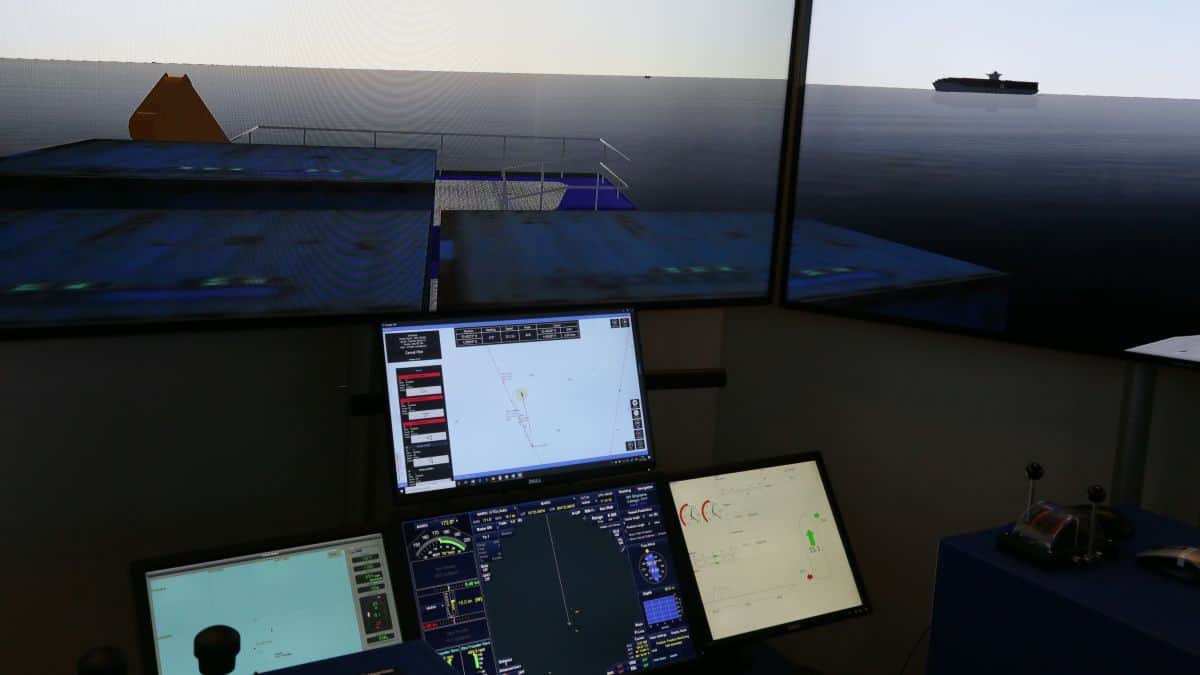
Robosys Automation’s VOYAGER AI underwent evaluation at MARIN as part of the development of its Autonomy Testbed for testing and comparing collision avoidance systems
Robosys Automation has completed a test campaign at MARIN (Maritime Research Institute Netherlands), evaluating its VOYAGER AI Autonomous Navigation System (ANS) against 55 recognised DNV benchmark marine traffic scenarios to assess its collision avoidance performance and compliance with international navigation regulations.
Robosys contributed in MARINs development programme of the Autonomy Testbed; a testbed designated to test, compare and, once mature, be able to validate Collision Avoidance systems. The VOYAGER AI software was tested on its ability to make safe, predictable and COLREG-compliant navigation decisions across a comprehensive range of realistic maritime operating conditions.
The test campaign represents another significant milestone in Robosys’ longstanding collaboration with MARIN, building on almost a decade of joint work advancing the safe development, validation and deployment of autonomous maritime technologies.
Conducted within MARIN’s advanced simulation and assessment environment, the evaluation subjected VOYAGER AI to independently defined benchmark scenarios representing many of the collision avoidance situations encountered during routine commercial operations.
Designed to challenge autonomous navigation systems across the full spectrum of COLREG encounter types and operational complexity, the benchmark programme included head-on encounters, crossing situations, overtaking manoeuvres, single, dual and multi-target interactions, mission recovery following collision avoidance actions, and independent assessment of collision avoidance effectiveness, COLREG compliance and overall operational performance.
Beyond the benchmark programme, VOYAGER AI was also evaluated using specialist operational scenarios including dense AIS-derived traffic, fishing vessel operations, near-shore navigation, randomly generated encounters and expert-developed operational cases, providing an even broader assessment of autonomous decision-making capability under representative commercial operating conditions.
From the independent evaluation across a wide range of operational scenarios, MARIN was able to obtain performance scores in relation to safe, predictable and COLREG-compliant navigation decisions resulting in valuable technical insight to support the platform’s continued evolution.
“This programme represents a significant milestone in the ongoing development of VOYAGER AI’s COLREGs compliant manoeuvres algorithms,” said Aditya Nawab, CEO and Founder of Robosys: “Our customers need confidence that autonomous navigation systems will behave safely and predictably in the complex situations encountered during everyday operations and in accordance with the Rules of the Road.”
“Through independent testing by MARIN, we were able to show the current performance level of VOYAGER AI against recognised DNV benchmark scenarios while providing invaluable technical insight that will continue to enhance the platform as maritime autonomy evolves.”
The latest validation programme builds upon a relationship that first began in 2018 through the Netherlands Joint Industry Project (JIP) on Autonomous Shipping, culminating in the first autonomous commercial vessel trials conducted in the North Sea onboard SeaZip 3 a 26m Damen Fast Crew Supplier 2610.
As the maritime industry moves towards greater levels of autonomy, independent, external validation will play an increasingly important role in demonstrating safety, regulatory compliance and operational readiness.











, testing the software)