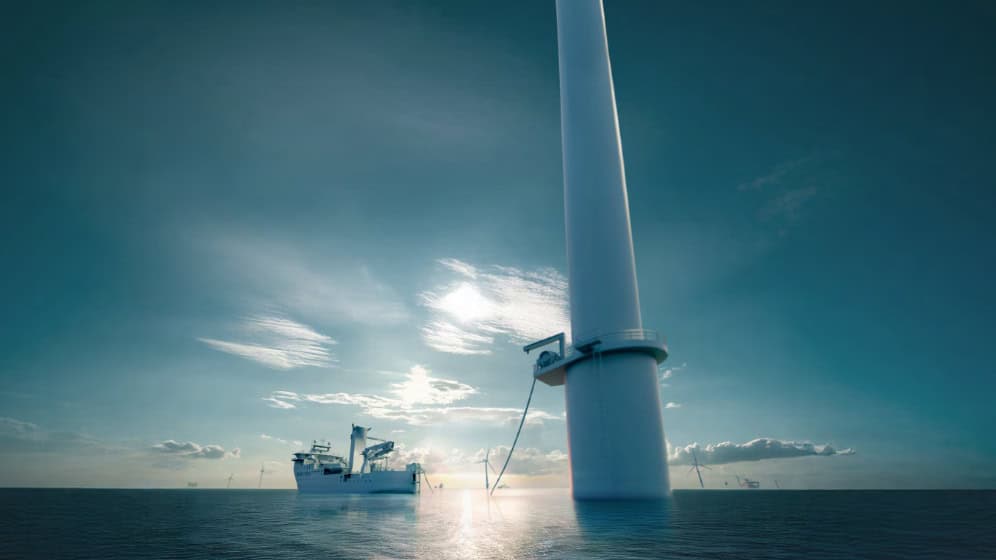
A study by ScottishPower Renewables and Stillstrom by Maersk has confirmed the potential for battery-powered zero-emission vessels to service offshore wind farms. These vessels could be charged directly from the wind farm’s own turbines, creating a fully sustainable and self-sufficient ecosystem for offshore wind operations.
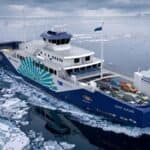
The study is the first in a series of three commissioned by ScottishPower Renewables (SPR) to explore options for decarbonising offshore operations and reducing greenhouse gas (GHG) emissions. It looked at the feasibility and benefits of integrating battery-powered Service Operation Vessels (E-SOVs), which stay out at sea for extended periods, into offshore windfarm operations.
The study confirms that the electrification of offshore operations is not only technically feasible – but could also deliver both economic and operational benefits.
The findings are being shared through the Operation Zero initiative, which was launched at COP26 in Glasgow and brings together developers and supply chain companies committed to making zero-emission operations and maintenance vessels a reality.
The key findings in the report are:
- Integrating offshore charging and E-SOVs in offshore windfarms is technically feasible, and operationally and economically viable. E-SOVs can operate in zero-emission mode for up to 18-19 hours a day without charge, thereby reducing GHG emissions.
- The business case for E-SOVs is competitive with traditional marine gas oil-fueled vessels and cheaper than other decarbonised solutions like e-methanol. Operating E-SOVs in offshore windfarms will almost entirely remove service vessel-related GHG-emissions as E-SOVs are powered by the clean power at hand in the offshore windfarm.
- Offshore windfarms can provide the necessary grid infrastructure for charging E-SOVs, offering greater control over fuel costs and reducing exposure to volatile fuel prices and geo-political risks.
Ross Ovens, ScottishPower Renewables’ Managing Director for Offshore, said: “By the end of the decade, our aim is to reduce absolute greenhouse gas emissions for our offshore projects by more than two-thirds* and research like this demonstrates the potential to decarbonise marine operations, which could help achieve this ambition.
“The study with Stillstrom provides valuable learning on how this innovative technology could be integrated into offshore windfarms and shows the art of the possible. What we need to do now is consider what this means in practice and what that would look like in real-life. The report offers plenty of food for thought and it’s great to have the support of Operation Zero to share these findings, so we can all collectively work together towards a clean energy future.”
Kristian Borum Jorgensen, CEO of Stillstrom by Maersk, added: “Our collaboration with SPR highlights the potential of E-SOVs to fully decarbonise vessel operations in offshore wind farms, making them more sustainable and cost-effective. With our offshore charging solutions now commercially ready, we are excited to deliver practical systems that accelerate decarbonisation and enable a cleaner future for offshore operations.”
Nigel Quinn, Chair of the Operation Zero Steering Board, said: “It’s great to see developers and the supply chain working together to develop the solutions and best practice that will be a game changer for the industry as a whole. Through studies like this, we will be able to learn, innovate and accelerate the adoption of zero-emission vessels and technologies to achieve a sustainable maritime future.”