Yanmar Power Technology Co., Ltd., (Yanmar Power Technology), a group company of Yanmar Holdings Co., Ltd., has successfully completed a land-based demonstration test of a pilot-ignition hydrogen 4-stroke high-speed engine for power generation in coastal vessels, achieving operation at a rated output of approximately 500kW. This trial was conducted as part of the Nippon Foundation’s zero emission ship demonstration experiment.
The tested pilot-ignition hydrogen 4-stroke high-speed engine operates by using a small amount of diesel oil as the ignition source (pilot fuel) to burn a premixture of hydrogen and air. With this operation, the engine achieved the world’s highest hydrogen fuel ratio and an output of approximately 500 kW, leading the industry (according to Yanmar’s research).
Going forward, Yanmar Power Technology plans to continue zero-emission trials using biofuel as the pilot fuel, while also working towards obtaining class certification for demonstration operations scheduled for 2026.
About the Zero-Emission Ship Project
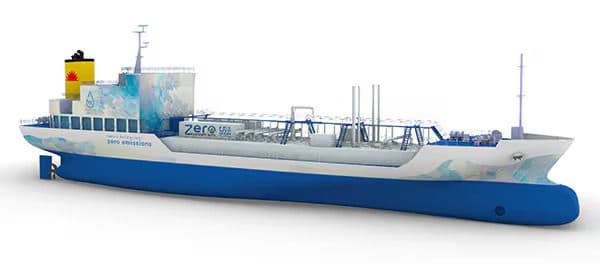
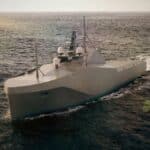
This project, led by the Nippon Foundation, focuses on the development of hydrogen-powered, zero-emission ships, and supports related technology development. In addition to hydrogen engine development, the project is currently working on a hydrogen engine-compatible hybrid electric propulsion vessel, combining hydrogen engine generators with batteries. The vessel design incorporates a container unit-type hydrogen power generation system on its upper deck. Uyeno Transtech Co., Ltd., a shipping company under the Uyeno Group, is responsible for the vessel’s development and construction.
In addition to the diesel pilot-ignition hydrogen engine, Yanmar Power Technology is developing a similar “pilot-ignition” engine that will achieve zero emissions by co-firing a small amount of biofuel for ignition with hydrogen, and a “spark-ignition” engine that will burn hydrogen exclusively in consideration of vessel operation until the hydrogen infrastructure becomes widely available. Land-based demonstration tests using this pilot-ignition 6-cylinder hydrogen engine are scheduled to begin in 2024, with demonstration operations planned for 2026. Yanmar Power Technology is also conducting parallel land-based tests for the spark-ignition engine, aiming to lead the adoption of hydrogen engine-compatible electric propulsion vessels.
This work is part of Yanmar’s broader efforts to contribute to achieving zero-emission for coastal vessels based on hydrogen energy from around 2030.
Consortium Members (as of September 2024):
- Yanmar Power Technology Co., Ltd. (Lead)
- Ueno Transtech Co., Ltd.
- Kyoto University
- Fukuoka Shipbuilding Co., Ltd.
- Mitsui E&S Shipbuilding Co., Ltd.
- Mirai Shipbuilding Co., Ltd.
- National Maritime Research Institute, National Institute of Maritime, Port and Aviation Technology, Japan
Responsibilities: 4. detailed vessel design and construction, 5. basic planning, 6. design and construction of hydrogen engine container generation units. 7. Technical development of the spark-ignition hydrogen engine.