



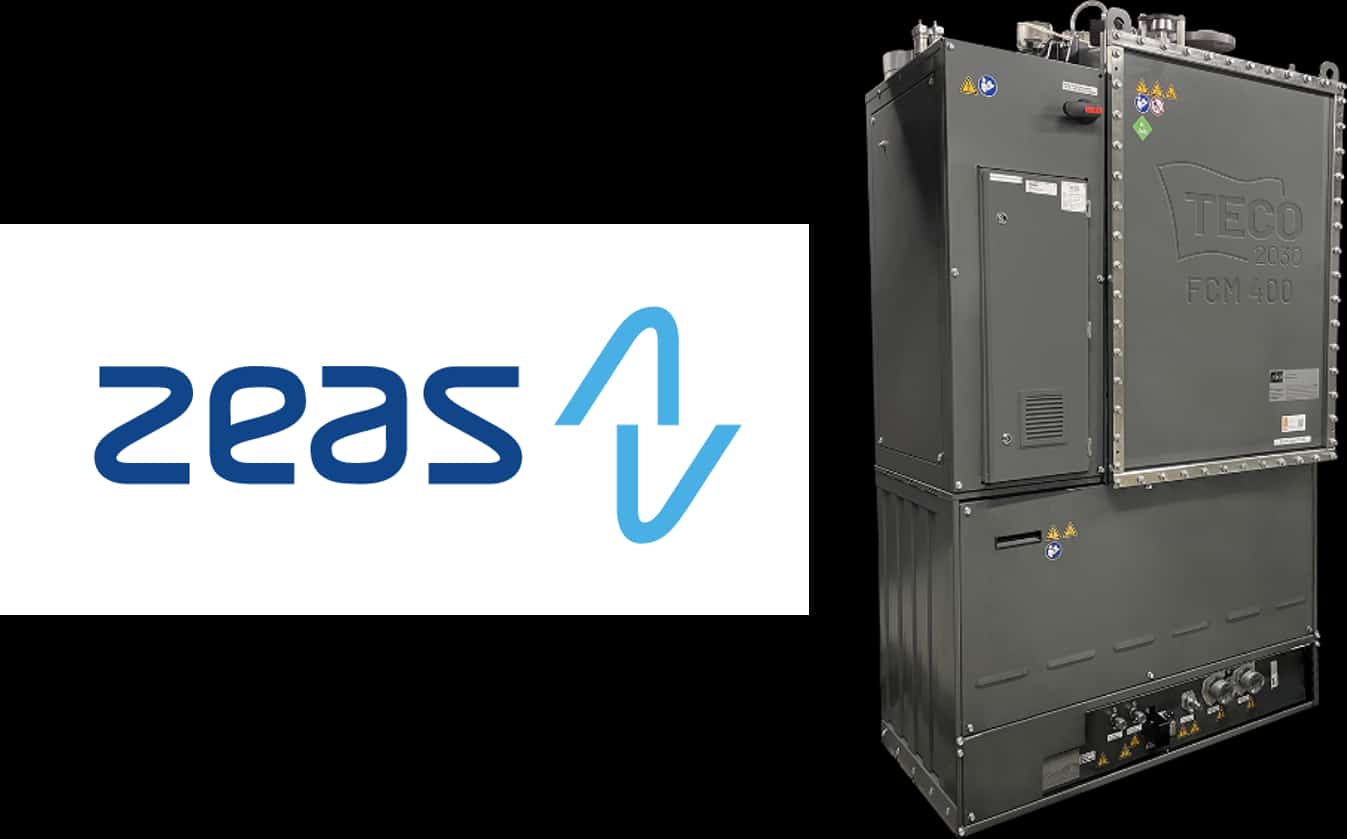
TECO 2030 commences it’s second EU Horizon Project, Zero Emission Adriatic Ship – ZEAS, together with 13 partners from various European Countries. The overall project grant from EU Horizon is over EUR 13.5 million, where over EUR 2.3 million is reserved to TECO 2030’s deliverable of 1.2 megawatts (MW) of fuel cells for full vessel propulsion.
The project focuses on pioneering a shift towards the safe and sustainable use of climate-neutral fuels in maritime transport, specifically through a full-scale demonstration of a hydrogen fuel cell-powered system suitable for maritime applications. This ship, tailored for operation in the Adriatic Sea’s delicate marine ecosystem, is a testament to the project’s commitment to environmental preservation and zero emission waterborne transport.
“This project further enables our efforts to showcase how fuel cells and hydrogen can be a large contributor to decarbonize and eliminate harmful emissions of waterborne transport around the world,” said Tore Enger, Group CEO, TECO 2030.
Key activities in the project include the design and construction of the ship, the development of comprehensive hydrogen distribution, storage, and bunkering solutions, and rigorous testing through sea trials to ensure compliance with certification standards. The project also places a strong emphasis on environmental impact, with thorough emissions assessment, environmental performance studies, and risk and safety evaluations.
Advanced digital technologies will play a crucial role, with the development of digital twins for monitoring, control, simulation, and predictive maintenance solutions augmented by augmented reality systems. These technologies will be rigorously tested and optimized for use by shipowners, operators, shipyards, and engineering firms.
“I’m excited to share that we’ve successfully secured our second Horizon Europe project! Achieving a perfect record in our EU project proposals is truly remarkable. I extend my heartfelt gratitude to our dedicated partners and our in-house team for their exceptional proposal writing efforts,” said Fredrik Aarskog, Director of Business Development, TECO 2030.
This initiative involves an international consortium of leading entities across the innovation spectrum, dedicated to developing, validating, and showcasing a zero-emission passenger ship fueled by hydrogen.
The involved consortium partners are Lurssen Design Center Kvarner, TECO 2030 and affiliates, Gitone Kvarner, Maritime Center of Excellence, Jadrolinija, University of Rijeka – Maritime Faculty, DNV Greece, Hycenta research, TECNO Ambiente, Scan Projekt, Technische Universitaet Chemnitz, Zenlab and the Croatian Hydrogen Association.














 of fuel cells for full vessel propulsion.)