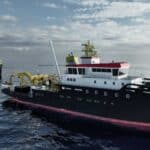
Corvus Energy is pleased to supply the battery energy storage system onboard the Magellan Discoverer— the first hybrid diesel-electric vessel to be constructed in South America.
The vessel is a luxury polar expedition cruise ship to be built at the Chilean shipyard, Astilleros y Servicios Navales S.A. ASENAV for cruise operator Antarctica 21. Corvus Energy will supply an Orca Energy Storage system to be used for zero-emission operation mode. The battery system will be part of ABB’s full power plant delivery onboard the ship. The 93-meter, 163-passenger vessel will have all the latest technology onboard for sustainable operation like solutions for regenerating energy from the lifts, and heat exchangers that will collect warmed air before it is expelled outside. Along with the cutting-edge hybrid-electric propulsion system, the Magellan Discoverer will be able to operate within the stringent Tier III emission standards.
“We are very proud to have been selected by ASENAV and Antarctica21 to be part of the very first hybrid vessel built in South America and to collaborate with Corvus Energy, ensuring the vessel achieves full performance,” says Dick Bjorkqvist, Global Segment Manager, Cruise, ABB Marine & Ports. “This truly innovative project further strengthens our contribution to the marine industry with leading technologies for improved efficiency.”
As with other regions, the interest in hybrid and electric vessel propulsion in Latin America is increasing.
In recent months, Corvus Energy has secured projects for battery systems onboard vessels planned for operations both in Panama and Argentina as well as ongoing sales projects in other Latin American countries.
Ole-Jacob Irgens, Executive Vice President of Corvus Energy states “It means a lot for us to be the supplier for such an important project in the region. Going forward, we do expect a significant uptake of electric and hybrid projects across segments in South America. With our unsurpassed experience from more than 1,000 projects worldwide, we will do our best to serve as an expert resource and reliable partner when ship owners, operators, designers and shipbuilders pursue the electrification of shipping.”
The Magellan Discoverer is planned to join the Antarctica21 fleet for the 2026-27 Antarctic season. The vessel will be operating from King George Island around the Falkland Islands (Islas Malvinas), South Georgia and Antarctica. It will be the second sustainable expedition cruise ship for Antarctica21, joining its sister vessel, the Magellan Explorer, currently in operation.