Latest NewsVessel Repair & MaintenanceThordon Bearings Secures Contract Across Panama Fleet of Tugs

Thordon Bearings Secures Contract Across Panama Fleet of Tugs

Thordon Bearings has secured a significant contract to convert the rubber tailshaft bearings across an entire fleet of Panama-operating tugs, pilot vessels, and workboats to water-lubricated polymer bearings.

The agreement with the unnamed operator follows the successful retrofitting of Thordon’s SXL tailshaft bearings to twelve of its twin-screw tugs last year during scheduled dry dockings.

The remaining 32 vessels will now be converted in batches at planned maintenance intervals over the next four years.

For the first batch of retrofit conversions, Thordon will supply a total of 62 water-lubricated bearings machined to fit shaft diameters ranging from 63.5mm to 101mm (2.5in to 4.5in). However, the scope of supply also includes Thordon’s ThorPlas-Blue bearings for tiller arms and jockey bars and SXL rudder bearings, both of which operate without the use of grease.

Egnard Bernal, Thordon Bearings’ Business Development Manager, Latin America, explained: “We have worked with this operator since 2020 when we resolved problems with the rubber tailshaft bearings on one of its Spanish-built pilot vessels.

“Following that initial success we have retrofitted one vessel after another but have now received a stock order for the entire fleet. All rubber tailshaft bearings will be replaced with SXL at scheduled dry dockings over the next few years. This is a significant order for Thordon Bearings,” he said.

Commenting on the reason behind the fleet-wide retrofit, Yves Silva, Regional Manager – LATAM, said: “This owner operates a zero-pollution policy, so we are moving very quickly to install a wide range of environmentally friendly solutions. The company wants all of its vessels to have 100% green operation and long lasting Thordon bearings are the most sustainable bearing options available.”

All of Thordon’s polymer bearings require neither grease nor oil for lubrication. Yet, while environmental protection was a major factor in the decision, so too was bearing longevity and reliability.

Interoceanic waterways tend to be very abrasive environments, which are not ideal for bronze-backed rubber bearings. The bronze outer shell and the steel housing are prone to galvanic corrosion, resulting in non-budgeted maintenance costs and drydockings.

Silva added: “That this owner is planning to ‘Thordonize’ its entire fleet is testament to the reliability, long wear life and robust performance of our bearing technology. Our bearings deliver on value, performance, and complete elimination of oil/grease pollution for both newbuild vessels and conversions.”


Latest News

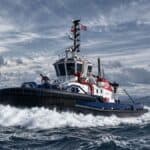
Boluda Towage has expanded its Norwegian fleet with the addition of VB NORWEGIAN FALCON, a new tug built by Sanmar Shipyards to support towing, vessel assistance and offshore operations in demanding maritime environments.

Boluda Towage Takes Delivery of VB NORWEGIAN FALCON

Sanmar-built VB NORWEGIAN FALCON features RAstar 3200 SX design, ASD propulsion and more than 6,700 hp Boluda Towage has expanded its Norwegian fleet with the...
SWITCH Maritime has secured a Design Basis Agreement (DBA) from the United States Coast Guard (USCG) for its SWITCH-150 hydrogen fuel cell-electric ferry, marking a key milestone in the development of the 150-passenger vessel. Designed by naval architecture firm Incat Crowther, the SWITCH-150 combines hydrogen fuel cell-electric propulsion with onboard hydrogen storage to support high-frequency ferry operations without compromising service schedules or requiring shoreside charging infrastructure.

SWITCH Hydrogen Ferry Clears Key US Coast Guard Milestone

The US Coast Guard agreement establishes a regulatory framework to guide construction, commissioning and future commercial operation of the hydrogen-powered ferry SWITCH Maritime has secured...
Norwegian ocean surface measurement specialist Miros has introduced a new 3D vessel view for its WaveSystem wave monitoring platform, giving crews and offshore operators a consolidated view of measured sea conditions around their vessel.

Miros Introduces 3D Vessel View for Real-Time Wave Monitoring

Miros introduces a vessel-specific 3D visualisation to help operators interpret real-time wave measurements at critical offshore working locations Norwegian ocean surface measurement specialist Miros has...
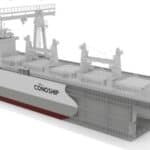
Elegant Exit Company (EEC) has partnered with Conoship International to develop a high-capacity Floating Dry Dock (FDD) concept designed to provide a controlled, environmentally responsible alternative to traditional ship dismantling methods. Ship recycling through beaching remains a major environmental and humanitarian challenge for the maritime industry, exposing coastal ecosystems to potential contamination and workers to hazardous operating conditions.

EEC and Conoship Develop Versatile Floating Dry Dock Concept

The high-capacity floating dry dock concept is designed to support shipbuilding, maintenance and green ship recycling while improving environmental protection and worker safety Elegant Exit...

Related news