Power & PropulsionAmmoniaYanmar and Amogy to Explore Ammonia-to-Hydrogen Power

Yanmar and Amogy to Explore Ammonia-to-Hydrogen Power

Yanmar and Amogy, have entered into a Memorandum of Understanding (MOU) to integrate Amogy’s advanced ammonia-cracking technology into Yanmar’s hydrogen internal combustion engine (H2ICE). This collaboration seeks to pioneer a solution for decarbonizing marine power generation.

The partnership will focus on combining Amogy’s technology with Yanmar’s H2ICE to provide low-cost hydrogen fuel. Amogy’s ammonia-cracking technology uses state-of-the-art catalyst materials to break down ammonia into hydrogen and nitrogen at lower reaction temperatures with high durability, minimizing heating and maintenance requirements. This integration promises a comprehensive clean energy solution for decarbonizing marine power generation.

Furthermore, building on this joint research, both companies will explore the potential for collaboration in developing maritime hydrogen fuel cell systems.

“We are excited to work with Amogy on this innovative project,” said Ken Kawabe, Group Leader at Yanmar Research and Development Center. “Our commitment to a sustainable future aligns perfectly with this collaboration, and we believe that integrating Amogy’s ammonia-cracking technology with our H2ICE has immense potential for decarbonizing marine power.”

“As pioneers in sustainable energy solutions, we are thrilled to collaborate with Yanmar in exploring the integration of our cutting-edge ammonia-cracking technology with their hydrogen internal combustion engines,” said Seonghoon Woo, CEO at Amogy. “Collaboration is critical to advancing clean energy solutions and, together, we can overcome challenges and expedite sustainable progress in the marine sector.”

The collaboration started began in 2023 when Yanmar Ventures, Yanmar’s corporate venture capital arm, invested in Amogy. Since then, both companies have been exploring opportunities to integrate their technologies.


Latest News

Combining GMDSS call statistics with an industry-first maritime safety broadcast analysis, Inmarsat Maritime’s new safety data platform aims to support shipping in addressing its persistent and evolving operational risks. Deep-sea shipping is an inherently hazardous enterprise and the many operational risks faced by vessels, cargo, and crew will likely never be eliminated entirely. Nevertheless, data can play a significant role in minimising the frequency and severity of incidents at sea.

Inmarsat Maritime Safety Data Hub Highlights Global Shipping Risks

Combining GMDSS call statistics with an industry-first maritime safety broadcast analysis, Inmarsat Maritime’s new safety data platform aims to support shipping in addressing its...
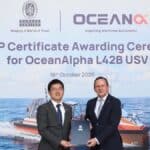
Bureau Veritas Marine & Offshore has awarded an Approval in Principle (AiP) to OceanAlpha for the design of its L42B uncrewed surface vessel (USV), developed for offshore hydrographic and geophysical survey operations.

OceanAlpha Secures BV AiP for L42B Offshore Survey USV

OceanAlpha's L42B combines a modular survey payload with remote operation capabilities to support extended offshore data-gathering missions Bureau Veritas Marine & Offshore (BV) has awarded...

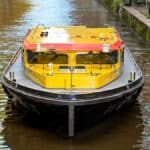
Damen Delivers Two Electric Patrol Vessels to Amsterdam

The latest delivery brings to six the number of Damen Patrol Vessels 1304 Electric supplied to Amsterdam since 2021 https://vimeo.com/1243208175?fl=pl&fe=sh Damen Shipyards Group has delivered two...
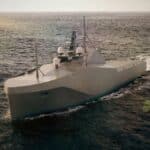
Kongsberg Maritime has unveiled the Arctic Hunter USV, a new class of uncrewed surface vessel designed to accelerate the deployment of hybrid naval fleets combining crewed and uncrewed assets.

Kongsberg Maritime Unveils Arctic Hunter USV

Kongsberg Maritime combines commercial shipbuilding expertise and autonomous vessel technology to support next-generation naval operations in Arctic waters Kongsberg Maritime has unveiled the Arctic Hunter...

Related news