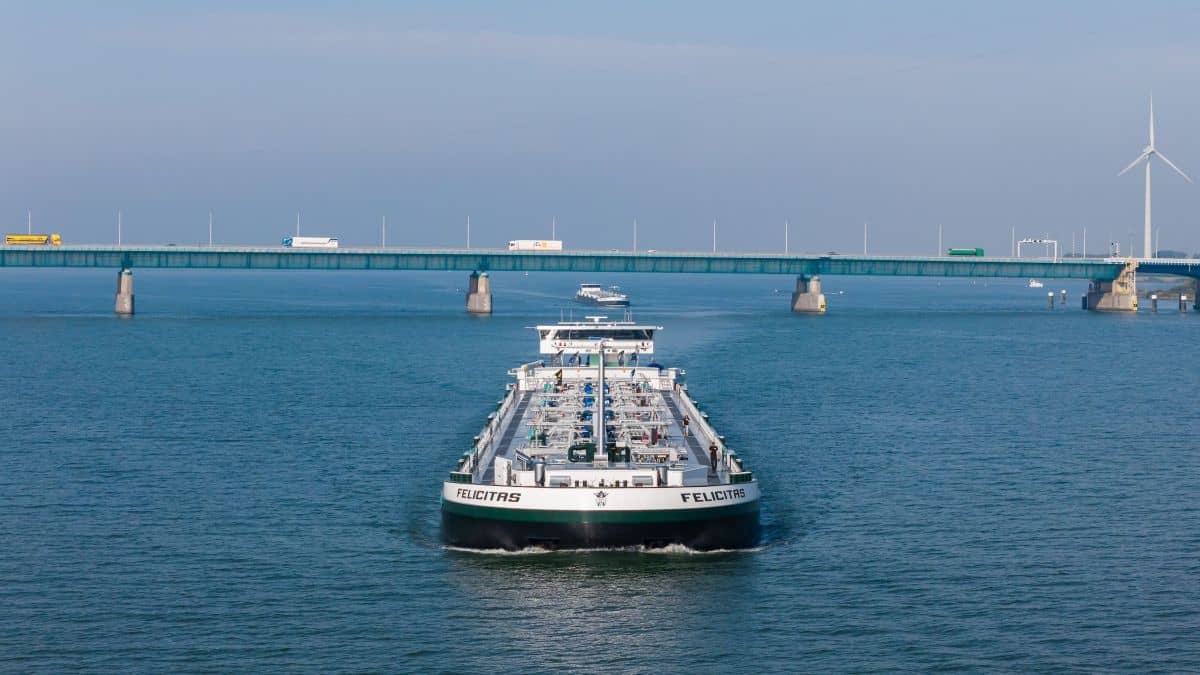
Designed by RensenDriessen Shipbuilding and fitted out by Den Breejen Shipyard, ‘Felicitas‘ brings AMS Barging’s fleet to 17 vessels
Dutch inland shipping specialist AMS Barging has expanded its fleet to 17 vessels with the christening of Felicitas, a new 135-metre diesel-electric tanker designed to carry approximately 9,000 m³ of liquid cargo. Named during a ceremony at Noordereiland in Rotterdam, the vessel features high-capacity cargo-handling systems and is designed to accommodate future modifications for methanol bunkering.
The naming ceremony was conducted by Liv and Julie, daughters of AMS Barging co-owner Igor Jansen, officially marking the christening of the new tanker. Earlier this year, AMS Barging christened Fortuna, a sister vessel to Felicitas, as the company continued to develop its fleet.
The 135-metre tanker was designed by RensenDriessen Shipbuilding and fitted out by Den Breejen Shipyard. Felicitas features 12 cargo tanks, a dual piping system, two mass flow meters, a nitrogen generator, a bunker boom and a cargo pumping capacity of 1,800 m³ per hour.
Geopolitical developments and the energy transition are reshaping the international bunker market. AMS Barging is responding with vessels that can transport conventional fuels while allowing for future changes in fuel demand.
Interest in methanol as a marine fuel continues to grow. According to the Methanol Institute, more than 150 methanol-capable vessels are in operation worldwide, with more than 290 on order.
Methanol can significantly reduce emissions of sulphur oxides, nitrogen oxides and particulate matter compared with conventional marine fuels. Renewable methanol can also reduce lifecycle greenhouse gas emissions by more than 90%. The growth in methanol-fuelled shipping is increasing the need for continued investment in bunkering infrastructure.
“No one knows exactly what the fuel mix will look like in ten years’ time. We see methanol as one of the important alternatives,” says Martin van Veen, Commercial Director at AMS Barging. “That is why we invest in vessels that can operate efficiently today while allowing us to respond to future developments.”
Felicitas has completed her maiden commercial voyage and is now operating on the spot market. AMS Barging reports strong demand for large tankers capable of transporting substantial cargo volumes efficiently. By carrying larger parcels in a single voyage, Felicitas can reduce the number of vessel movements required and make more efficient use of loading and unloading facilities.
The vessel has diesel-electric propulsion and Z-drives, azimuthing propulsion units that improve manoeuvrability. Its engines meet the Stage V emissions standard. AMS Barging has previously reported fuel savings of around 25% with similar diesel-electric propulsion systems, compared with conventionally powered vessels.
“With existing vessels, it can sometimes be difficult to find exactly the combination of technology and capabilities we are looking for. By developing newbuild vessels ourselves, we can incorporate the latest technologies and tailor each vessel to the needs of the market. In doing so, we are investing not only in additional capacity, but also in the future of our fleet,” Van Veen adds.