


Memorandum of Understanding paves the way for deployment of Candela P-12 electric hydrofoil vessels to support cleaner, lower-cost inter-island transport in Fiji.
Swedish electric hydrofoil vessel manufacturer Candela has partnered with Green Pacific Shipping and Fijian operator Sea Fiji to advance a cleaner and more resilient transport solution. The companies have signed a Memorandum of Understanding (MoU) to deploy a fleet of Candela P-12 electric hydrofoil vessels in Fiji, marking a significant step towards sustainable maritime transport in the Pacific.
The initiative aims to reduce reliance on imported fossil fuels while delivering lower operating costs, improved energy efficiency and reduced emissions. By introducing electric hydrofoil technology to Fiji’s inter-island transport network, the partners hope to strengthen transport connectivity while helping to shield operators and communities from future fuel price shocks.
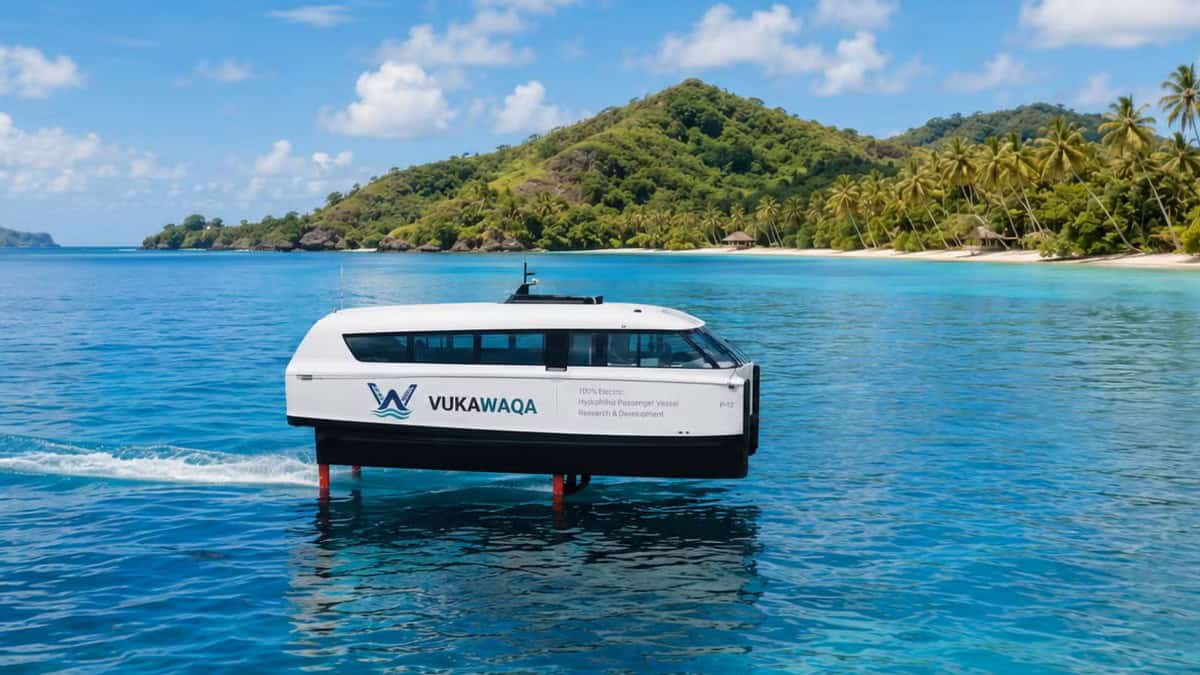
The service is intended to operate under a local brand, VukaWaqa, replacing conventional diesel transfer boats on the busy routes serving Fiji’s outer-island resorts in the Mamanuca and Yasawa groups. First vessels are scheduled to enter service in mid 2027.
Under the MoU, an initial fleet of three to five Candela P-12 vessels are envisioned to operate between Nadi/Denarau and the Mamanuca and Yasawa Islands, with provision for further expansion in subsequent phases. Green Pacific Shipping will act as the principal operator and financing/asset-owning party for the fleet, Sea Fiji will lead in-country operations, local crewing and customer experience, and Candela will supply the vessels, train crew and technicians, and support the build-up of local maintenance capability in Fiji.
Representatives of all three parties will be attending AHICE Fiji this month, where they will present the VukaWaqa partnership and engage with resort operators, investors and public-sector stakeholders on the rollout.
By flying above the water on computer-controlled hydrofoils, Candela’s P-12 electric vessel uses up to 80 percent less energy than conventional fast boats. The technology dramatically reduces fuel consumption while also cutting wake, noise and emissions, and enables the long range needed at high speed to replace diesel vessels.
Björn Antonsson, Regional CEO of Candela APAC: “Fiji is uniquely positioned to become a global leader in sustainable waterborne transport. Tourism depends on Fiji’s extraordinary marine environment, but there is also a growing need for greater energy independence and resilience. Electric vessels can help address both — and with partners like Green Pacific Shipping and Sea Fiji, we can now turn that vision into a real service on the water.”
According to a Candela case study on a typical Fijian resort transfer route, a fleet of two P-12 vessels could reduce annual operating costs by up to 42 percent while avoiding up to 26,000 tonnes of CO₂ emissions over a 15-year period – while freeing the operator from dependency on diesel fuel, as the vessels can recharge from floating solar battery systems. Under the MoU, the Parties have committed to jointly explore such renewable charging solutions for the VukaWaqa fleet.
“Fiji’s tourism industry depends on reliable, comfortable transfers and on protecting the reefs and waters that draw guests here in the first place,” said Matthew Lambert, co-founder of Green Pacific Shipping. “Combining Candela’s technology with Sea Fiji’s local expertise, VukaWaqa is designed to deliver a premium guest experience and a step-change in resilience for operators.”
Candela’s electric hydrofoil vessels are already operating in public transport service in Stockholm, Sweden, where they have demonstrated significant reductions in energy use while maintaining high speed and much better passenger comfort. The company has also announced deployments in the Maldives, Mumbai and Norway.
For Fiji, reducing dependence on imported fuel is about more than sustainability. It is about resilience. By using a fraction of the energy required by conventional fast boats, and by enabling renewable charging, electric hydrofoils could help shield operators from future fuel price shocks while protecting the reefs and marine environments that underpin the country’s tourism industry.
The MoU establishes a framework for the Parties to finalise definitive commercial agreements in the coming months, ahead of planned vessel deliveries in mid-2027.