


Multraship’s Novatug launches dedicated maritime training facility to improve crew performance and operational effectiveness
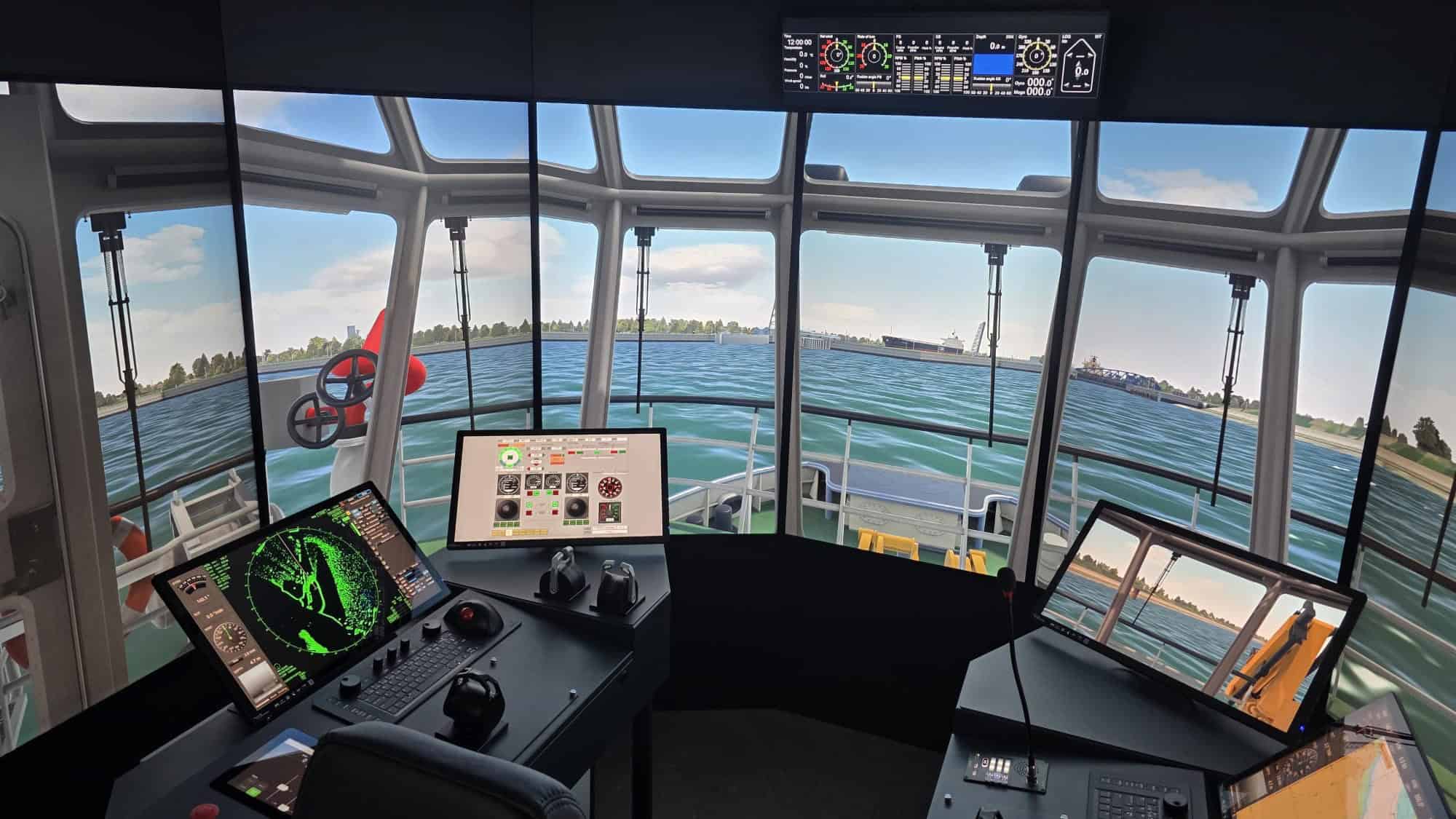
Novatug, the innovation and R&D division of Multraship Towage & Salvage, has opened an advanced simulator and training centre equipped with technology from Wärtsilä, aimed at enhancing operational safety and improving crew preparedness for complex towage, vessel handling and specialist maritime operations.
The new simulator suite, which is based at the group’s headquarters in Terneuzen in the Netherlands, enables masters, tow masters and crews to train in realistic operational scenarios, including complex towing procedures, challenging navigational conditions, project towage operations and emergency response scenarios.
The new training centre brings together a state-of-the-art full mission simulator, mixed reality technology, project simulation capabilities and customised digital vessel models that reflect the operational environments and vessel handling requirements of the fleet. This includes a high-fidelity digital model of a Carrousel RAVE Tug, enabling crews to train for tailored and highly specialised manoeuvring, towage and vessel handling scenarios.
The training centre is supported by a team of experienced trainers, all of whom are active, or recently active, vessel captains. This means they continue to draw on hands-on, on-board experience as they train other crew members alongside their real-world operations.
The introduction of the new state-of-the-art training centre comes as Multraship, together with Novatug, continues to equip its people for increasingly complex and high-pressure situations, while also preparing them for the operational challenges of future vessels, including new propulsion methods, fuel types and data-led scenarios.
“Advanced training techniques have always been a critical part of our operations, particularly during complex towage operations and high-pressure manoeuvring situations where no two scenarios are ever the same,” said Leendert Muller, Managing Director at Multraship.
“Most vessel simulators are built to train crew for navigational scenarios, but Multraship’s new simulator is designed specifically to enable our crews to understand the challenges of manoeuvrability. Effective operations depend on close cooperation between towmasters, wheelmen, and many other stakeholders, often working across specialised assets and on complex projects where Multraship plays a crucial role. The simulator is built to develop exactly this kind of coordinated handling and communication. And because our work is rarely a one-vessel job, the simulator allows multiple people to train simultaneously in a single shared scenario, coordinating across several vessels in real time, just as they would in a real-life operation.
“By investing in this simulator and our people, we are giving our teams access to a much wider range of operational scenarios that are difficult to replicate in the real world. Crucially, we are giving them the space and resources they need to make mistakes, learn from them and build an environment where we can grow our crew for the future,” he added.
“Collaboration and partnerships between maritime stakeholders are essential for ensuring an efficient future for the shipping industry”, comments Johan Ekvall, Director, Simulation & Training, Wärtsilä Marine. “New vessel innovations need to be backed by training. By providing a realistic and controlled environment for specialised learning, simulation can help close critical skill gaps and better prepare tug masters for current and future operational demands.”
The investment in the new training centre underlines Multraship and Novatug’s continued focus on safety, operational performance and specialist maritime capability, while reinforcing its long-term commitment to advanced operational training. Beyond internal crew development, the facility will also be available to external clients and partners, for crew training, project simulation, port operation assessments, dedicated research initiatives and bespoke vessel handling scenarios ahead of live execution. Over time, the ambition is to develop the site into a dedicated regional training centre for the wider maritime community.