Latest NewsShip & Boat BuildingReach Remote 1 Cleared for Uncrewed Offshore Operations

Reach Remote 1 Cleared for Uncrewed Offshore Operations

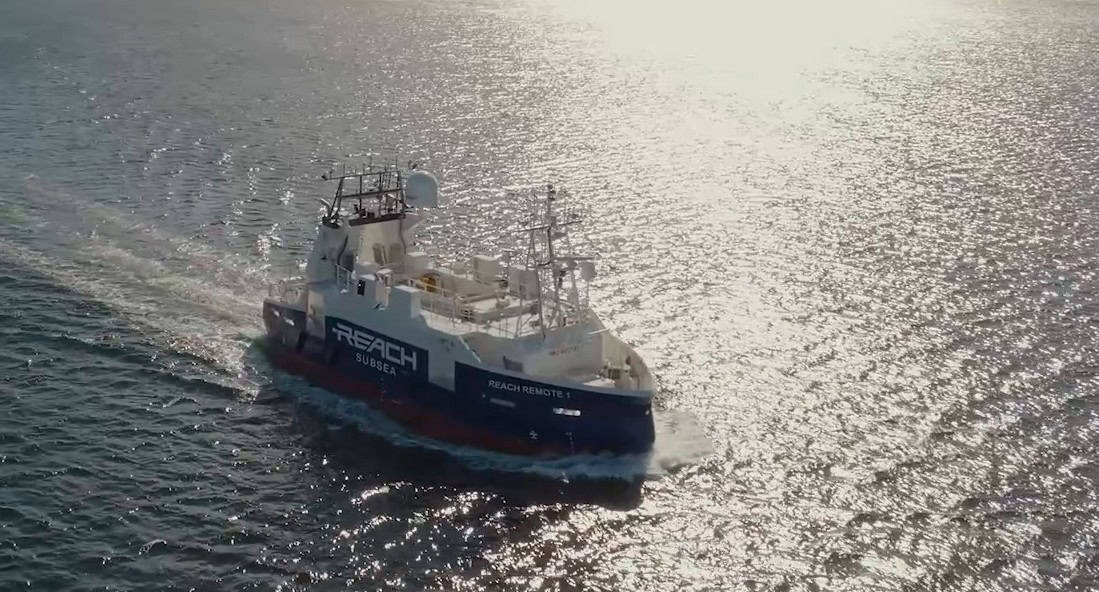
Reach Subsea has achieved a significant industry milestone with the granting of a trading permit to operate its Reach Remote 1 Uncrewed Surface Vessel (USV) entirely through remote control—without the need for a traditional support vessel.

The permit was issued by the Norwegian Maritime Authorities, with technical validation and support from DNV. Reach Remote 1 has already been in full commercial operation, and this permit initiates the final phase towards full certification.

“The Reach Remote programme is central to our strategy to transform subsea operations through ocean robotics. This milestone reflects the extraordinary collaboration across our teams and with the Norwegian Maritime Authorities.” – Jostein Alendal, CEO of Reach Subsea.

This is the first approval of its kind for an USV of this size with integrated Work Class ROV capability, representing a significant milestone for the maritime and offshore industry.

“Since start of operations in April a support vessel has enabled human eyes to observe while demonstrating remotely controlled unmanned operations. Our people have proved that Reach Remote has equivalent or better maritime safety level and situational awareness compared to manned vessels, which is validated by DNV and NMA through this trading permit.” – Inge Grutle, COO of Reach Subsea.

On Saturday, 11 October, Reach Remote 1 sailed off to continue her work for Shell on the Ormen Lange field, now entirely on her own, marking a historic moment for Reach Subsea and the future of remote-controlled subsea services.

Reach Remote 1 is the first in a new class of USVs developed to perform offshore tasks with significantly lower emissions and reduced need for offshore personnel. As Reach Remote 2 prepares for deployment in Australia and with Reach Remote 3 and 4 under construction, Reach Subsea continues to push the boundaries of what’s possible at sea and beneath the surface.


Latest News

Bibby Marine has launched its pioneering electric commissioning service operation vessel (eCSOV), Staffordshire, at Armon Shipyard in Vigo, Spain, marking a key milestone in the development of electric vessels for offshore wind operations.

Bibby Marine Launches Electric CSOV Staffordshire

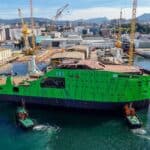
Electric commissioning service operation vessel enters the water at Armon Shipyard in Spain, marking a major milestone in Bibby Marine’s next-generation offshore support vessel...
Liebherr’s LS-C 60 cylinder-luffing ship crane has been selected for the Mareva Nui II, a cargo and passenger vessel being built to serve island communities across French Polynesia’s Tuamotu archipelago.

Liebherr Crane Selected for French Polynesia Cargo Vessel

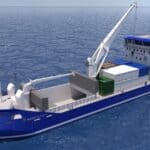
The LS-C 60 cylinder-luffing crane will provide lifting capacity of up to 40 tonnes aboard the cargo and passenger vessel serving French Polynesia’s Tuamotu...
PowerCell Group will supply 10 Marine System 225 fuel cell units for two additional hydrogen-electric bulk carriers being developed by GMI Group AS, expanding the programme to four vessels with 5.4 MW of total installed fuel cell power.

PowerCell Secures Second GMI Group Fuel Cell Order

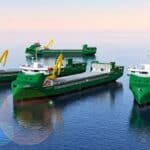
The latest order builds on a September 2025 contract as GMI Group advances plans for a new generation of hydrogen-electric commercial vessels PowerCell Group will...
Yinson GreenTech’s marine electrification business, marinEV, has selected Zeabuz to provide the autonomy platform for the Langkawi Electric Ferry Project, an initiative aimed at establishing Malaysia’s first commercial, open-sea, fully electric passenger ferry service.

Zeabuz Selected for Malaysia’s Langkawi Electric Ferry Project

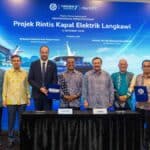
Yinson GreenTech’s marinEV selects Zeabuz to equip two HydroFerries with autonomous capabilities for Malaysia’s planned electric passenger ferry service Yinson GreenTech’s marine electrification business, marinEV,...

Related news