


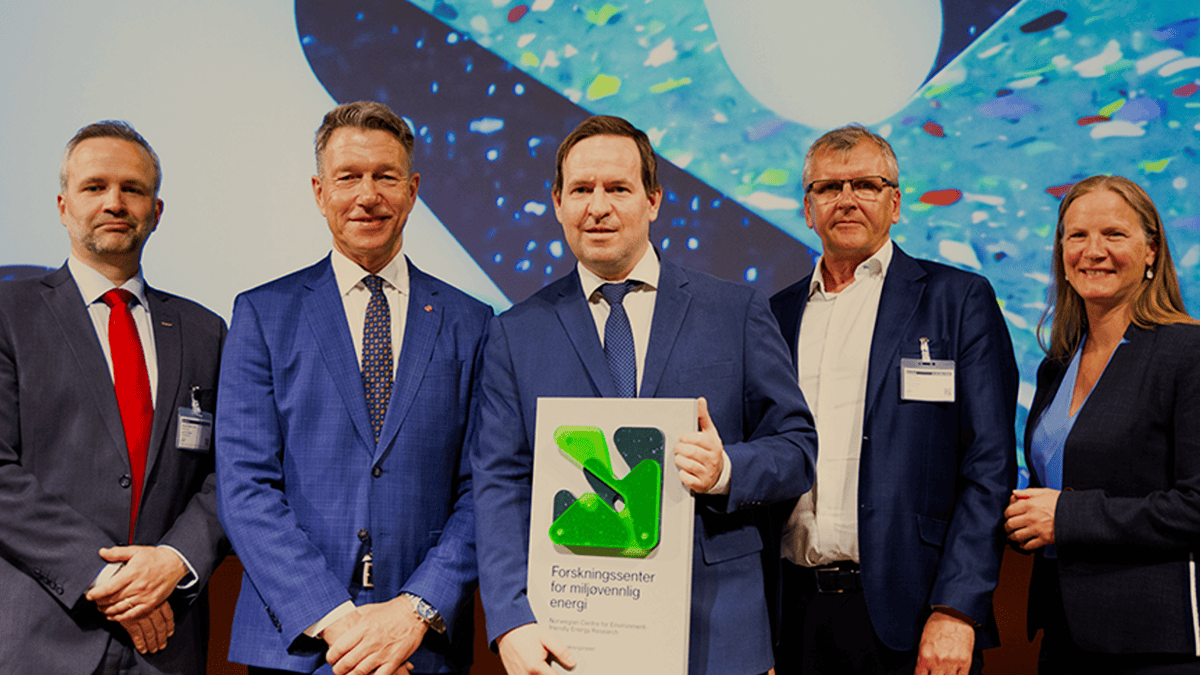
Together with 12 research institutes and around 50 industrial partners, VARD has received funding from the Research Council of Norway for a new research centre for renewable energy to speed up the green transition in the maritime sector. FME MarTrans is awarded 300 million NOK over eight years.
Accelerating the green transition of the maritime sector, reducing energy consumption, and replacing fossil fuels with renewable fuels is no easy task. Now a new research centre, FME MarTrans, will accelerate the development.
FME Maritime Energy Transition (MarTrans) is an 8-year collaborative project with 65 partners from the maritime industry and research environment. The focus is research, innovation, and education to accelerate the green transition in maritime shipping, while increasing value creation and exports for the Norwegian maritime industry.
Vard‘s role in FME MarTrans is to contribute with financial support and resources in various projects. The research centre also serves as a “birth unit” for new collaborative projects between the partners.
“This will be an important arena for networking, cross-border collaboration, and an arena to add relevance to the research work.” said Håvard Vollset Lien, Vice President Research and Innovation at Vard.
The world’s largest maritime research programme
With total funding from the Research Council of Norway and the industrial partners of more than NOK 300 million, this will be the world’s largest maritime research programme of its kind. Trond Vikan Johnsen, Centre Director at SINTEF Ocean, is looking forward to getting started.
“The maritime community is well underway with the green transition. Over the past decade, local pollution has been greatly reduced and major cuts have been made in greenhouse gas emissions per goods transported, but with an ever-increasing need for transport and an ambition of zero emissions in 2050, we still have major challenges ahead of us,” says Johnsen.
As many as 18 shipping companies with a total of around 450 ships in operation are participating in the centre. Norway has the world’s fifth largest fleet of ships and therefore has a good opportunity to make a difference in global emissions from the sector.
The initiative for FME MarTrans comes from SINTEF Ocean and is based on the previous SFI Smart Maritime project that Vard participated in 2015-2023.
What will FME MarTrans do?
The maritime sector currently accounts for 9 % of Norway’s total greenhouse gas emissions and 12 % of global greenhouse gas emissions from the transport sector. If we are to cut emissions in maritime transport, we must solve four main challenges:
- Environmentally friendly fuel is expensive, and access scarce. Thus, consumption must be drastically reduced through energy optimization.
- To use the new energy carriers safely and efficiently, the energy systems on board must be further developed.
- Making green fuels available requires the development of supply chains and new port infrastructure.
- A sustainable transition requires that new technologies are supported with knowledge and development of business models, environmental impact, regulations, and energy system integration.
– FME MarTrans will organize much of its research activities and educational pathways around these areas, but will also drive innovation and piloting through company-controlled demo projects, says Centre Director Johnsen.
The work will start in the fall of 2024 and finish in 2032.
Partners:
Research institutions: SINTEF Ocean, SINTEF Energy, SINTEF Industry, SINTEF Ålesund, NTNU, NHH, UiT, Chalmers (SE), DTU (DK), VTT (FI), IIASA (AUT), NTUA (GRE).
Industry and public partners: Amon Maritime, AQS, Bergen Engines, Brunvoll, Corvus, DNV, Eitzen Rederi, Elinett, Fjord Base, Fjuel, Frøy, Gard, Gasnor, GC Rieber Shipping, Global Centre for Maritime Decarbonisation, Glocal green, GreenH, Grieg Star, HAV Group, Havila Shipping, Hydrogenious LOHC Maritime, Hyds, Höegh Autoliners, Island Offshore, Jotun, K.G. Jebsen Skipsrederi, Klaveness, Kongsberg, Kristiansand Havn, Miljødirektoratet, Moen Marin, Marine and Port Authorities of Singapore, Narvik Havn, Navtor, North Sea Container Line, Norske Havner, Oslo Havn, Plug, Rederiforbundet, SFL Corp, Sirius Design & Integration, Sjøfartsdirektoratet, Skarv Shipping Solutions, Solvang, Teco2030, Trondheim Havn, Trøndelag fylkeskommune, Ulmatec Pyro, Ulstein, Utkilen, Vard Group, Yara Marine, Østensjø Rederi