



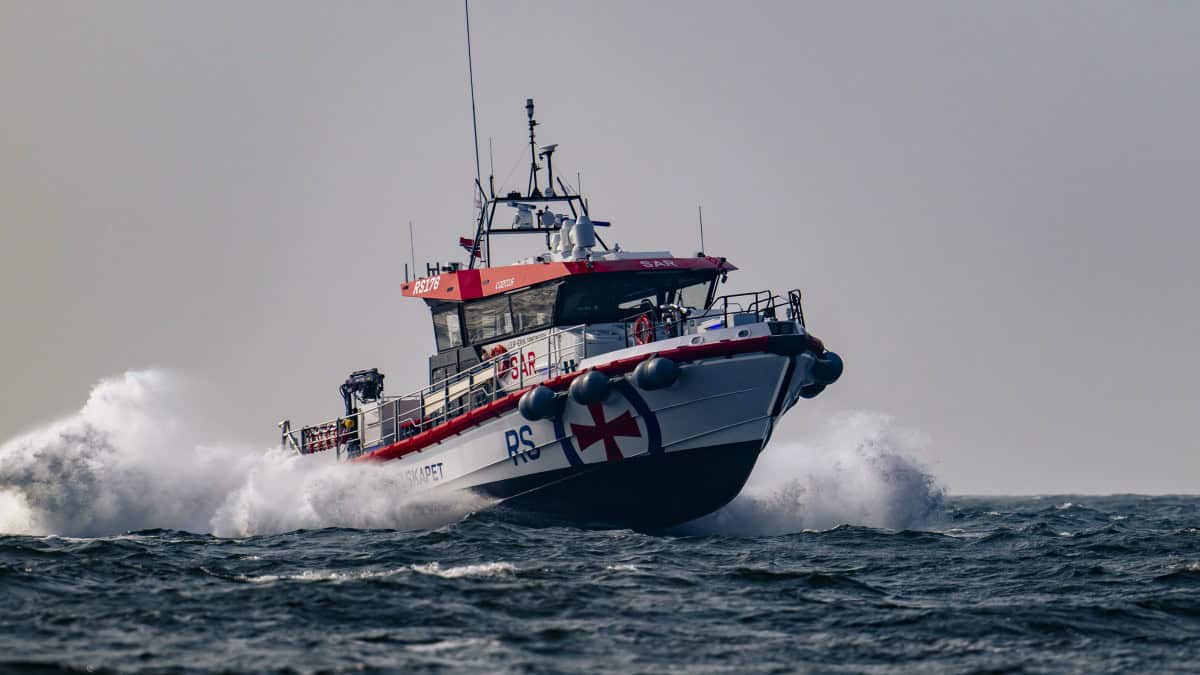
New regulations introduce mandatory continuous whole-body vibration monitoring and formal Safety Management Systems ahead of the December 2026 compliance deadline
The publication of Workboat Code Edition 3 (WB3) marks one of the most significant regulatory updates for the UK workboat sector in more than a decade. With a final compliance deadline of 13 December 2026, operators now face a shift from periodic, survey‑based safety checks to a model built on continuous, data‑driven oversight.
While the headline change is the introduction of mandatory continuous whole‑body vibration (WBV) monitoring, WB3 also brings a new requirement for a formal Safety Management System (SMS) under Annex 8. For many operators, particularly smaller fleets, this will require a procedure change in how safety is documented, evidenced, and managed.
A code designed for modern operations
The workboat sector has evolved rapidly in recent years. Faster vessels, more demanding offshore operations, and increasingly stringent client expectations have all contributed to a more complex risk environment. WB3 is the MCA’s response, a code designed to reflect modern operations and modern technology.
Two changes stand out:
- Continuous WBV monitoring, assessed throughout every voyage
- Mandatory SMS documentation, applicable to all operators regardless of fleet size
Most operators already run safe operations, but WB3 requires them to prove it. The SMS requirement formalises what many have done informally for years, while the WBV requirement introduces a new operational dimension: compliance that must be demonstrated in real time, not retrospectively.
Why whole‑body vibration monitoring matters and why it’s challenging
Whole‑body vibration exposure has long been recognised as a safety concern, with ISO 2631‑1 providing thresholds for daily exposure and action values. What WB3 changes is the expectation that exposure must be continuously assessed during the voyage, not simply measured at intervals or reviewed after the fact.
Magnús Þór Jónsson, co-founder of Hefring Marine and a specialist in WBV research, explains that WBV is rarely caused by a single factor. Instead, it is “a combination of vessel motion, wave impacts, machinery vibration, and the simple reality of time spent at sea.” High‑speed craft, he notes, are particularly vulnerable; “A small vessel operating at 25–35 knots in a moderate sea state can expose crew to repeated vertical shocks that accumulate far faster than most operators realise.”
Industry data from offshore wind, pilotage, and coastal service fleets consistently shows that exposure can vary considerably. This variation is influenced by factors such as:
- Vessel speed
- Heading relative to sea state
- Route selection
- Localised wave patterns
Two skippers on the same vessel, on the same day, can generate entirely different exposure profiles based solely on operational decisions.
The human impact: What WBV does to crew
Magnús’ own research reinforces the scale of the issue. A survey of 166 Icelandic mariners found that chronic pain, spinal issues, and musculoskeletal injuries were widespread among those operating smaller or high‑speed vessels. More than 40 per cent of respondents were over 60, and many reported long‑term back, knee, and shoulder problems linked to years of vibration exposure.
Supporting this, interviews with former U.S. Coast Guard personnel revealed similar patterns with three out of four veterans who had spent their careers on 10-15 metre high‑speed crafts reported chronic pain, requiring medical treatment or surgery. Those who transitioned to larger vessels experienced significantly fewer issues. “WBV is not just a comfort problem,” Magnús says. “It affects fatigue, cognitive performance, reaction time, and long‑term health. When 80-85 per cent of marine accidents are linked to human error, anything that degrades alertness becomes a safety risk.”
What does “continuous monitoring” really mean?
One of the emerging challenges is that many operators still interpret “monitoring” as installing a sensor and generating a report. WB3 goes much further, where continuous monitoring requires:
- Real‑time assessment, not post‑voyage analysis
- Operational decision‑making, not passive data collection
- Documented responses, not informal judgement calls
This introduces a new capability requirement for crews and although experienced mariners are adept at reading conditions and adjusting speed or heading accordingly, they have not previously been required to quantify vibration exposure against ISO thresholds while underway and record the rationale for their decisions. For smaller operators in particular, this represents a significant change.
How WB3 will change day‑to‑day operations
Under WB3, speed and route decisions become compliance decisions. When exposure approaches the action value, the skipper must either:
- Reduce speed
- Alter heading
- Change route
- Or continue with a documented justification
This transforms what was once an informal seamanship judgement into a recorded, auditable decision within the SMS.
The practical challenge is that in demanding conditions, crews do not have time to interpret vibration graphs or raw sensor outputs. They need clear, actionable guidance that translates data into operational choices, for example, reducing speed by a specific amount or adjusting heading to reduce exposure.
The role of intelligent decision support systems
The shift introduced by WB3 is not about replacing seamanship with automation. It is about ensuring that operational decisions are measurable, evidenced, and aligned with regulatory thresholds.
Digital systems that simply collect data without helping crews act on it risk creating a new compliance gap of “we monitored, but we didn’t respond effectively.” WB3 requires continual assessment, not just continual measurement.
This is driving interest in intelligent decision‑support platforms, such as Hefring Marine’s IMAS system, which provide:
- Continuous WBV measurement
- Interpretation of contributing factors (speed, heading, sea state)
- Real‑time operational recommendations to reduce exposure
Magnús describes the philosophy behind IMAS succinctly: “The skipper should stay in control, but they should never have to guess. If the system can tell them that reducing speed by three knots will keep exposure below the threshold, that’s actionable safety.”
A shift driven by regulation, accelerated by the market
Although WB3 is the regulatory catalyst, market forces are accelerating the adoption of continuous monitoring:
- Major port operators and offshore wind developers are beginning to require WBV monitoring as a condition of charter
- Insurers are increasingly recognising that continuous operational data provides a more accurate picture of risk than periodic surveys
- Operators with strong data records are already seeing improved commercial positioning
This mirrors trends across the wider maritime sector, where data‑driven safety is becoming a competitive differentiator.
Preparing for the future
With the 2026 deadline approaching, operators should act now to ensure they are ready for the transition. This begins with reviewing the code in detail, assessing current operational capabilities, adopting tools that support rather than burden crews, and starting to collect meaningful operational data as early as possible.
WB3 formalises an industry change that has been building across the industry for years of a move from experience-based operations towards data-informed, continuously evidenced safety management. Operators that embrace intelligent monitoring and decision-support technologies will be better positioned to demonstrate compliance, improve safety outcomes, and strengthen their competitive advantage in an increasingly demanding market. As Magnús puts it: “The sea will always be unpredictable, but how we respond to it doesn’t have to be.”










)