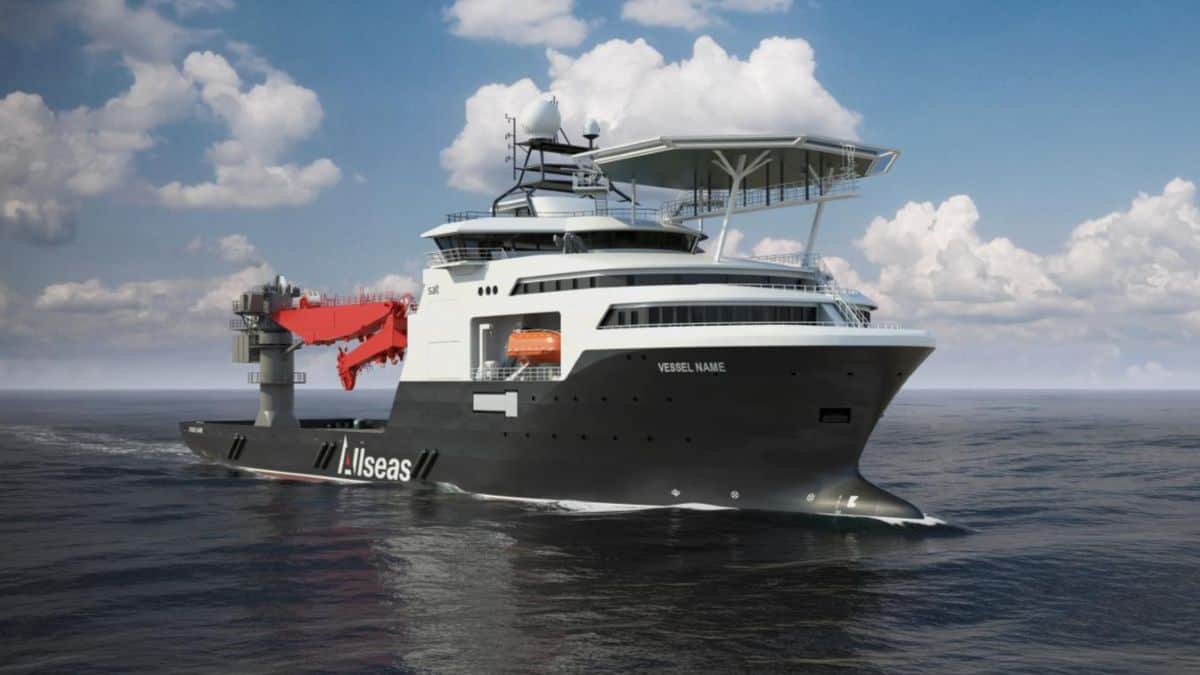
Allseas is bolstering its offshore construction capabilities with the acquisition of two newbuild offshore construction vessels (OCVs). This strategic investment reinforces the company’s fleet versatility and positions it for sustained growth in an evolving energy and subsea market.
Contracts for the two state-of-the-art vessels were signed on 9 April, with construction to take place at Wuchang Shipbuilding Industry Group in China. Based on the proven Salt Ship Design 308 OCV design, the vessels feature advanced equipment and systems to deliver enhanced performance, flexibility and functionality.
The new vessels boost Allseas’ construction and support capacity, enabling greater deployment flexibility and freeing up existing offshore construction vessels for larger, more complex scopes of work. This investment ensures Allseas remains at the forefront of the growing offshore construction and subsea installation sectors.
The first vessel is scheduled for delivery in September 2026, with the second following in December 2026.
Cutting-edge capabilities for a dynamic market
Each vessel will measure 100 metres in length, feature a 1,100 m² cargo deck and accommodate up to 110 personnel. Advanced features include:
- DP2 dynamic positioning system
- 150-tonne active heave-compensated offshore crane
- Hangar housing two work-class ROVs
- Hybrid 1,500-kWh battery energy storage system
- Methanol-ready propulsion design for future fuel flexibility.
Designed with maximum operational versatility in mind, the vessels are ideally suited for subsea construction, ROV support, and inspection, maintenance and repair activities.
Strategic investment for future growth
Dries van Strijp, Allseas’ Vice President Operations, explains that the decision to acquire two newbuild vessels follows a thorough evaluation of all options to expand the fleet’s versatility and meet future market demand.
“We recognised a clear need to optimise our vessel deployment to support an increasingly diverse and complex project portfolio,” says van Strijp. “After carefully exploring all available options, it became clear that securing two next-generation newbuilds – fully optimised with the latest technology – was the best long-term solution to strengthen our capabilities and capture new opportunities in a growing offshore market.”
The addition of these high-performance vessels not only expands Allseas’ operational flexibility but also reinforces its commitment to delivering sustainable, future-ready solutions to the global offshore energy industry.