
Patented polyurethane FlexLanding system provides a low-maintenance alternative to steel structures across offshore wind monopiles, quay walls and CSOVs
Buoyant Works, the specialist manufacturer of high-performance fendering and offshore wind farm impact protection products, is highlighting the breadth of applications for FlexLanding, its innovative polyurethane landing system designed to provide a flexible alternative to traditional steel landing structures.
Developed for demanding marine and offshore environments, FlexLanding has been engineered to support safer, lower-maintenance vessel interaction across three key operational settings: conventional offshore wind monopiles, quay wall installations and commissioning service operation vessels (CSOVs).
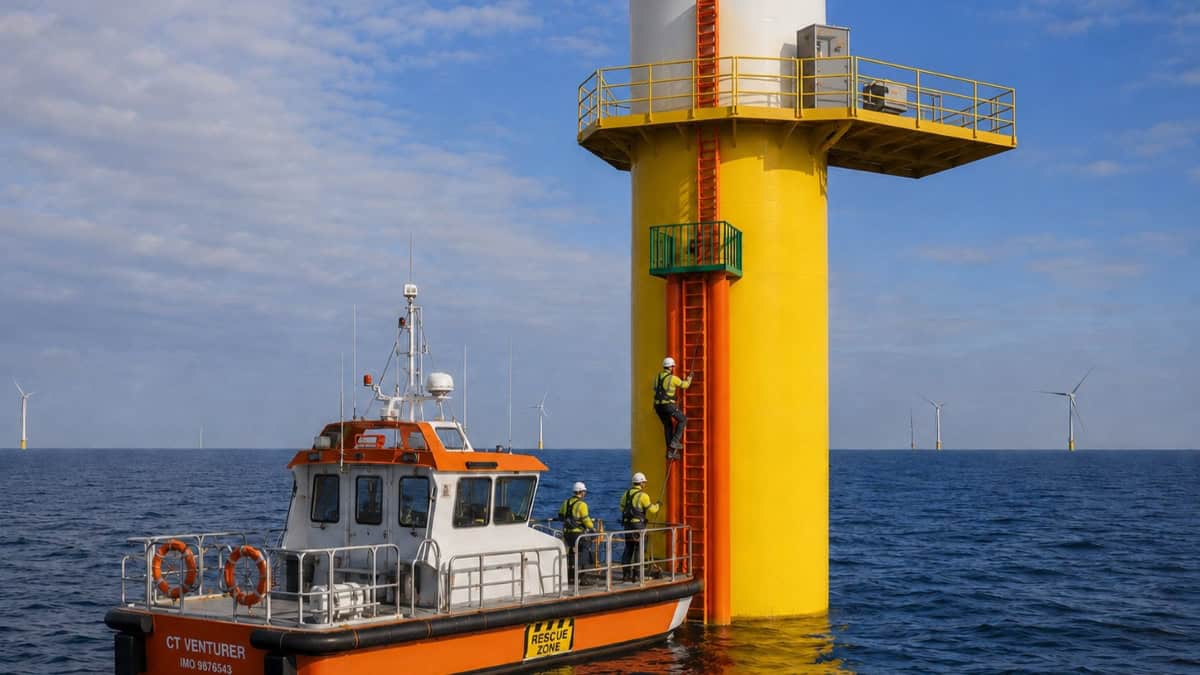
Designed for the modern offshore wind monopile
For traditional monopile foundations, FlexLanding provides a resilient interface between crew transfer vessels, daughter craft and the turbine structure. The system can incorporate integrated ladder steps for crew access, helping support safe and efficient transfers during inspection, maintenance and emergency response operations.
By replacing exposed steel landing structures with a high-performance polyurethane solution, FlexLanding is designed to reduce corrosion-related maintenance while absorbing impact and improving grip at the point of vessel contact. Its modular construction also allows individual sections to be replaced when required, helping operators minimise downtime and avoid unnecessary replacement of full assemblies.
Adaptable protection for quay wall applications
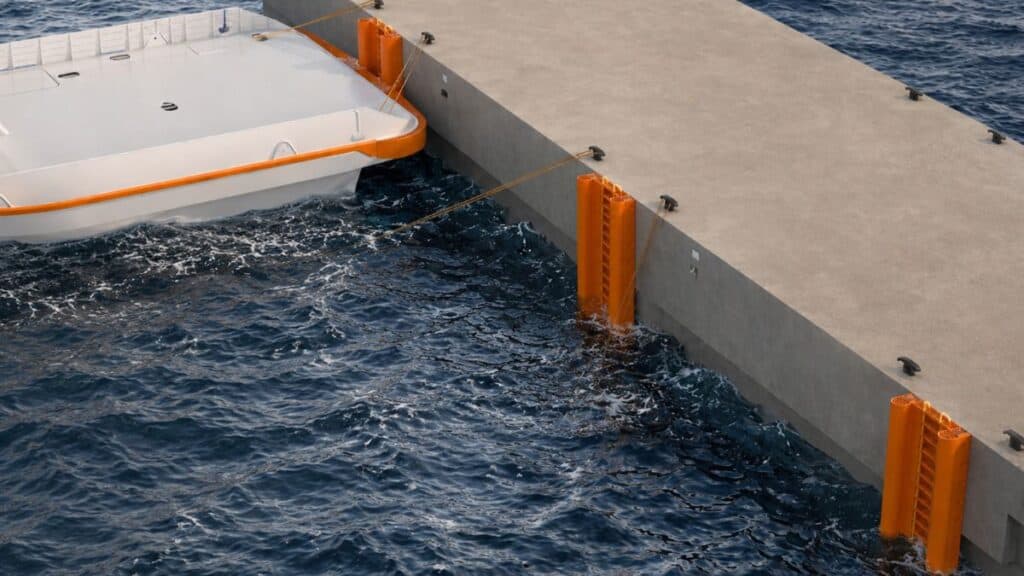
Beyond offshore wind structures, FlexLanding can be applied to quay wall environments where vessels require a durable, forgiving and easily maintained landing interface. In ports, harbours and service bases, the system can help protect quay infrastructure and vessel hulls during repeated berthing, transfer and operational contact.
Its lightweight modular design offers a practical alternative to conventional rubber or steel arrangements, supporting straightforward installation, targeted replacement and long-term operational resilience. This makes FlexLanding particularly relevant for facilities supporting offshore wind logistics, crew transfers, vessel servicing and high-frequency marine operations.
Supporting safer CSOV and daughter craft operations
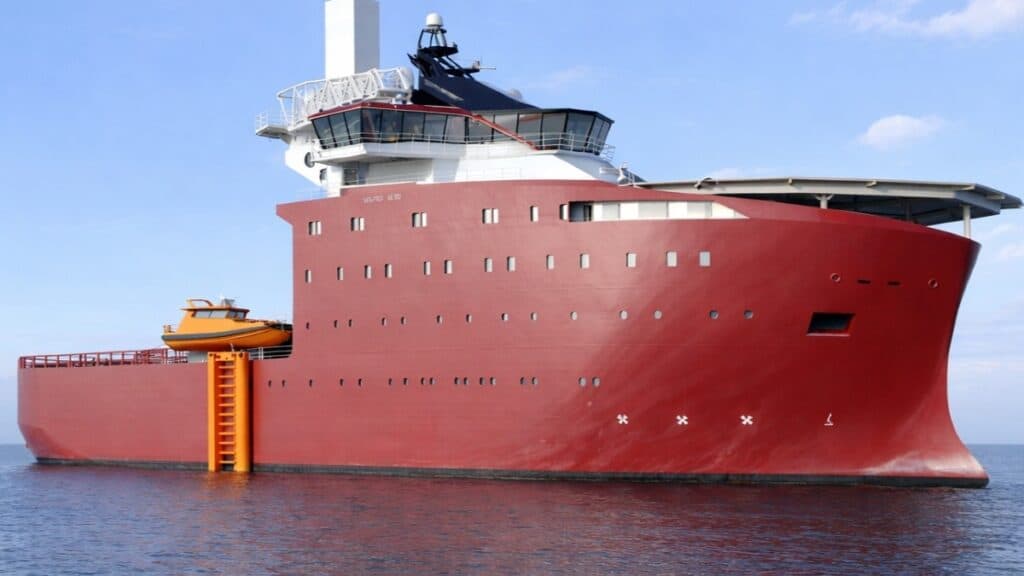
For CSOVs, FlexLanding can be configured either for emergency crew access or cargo mooring. The crew access version integrates ladder steps into the landing system, enabling personnel transfer from CTVs or daughter craft to the vessel. For cargo operations, the steps can be removed to create a clean interface that supports cargo mooring, while maintaining contact performance between the craft and landing structure.
This flexibility enables operators to specify a landing arrangement that reflects how the vessel will be used in the field, from routine offshore wind servicing to emergency access and cargo transfer support. The result is a system that aligns with the multi-role nature of today’s offshore service vessels.
Built around modularity, durability and reduced maintenance
Manufactured using Buoyant Works’ high-performance polyurethane, FlexLanding is designed for long service life in harsh marine environments. The material selection and modular design help reduce maintenance requirements, lower the need for offshore interventions and support more efficient vessel operations.
Across monopile, quay wall and CSOV applications, FlexLanding gives operators a single adaptable platform that can be configured around access, protection, grip and operational requirements.