


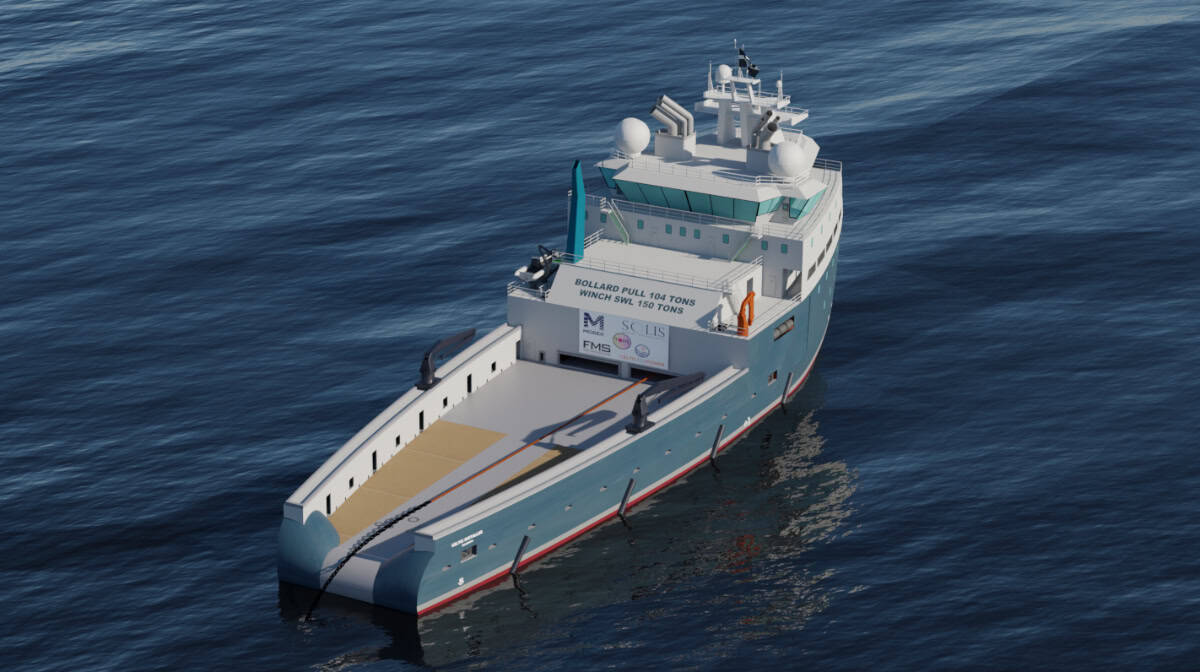
A consortium of maritime innovators led by Morek Engineering has unveiled an advanced Floating Wind Installation Vessel design concept tailored for the rapidly growing Floating Offshore Wind sector, marking a significant milestone with the completion of the first feasibility stage. Consortium partners include naval architects Solis Marine Engineering, innovation specialists Tope Ocean, marine operations specialists First Marine Solutions and Celtic Sea Power.
Bob Colclough of Morek Engineering explains, “We assembled a team with deep market insight and offshore expertise, then overlaid that with a clear vision for low-emission fuel systems. Our goal wasn’t simply to retrofit an existing design with greener propulsion, but to pinpoint where we could deliver the greatest carbon reductions in the construction of future floating wind farms. We expect this to be attractive to a wide range of stakeholders in the floating offshore wind industry.”
The project is part of the Clean Maritime Demonstration Competition Round 4 (CMDC4), funded by the UK Department for Transport and delivered by Innovate UK. CMDC4 is part of the Department’s UK Shipping Office for Reducing Emissions programme, a £206m initiative focused on developing the technology necessary to decarbonise the UK domestic maritime sector.
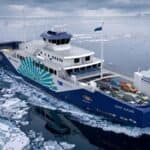
The Future FLOW Installation Vessel (FFIV) design incorporates low-carbon fuels providing fuel efficiency advantages, a hydrodynamically optimised hull and expanded mooring capacity. These innovations translate into significant time and cost savings compared to current vessels in operation.
The FFIV concept focuses on a section of the floating wind installation process that is yet to be optimised. It will work with any of the three main anchor types for floating wind turbines being considered by the industry: drag embedment anchors, which require installation by high bollard pull anchor handling vessels, suction piles and driven piles, which require large subsea cranes to install them into the seabed. In each case, the FFIV meets the requirements of the next phase by installing the mooring lines onto the installed anchors, enabling quick connection to floating foundations towed to the offshore site.
“We’ve reimagined the mooring installation process, designing a vessel focused on these new requirements”, adds Simon Hindley of Solis Marine Engineering. “By combining an energy-efficient hull form with a low-emission powertrain, we can tackle high-duty construction tasks without relying on traditional, fossil fuel-powered vessels, improving the overall efficiency of the offshore construction activities.”
The FFIV has been designed to maximise mooring line capacity whilst minimising running costs. The selection of azimuth thrusters and reduced resistance to station-keeping and dynamic positioning efficiency is partnered with the alternative fuel choice of methanol.
To maximise mooring line capacity, the FFIV has a large below-deck cable tank for synthetic mooring ropes as well as large chain lockers to hold the kilometres of chain expected for the floating wind industry.
Ian Godfrey of Tope Ocean summarised: “At present, the global fleet falls far short of what is required for serialised installation of floating turbines and their infrastructure. This innovative concept is the kind of advanced technology innovation the Floating Offshore Wind sector needs to realise the global pipeline of projects and the clean energy they can deliver.”
Having showcased the concept to selected industry experts at a Society of Maritime Industries event in London this month, the consortium is now advancing toward the next design stage. This will focus on the equipment for handling large quantities of synthetic ropes, weather-limit analyses, and regulatory and design challenges faced by methanol propulsion systems. The target is to secure an Approval in Principle by a major ship classification society by December 2025.