



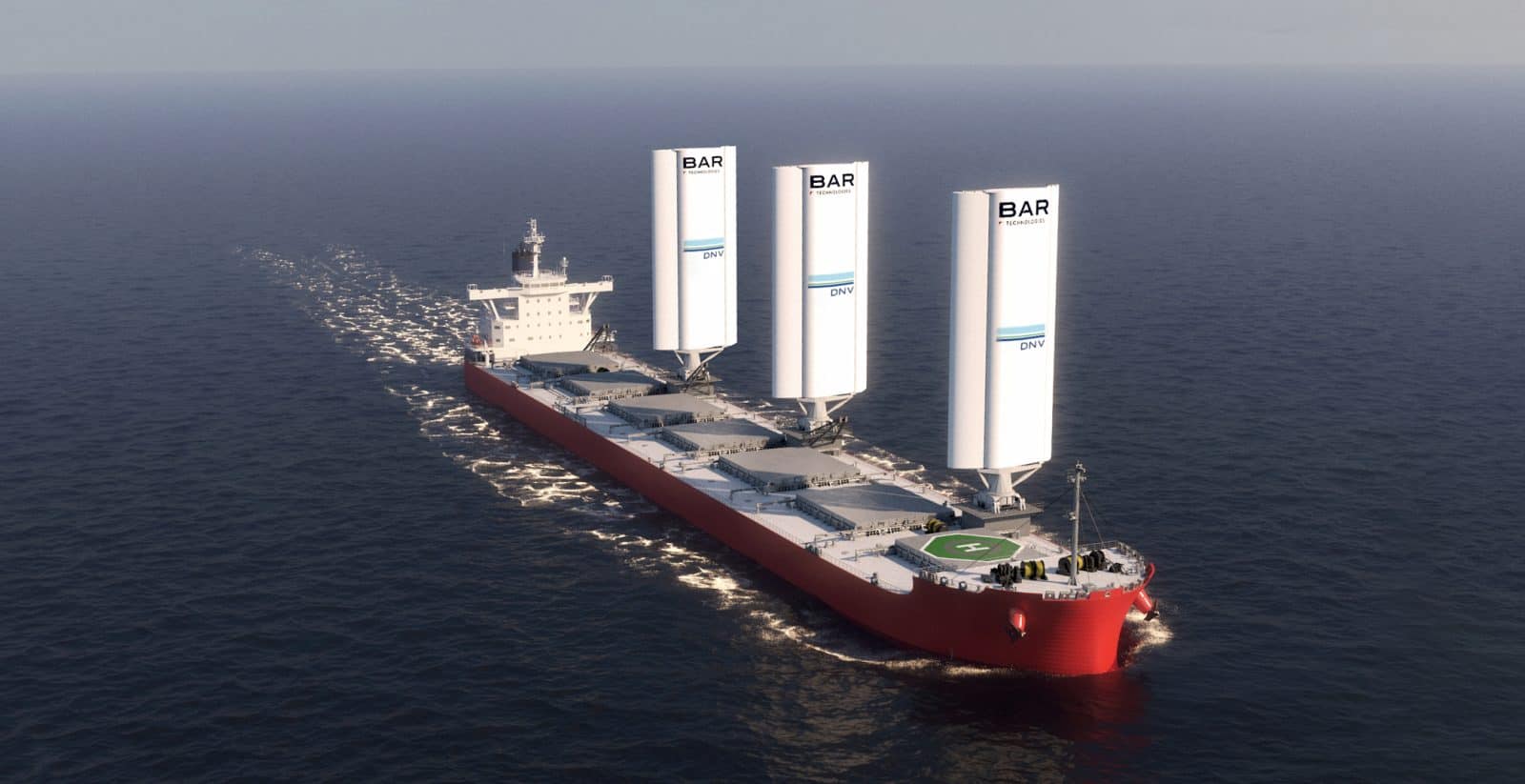
Classification society DNV has released an update to its Wind Assisted Propulsion Systems (WAPS) technical standard (ST-0511). The major update introduces new methods for evaluating WAPS fatigue strength, as well as the performance of the systems in extreme conditions.
Wind Assisted Propulsion systems (WAPS) are one of the most promising measures to assist the decarbonization of shipping today. Wind is an inexhaustible, free, zero carbon energy source, and a combination of advanced aerodynamics, automation, computer modelling, and new materials are unlocking a new generation of innovative wind systems.
While experience in using the systems is still developing, WAPS have already been implemented on commercial vessels and can enable fuel savings of up to 20%. The new updates to DNV’s industry leading technical standard (ST-0511) will support the growing interest in WAP systems as the industry looks to enhance sustainability and reduce fuel consumption in a tightening regulatory and economic climate.
“As we continue to build experience on WAP systems, and as new systems come onto the market, the case for owners who are looking at these systems as part of their efficiency and sustainability strategies grows stronger,” said Hasso Hoffmeister, Senior Principal Engineer at DNV Maritime. “Our customers are extremely focussed on maintaining compliance with the incoming GHG reduction targets and are seeing that WAPS can make a valuable contribution in this respect.
The interaction of WAPS with the structure of a vessel’s hull can be quite complex, so the update features a comprehensive new section on fatigue strength, including calculations that offer a completely new approach to the derive the load combinations from the wind and inertia forces on WAP systems. In addition, the standard sets out a new approach to assessing how WAPS perform under extreme wind conditions. Finally, the documentation requirements have been adjusted to streamline the process.
“We have recently seen the announcement of several lighthouse projects, which are taking WAPS further and will further showcase the potential of the wind as both primary and additional propulsion for a modern cargo vessel. This is why it is vital for us at DNV to use our technical expertise to continue innovating and enhancing our rules and technical standards and ensure that our customers can reap the benefits of these exciting new developments with confidence,” said Hoffmeister.
The WAPS ST-0511 standard provides a framework for the verification and certification of wind assistance propulsion systems. It can be applied in obtaining an Approval in Principle, a Design approval or a Type approval. These verifications and certifications can also be obtained as part of the integration into a vessel or independently. The ST-0511 technical standard is a complement to the DNV WAPS class notation, which is focussed on the integration of systems onboard vessels, whether retrofitted or as part of a newbuilding.






 are one of the most promising measures to assist the decarbonization of shipping today. Wind is an inexhaustible, free, zero carbon energy source, and a combination of advanced aerodynamics, automation, computer modelling, and new materials are unlocking a new generation of innovative wind systems. While experience in using the systems is still developing, WAPS have already been implemented on commercial vessels and can enable fuel savings of up to 20%. The new updates to DNV’s industry leading technical standard (ST-0511) will support the growing interest in WAP systems as the industry looks to enhance sustainability and reduce fuel consumption in a tightening regulatory and economic climate.)