


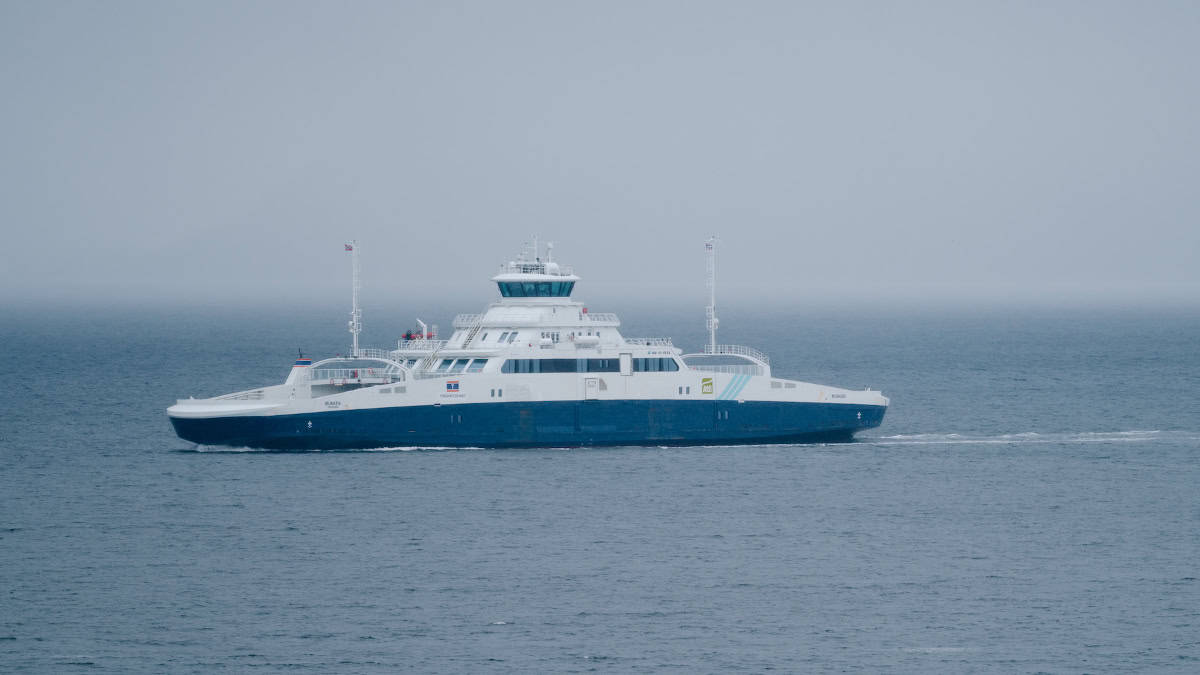
Norwegian ferry operator Torghatten and Kongsberg Maritime have entered into a contract for the development of a system for self-driving ferries on the Flakk-Rørvik route.
The car ferry service operation is part of the Norwegian highway network – County Road 715 – and connects the city of Trondheim with communities on the Fosen peninsula.
Norwegian ferry operator Torghatten and Kongsberg Maritime have entered into a contract for the development of a system for self-driving ferries on the Flakk-Rørvik route.
The car ferry service operation is part of the Norwegian highway network – County Road 715 – and connects the city of Trondheim with communities on the Fosen peninsula.
The strategic collaboration between the two companies will see Kongsberg Maritime technologies installed on the ferries, including its auto docking, auto crossing, collision avoidance and situational awareness capabilities. The new systems will aim to reduce fuel consumption, improve safety and punctuality, and optimise the staffing on ferries, in accordance with maritime regulations.
Torghatten’s Technology Director, Jan-Egil Wagnild, said: “The ferry industry has several challenges where autonomous processes can be part of the solution. Self-driving ferries can help increase safety and punctuality, reduce energy consumption, and take over routine tasks from the crew, who can then spend their attention on the sea instead of on the dashboard and navigation controls.
“We have several industrial environments in Norway that are at the forefront internationally in the field of maritime autonomy. Now there’s another platform where the key players can test new technologies in operational conditions and commercialise these solutions.”
Addressing the shortage of seafarers, Wagnild adds: “At the same time, recruitment in our industry is generally far too weak, and we all struggle to get hold of enough people.”
Mariann Grønseth, Managing Director of Torghatten Midt, points to a growing demand for digital technology in the industry. She says: “Autonomous solutions can help increase safety and operational efficiency. In addition, autonomy can be a natural step forward to give the crew additional support systems to improve their everyday working life.”
Through successful demonstrations of its remote and autonomous technologies on several pilot projects, Kongsberg Maritime has already proved that remote and autonomous technologies are applicable to coastal or inland waterway vessel types.
Pål André Eriksen, Kongsberg Maritime, Senior Vice President, Remote & Autonomous Solutions, adds: “The basic technology is already in place with us, but for it to be optimised and further developed, we are dependent on rolling it out on commercial vessels and building an industry around what can be commercialised for a global market.
“We are very optimistic about this project and look forward to it giving a positive boost to the maritime authorities’ work to adapt the regulations. This will facilitate a smoother development of the autonomy industry in Norway and create new opportunities for growth and innovation also beyond Norway’s borders”.
KONGSBERG is a world leader in the development of autonomous vessels, through its role as a partner or technology leader in a range of autonomy projects. These new technologies can make shipping safer, more efficient and create new and exciting possibilities for maritime operations and careers on land and at sea.
Autonomous maritime solutions can contribute to environmental sustainability and reduce costs. They can optimise routes, navigation, cargo handling while reducing energy consumption and greenhouse gas emissions.