



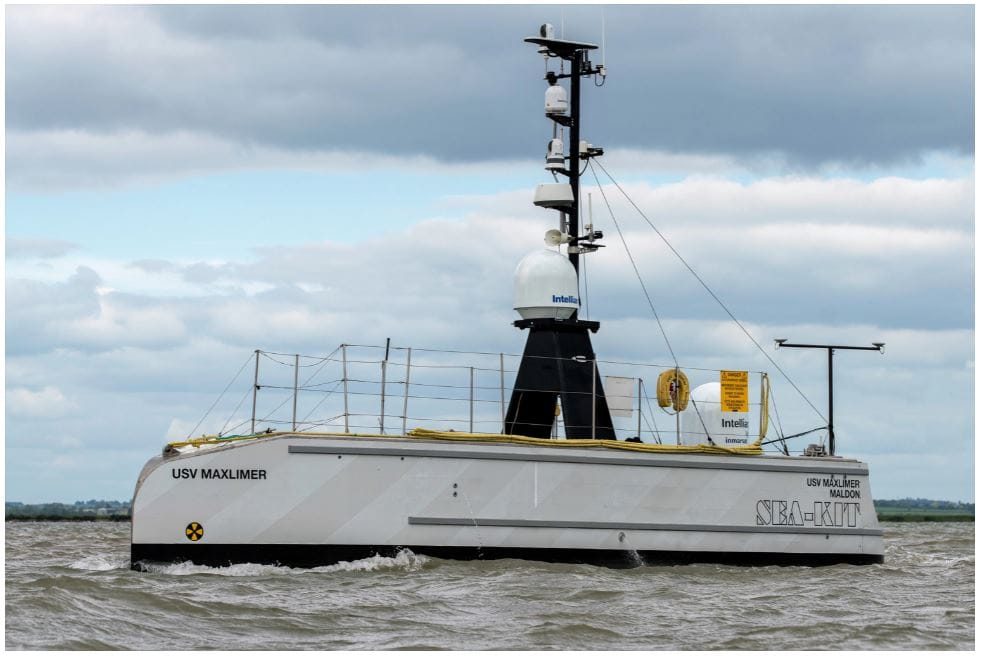
SEA-KIT International, leading designer and builder of Uncrewed Surface Vessels (USVs), has won funding to install an innovative PCB-based hydrogen fuel cell, engineered by project partner Bramble Energy, on its 12m USV ‘Maxlimer’ and demonstrate zero emission maritime operations.

SEA-KIT secured the grant through the recent Clean Maritime Demonstration Competition (CMDC) – Strand 2. The project, funded by the Department for Transport (DfT) working with InnovateUK, will showcase a successful diesel to hydrogen conversion of SEA-KIT’s proven USV design and demonstrate a route to fulfilling the UK’s Clean Maritime Plan Strategy commitment of reducing greenhouse gas emissions from shipping by at least 50% by 2050.
“SEA-KIT USVs have a dual diesel-electric hybrid drive, with propulsion coming from an electric motor powered by battery banks that are charged by in-situ diesel generators,” said Ben Simpson, SEA-KIT CEO. “This project will replace one of the diesel generators with new hydrogen fuel cell technology from Bramble Energy and demonstrate an offshore operation with zero carbon emissions.”
West Sussex-based Bramble Energy, a disruptor in the clean tech space, will design and manufacture a marinized, customised version of its printed circuit board fuel cell (PCBFC). The use of PCBs, as opposed to metallic or graphite end plates, makes the technology more suited to rugged, marine environments. Bramble Energy’s PCBFC system will sit inside an enclosure within the USV to prevent sea water ingress and corrosion.
Dr Vidal Bharath, COO of Bramble Energy said: “Bramble Energy is committed to powering a net zero economy. This project provides the perfect opportunity to demonstrate our decarbonising technology in a real world, challenging environment across a new industry with an exciting commercial partner.”
SEA-KIT will retrofit its demonstration vessel, USV ‘Maxlimer’, with the hydrogen fuel system. Data gathered from bench testing and sea trials will be utilised for the design and build of similar USVs, as well as for larger uncrewed vessel builds in the near future.
USVs are already being deployed for a range of commercial tasks, including geophysical survey, offshore inspections, surveillance and coastal asset monitoring. This collaboration between SEA-KIT and Bramble Energy aims to enable the emergence of hydrogen fuel systems as another viable option for the fast-growing USV market.
Innovate UK, the UK’s innovation agency, drives productivity and economic growth by supporting businesses to develop and realise the potential of new ideas. The CMDC projects represent the first major investment from DfT specifically aimed to drive innovation within the maritime industry.
Simon Edmonds, Deputy Executive Chair and Chief Business Officer for Innovate UK, said: “As the UK prepares to host COP26 in the maritime city of Glasgow, it is great that we can announce funding for these fantastic projects in the maritime sector that will help the UK meet its net zero goals. From this competition we saw a very high level of demand, we have seen the very best of British ideas from all over the country. It is clear that not only does the UK have a great maritime history, but also a bright and greener future too.”
The application of a hydrogen fuel source to a USV will be a world first, putting the UK firmly in the lead on zero emissions uncrewed technology for sustainable maritime growth.







, has won funding to install an innovative PCB-based hydrogen fuel cell, engineered by project partner Bramble Energy, on its 12m USV ‘Maxlimer’ and demonstrate zero emission maritime operations. SEA-KIT secured the grant through the recent Clean Maritime Demonstration Competition (CMDC) – Strand 2. The project, funded by the Department for Transport (DfT) working with InnovateUK, will showcase a successful diesel to hydrogen conversion of SEA-KIT’s proven USV design and demonstrate a route to fulfilling the UK’s Clean Maritime Plan Strategy commitment of reducing greenhouse gas emissions from shipping by at least 50% by 2050.)