Power & PropulsionElectricStillstrom Launches Two New Standalone Charging Systems

Stillstrom Launches Two New Standalone Charging Systems

Standalone charging systems expand deployment options across existing and future offshore wind developments

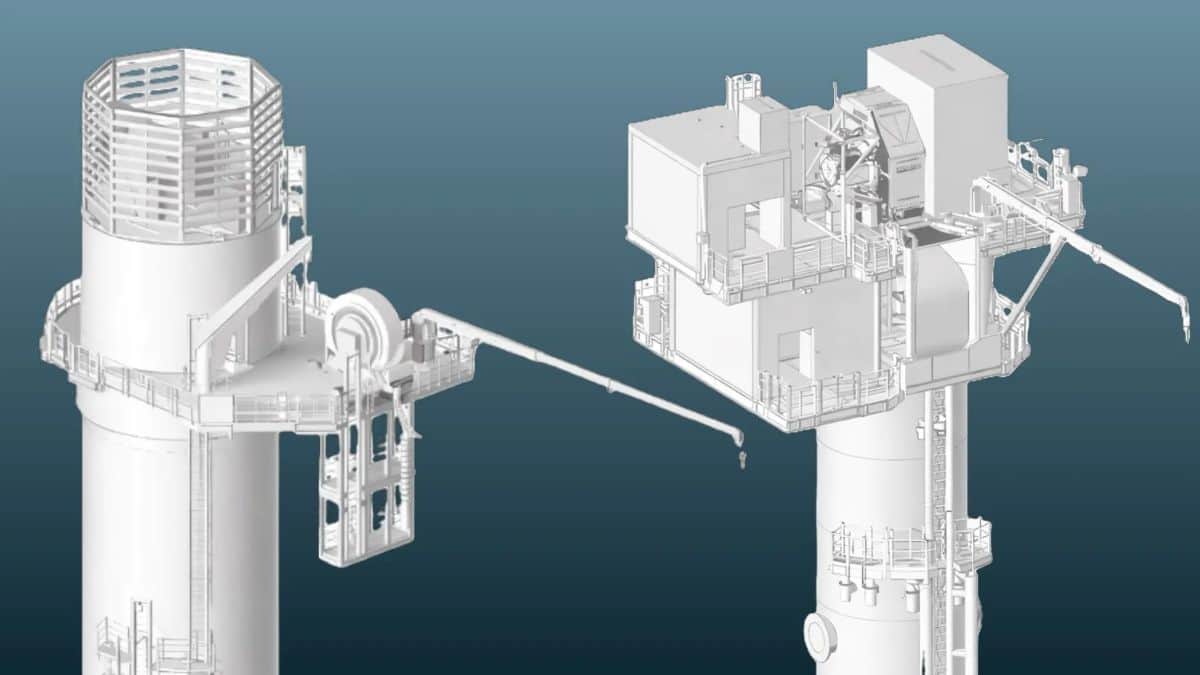
Stillstrom by Maersk, has unveiled two new standalone charging systems aimed at addressing a critical constraint in offshore operations: the reliable provision of electric power to vessels at sea.

The newly introduced Power Hub and Power Tower are designed as standalone systems, capable of operating independently from wind turbine infrastructure. This enables more flexible deployment across both existing offshore wind farms and future developments, where demand for vessel electrification is accelerating.

As wind farms move further offshore and increase in scale, service vessels are becoming increasingly central to installation, maintenance and long-term operations. Reliable offshore power is therefore a key enabler for vessel electrification, supporting reduced reliance on maritime fuels, enhanced efficiencies and lower greenhouse gas emissions across offshore campaigns.

The launch builds on the work of Stillstrom’s R&D team, with engineers Koen Legrand and Raymond Bergmann recently recognised as Inventors of the Year 2025 by A.P. Moller – Maersk, reflecting the strength of the company’s innovation. This includes multiple patents across its offshore charging technologies, as well as pending protection for both the Power Hub and Power Tower.

“Our two new monopile systems help to address the sector’s long-standing ‘chicken and egg’ challenge, where vessel electrification and infrastructure deployment must progress in step. The Power Hub is a compact, monopile-mounted structure designed for installation within operational wind farms, enabling charging capability to be added to existing infrastructure. The Power Tower is designed for new-build offshore wind projects, with a form that mirrors a turbine foundation and allows installation using standard construction vessels, tools and processes, enabling charging to be integrated from the outset.” – Koen Legrand, Stillstrom’s Detailed Engineering Manager and co-recipient of the award

“Our mission is to eliminate vessel emissions, the largest source of CO₂ in offshore wind farm operations. Electrification of SOVs is therefore essentialif the wind industry is to meet its full decarbonisation potential. What has been missing is the infrastructure to support it at sea. These new solutions give developers and operators practical, scalable options, enabling offshore charging either fully integrated within wind farm structures or through standalone offshore installations.” – Kristian Borum Jørgensen, CEO of Stillstrom


Latest News

The International Institute of Marine Surveying (IIMS), working in collaboration with the International Marine Contractors Association (IMCA) and the Workboat Association, has announced the publication of the International Workboat Code of Practice, a 122-page guide providing best-practice guidance for the construction, operation and surveying of commercial workboats.

IIMS, IMCA and Workboat Association Launch International Workboat Code of Practice

IIMS, IMCA and the Workboat Association collaborate on a 122-page guide covering vessel safety, operational standards and crew competency for commercial workboats worldwide The International...
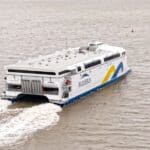
The world’s largest battery-electric ship has officially entered commercial passenger service, marking a major milestone for maritime electrification and zero-emission vessel operations. Built by Incat Tasmania for long-standing customer Buquebus, the 130-metre China Zorrilla has completed its maiden commercial voyage between Buenos Aires, Argentina, and Colonia, Uruguay, across the River Plate.

China Zorrilla Begins Electric Ferry Operations

Built for Buquebus to connect Argentina and Uruguay, the China Zorrilla, the world’s largest battery-electric ferry, marks a major milestone in large-scale marine electrification...
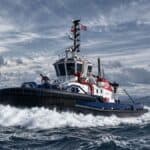
Boluda Towage has expanded its Norwegian fleet with the addition of VB NORWEGIAN FALCON, a new tug built by Sanmar Shipyards to support towing, vessel assistance and offshore operations in demanding maritime environments.

Boluda Towage Takes Delivery of VB NORWEGIAN FALCON

Sanmar-built VB NORWEGIAN FALCON features RAstar 3200 SX design, ASD propulsion and more than 6,700 hp Boluda Towage has expanded its Norwegian fleet with the...
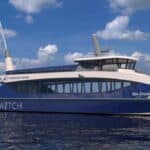
SWITCH Maritime has secured a Design Basis Agreement (DBA) from the United States Coast Guard (USCG) for its SWITCH-150 hydrogen fuel cell-electric ferry, marking a key milestone in the development of the 150-passenger vessel. Designed by naval architecture firm Incat Crowther, the SWITCH-150 combines hydrogen fuel cell-electric propulsion with onboard hydrogen storage to support high-frequency ferry operations without compromising service schedules or requiring shoreside charging infrastructure.

SWITCH Hydrogen Ferry Clears Key US Coast Guard Milestone

The US Coast Guard agreement establishes a regulatory framework to guide construction, commissioning and future commercial operation of the hydrogen-powered ferry SWITCH Maritime has secured...

Related news