Power & PropulsionHydrogenTECO 2030’s Fuel Cell Reaches Full Power in Test

TECO 2030’s Fuel Cell Reaches Full Power in Test

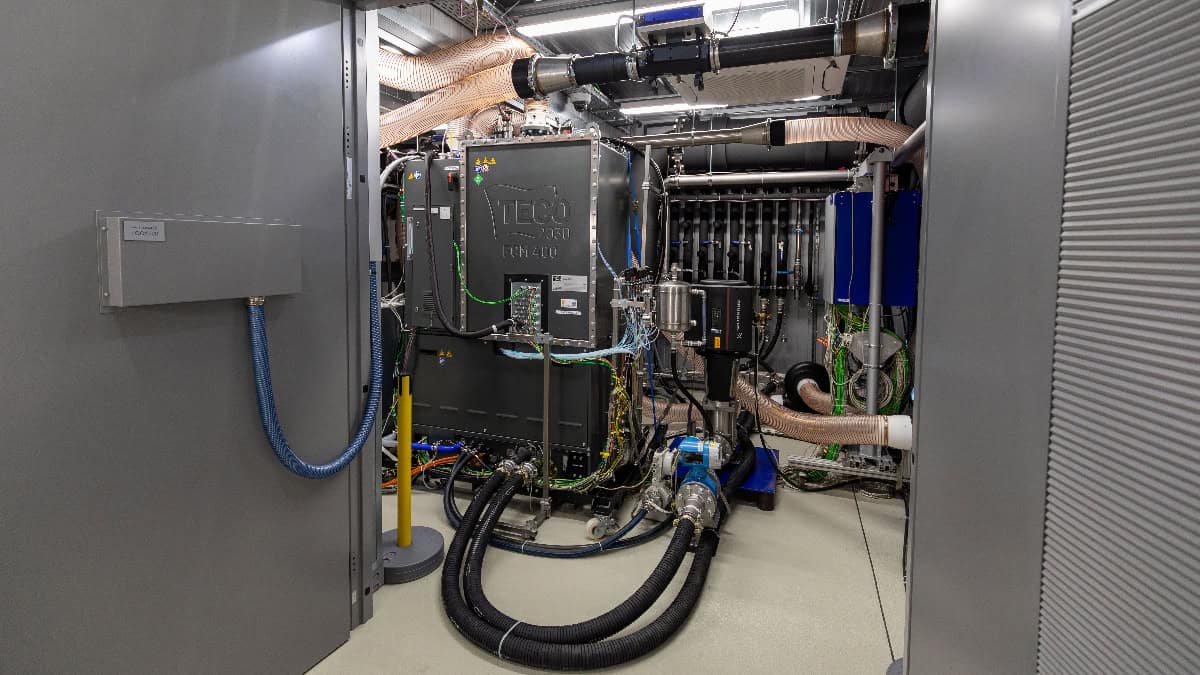
Since November 2023, the system has been connected to AVL’s testbed facility in Graz. It has undergone minor modifications and adjustments to achieve its maximum power output. The TECO 2030 fuel cell system has successfully achieved a full power output by using hydrogen as fuel.

This positions the system as the most powerful marine fuel cell system globally, which is purposely designed for heavy-duty industrial applications. The unique design is based on our 30 years of maritime experience and AVL’s two decades of R&D experiences in the field of hydrogen and fuel cells.

TECO 2030’s fuel cell technology features a modular system with installed power capacity of 400kW’s. This includes exceptional energy efficiency, an inherent safety concept, optimal weight and size dimensions, advanced component design, extended lifespan, and rapid dynamic load response.

“This milestone is the biggest one so far in the history of TECO 2030 Group, we now have a fully functional fuel cell which is almost ready for market deployment and powering our client’s applications with zero emission hydrogen-electric power. This is a moment we have all been waiting for since we started our development four years ago. A huge achievement by the entire team at TECO 2030 and AVL,” said Tore Enger, Group CEO, TECO 2030. “All in all, the team is overwhelmed how well the system operates and how the design has beat our expected performances and proves our position as a leading provider of heavy-duty fuel cell applications,” Enger concludes.

About TECO 2030

TECO 2030 is an innovative engineering and equipment development company with focus on a greener and cleaner environment. Our core objective is to identify and develop high quality, cutting edge and cost-effective solutions to significantly reduce ecological impact of maritime pollution.


Latest News

Combining GMDSS call statistics with an industry-first maritime safety broadcast analysis, Inmarsat Maritime’s new safety data platform aims to support shipping in addressing its persistent and evolving operational risks. Deep-sea shipping is an inherently hazardous enterprise and the many operational risks faced by vessels, cargo, and crew will likely never be eliminated entirely. Nevertheless, data can play a significant role in minimising the frequency and severity of incidents at sea.

Inmarsat Maritime Safety Data Hub Highlights Global Shipping Risks

Combining GMDSS call statistics with an industry-first maritime safety broadcast analysis, Inmarsat Maritime’s new safety data platform aims to support shipping in addressing its...
Bureau Veritas Marine & Offshore has awarded an Approval in Principle (AiP) to OceanAlpha for the design of its L42B uncrewed surface vessel (USV), developed for offshore hydrographic and geophysical survey operations.

OceanAlpha Secures BV AiP for L42B Offshore Survey USV

OceanAlpha's L42B combines a modular survey payload with remote operation capabilities to support extended offshore data-gathering missions Bureau Veritas Marine & Offshore (BV) has awarded...

Damen Delivers Two Electric Patrol Vessels to Amsterdam

The latest delivery brings to six the number of Damen Patrol Vessels 1304 Electric supplied to Amsterdam since 2021 https://vimeo.com/1243208175?fl=pl&fe=sh Damen Shipyards Group has delivered two...
Kongsberg Maritime has unveiled the Arctic Hunter USV, a new class of uncrewed surface vessel designed to accelerate the deployment of hybrid naval fleets combining crewed and uncrewed assets.

Kongsberg Maritime Unveils Arctic Hunter USV

Kongsberg Maritime combines commercial shipbuilding expertise and autonomous vessel technology to support next-generation naval operations in Arctic waters Kongsberg Maritime has unveiled the Arctic Hunter...

Related news