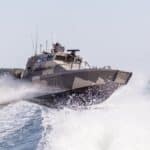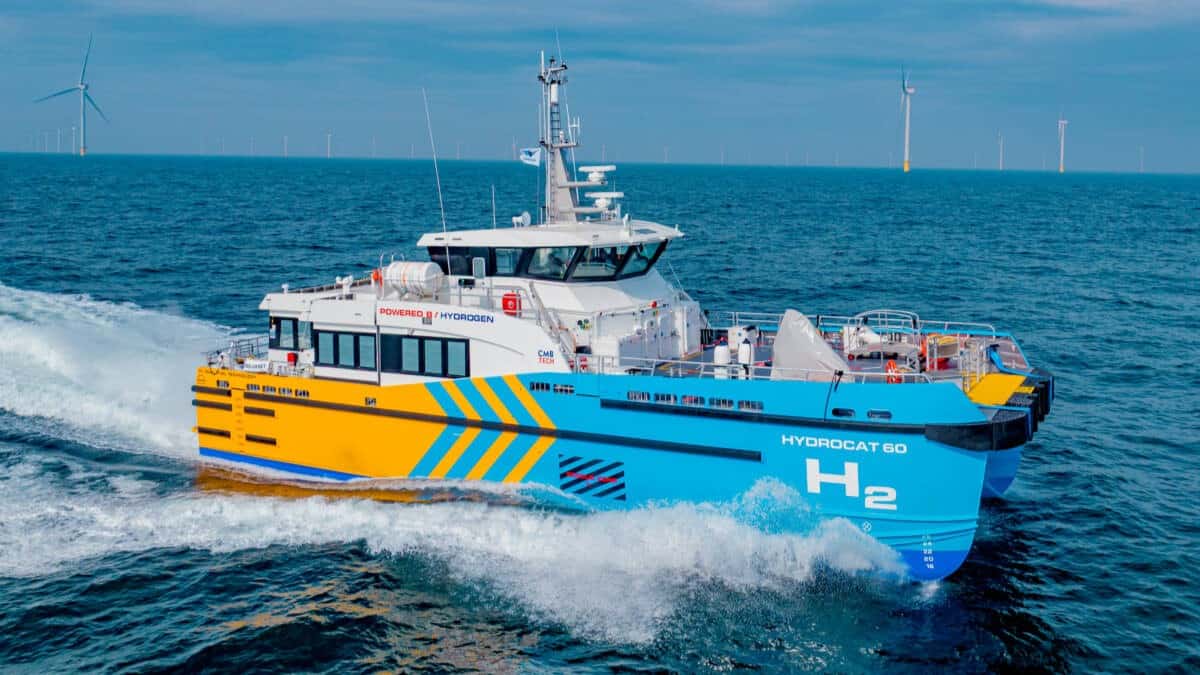
Windcat announce the delivery of the Hydrocat 60, the second vessel in its groundbreaking MK5 series of Crew Transfer Vessels (CTVs). Notably, the Hydrocat 60 will be the first in the series equipped with a full hydrogen dual fuel system, reinforcing Windcat’s leadership in sustainable offshore solutions.
Hydrocat 60 is equipped with a dual fuel hydrogen combustion engine, co-developed by CMB.TECH and MAN. This advanced engine allows the vessel to operate on both hydrogen and traditional diesel fuel, ensuring flexibility and reliability. The vessel includes CMB.TECH’s full hydrogen system, capable of storing up to 458 kg of compressed hydrogen, providing a significant step towards reducing emissions in maritime operations.
“We are very proud to now have the 3rd hydrogen-powered CTV in operation within the Windcat fleet. We see that hydrogen is building momentum in the offshore wind industry and is already contributing towards the reduction of our customers’ CO2 emissions today. With more hydrogen-ready vessels already in the water and under construction, we continue to answer to the increasing demand for clean high performance CTVs.” said Willem van der Wel, Managing Director of Windcat.
The MK5 design addresses the evolving needs of the offshore wind industry by delivering high-performance vessels that significantly enhance crew comfort and operational efficiency. Developed through in-house innovation, the MK5 design incorporates feedback and experience from the daily operations of our fleet and offers further optimised seakeeping capabilities, larger deck space, and provisions for increased hydrogen storage. With an overall length of 27 meters, an optimised hull shape, increased width, and elevated freeboard, these vessels ensure greater accessibility and comfort, making the vessel series ideal for those developments located further offshore.
The Hydrocat 60’s innovative dual fuel hydrogen system, which allows for straightforward maintenance on the vessel and dual fuel capability, makes it a pragmatic choice for immediate CO2 emissions reduction. Windcat is confident that hydrogen technology will continue to gain traction, propelling the maritime and offshore industry towards decarbonisation. To ensure all newly constructed MK5 vessels are future-proof, each will be fitted with a dual fuel hydrogen engine on board as standard.